Rome was love at first sight for me, and every time we visit, I fall more in love with this city!
Rome is often called the Eternal City because ancient Romans believed that Rome was invincible. They believed Rome was untouchable, that no matter what happened or how many empires came and collapsed, Rome would go on forever. And it has.
As soon as you step foot inside the city, you will be immediately drawn in by its cobblestone streets, outdoor cafes, and fascinating history.
If you are planning your first trip, this self-guided walking tour of Rome includes the top tourist spots as well as an invitation to discover the true, authentic beauty of Rome.
*This post contains affiliate links. If you book a guide through the link provided, we will earn a small commission at no extra cost to you. Thank you for your support!
The Best Self-Guided Walking Tour of Rome, Italy
Link to the Self-Guided Tour Map
If this is your first time visiting Rome, I have created a walking map to help with your planning. I recommend setting aside at least two days to visit all the sites on this walking tour of Rome.
The green markers on the map are food recommendations so that you can be sure to find some delicious Italian cuisine wherever you are on the walking tour.
1. The Colosseum
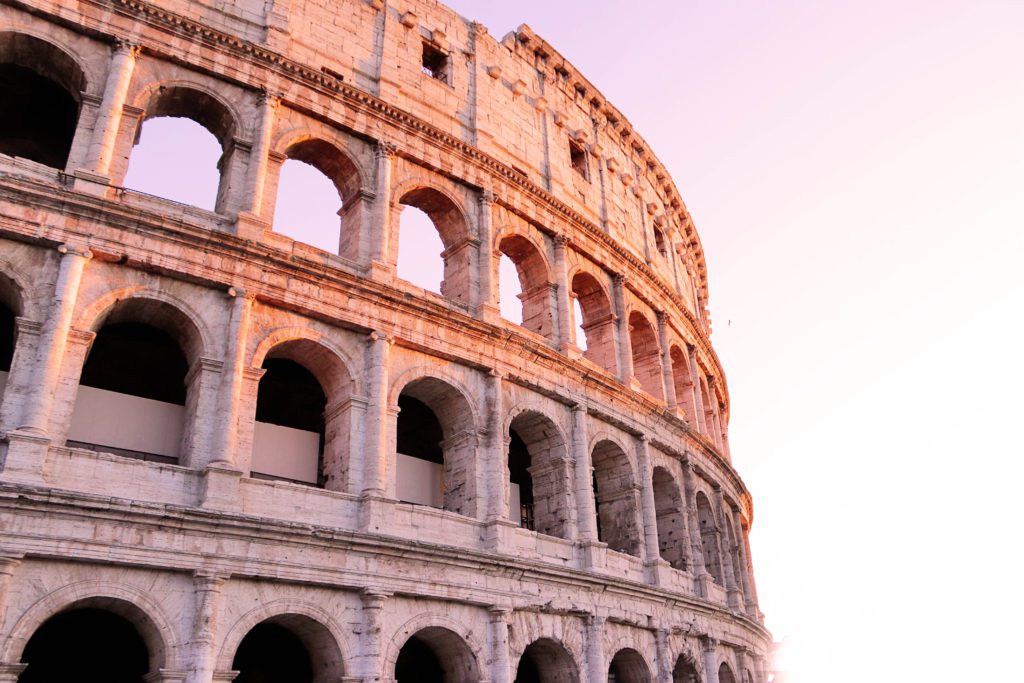
We’ll start the walking tour at the Colosseum, the largest ancient amphitheater ever built. It is one of the most recognizable landmarks and one of the most visited tourist attractions in the world.
The Colosseum was completed in 80 AD and took about 10 years to build at the hands of Jewish slaves. It is interesting to note that the original facade was made of white travertine hauled by horse and cart from Tivoli over the span of 4 years.
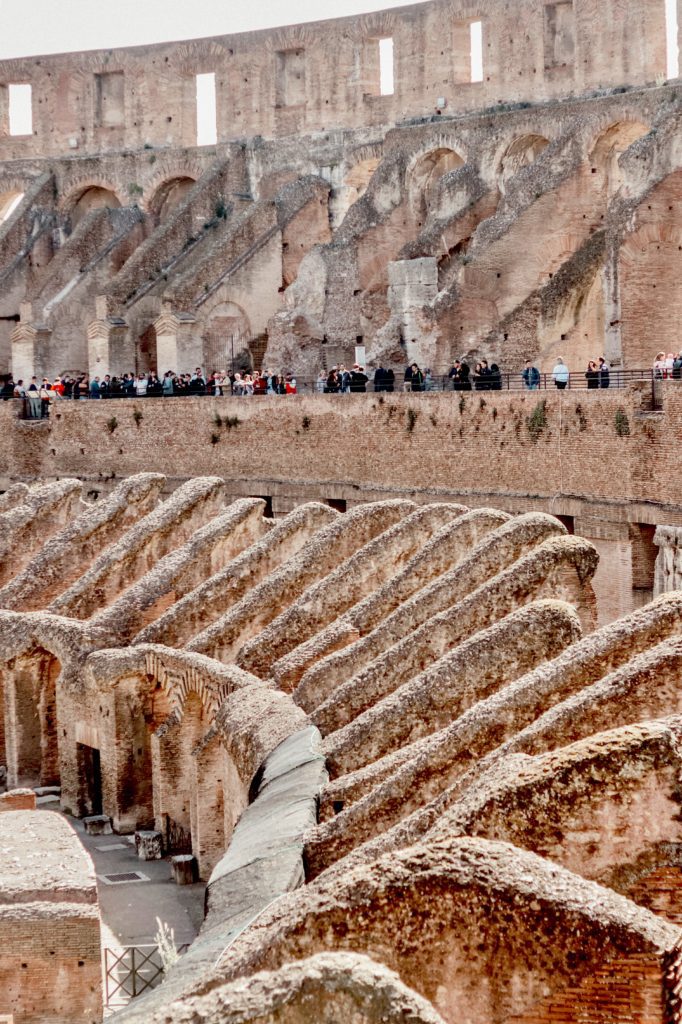
After the Colosseum was abandoned, much of it was removed and used to build St Peter’s Basilica and other churches and monuments.
The Colosseum is most well-known for its gruesome gladiator fights. Participants included not only paid gladiators but also slaves and criminals who were sentenced to death.
Gladiators originated from the lower class, but success in the arena could catapult them to stardom with riches and fame.
The massive amphitheater was also used for animal hunts, battle re-enactments, performances, and public executions. They would sometimes even flood the Colosseum to re-enact mock sea battles.
It is estimated that around 500,000 people and one million animals lost their lives during battles and games in the Colosseum.
The most epic games took place during a 123-day celebration of Emperor Trajan’s victories in Dacia. The brutal contests involved around 10,000 gladiators and 11,000 animals.
Animals were brought in from all over to be slaughtered at the games. The most popular species were bears, hippos, elephants, tigers, lions, and jaguars.
As you can imagine, this had a devastating effect on the animal population. Entire species were wiped out during this period.
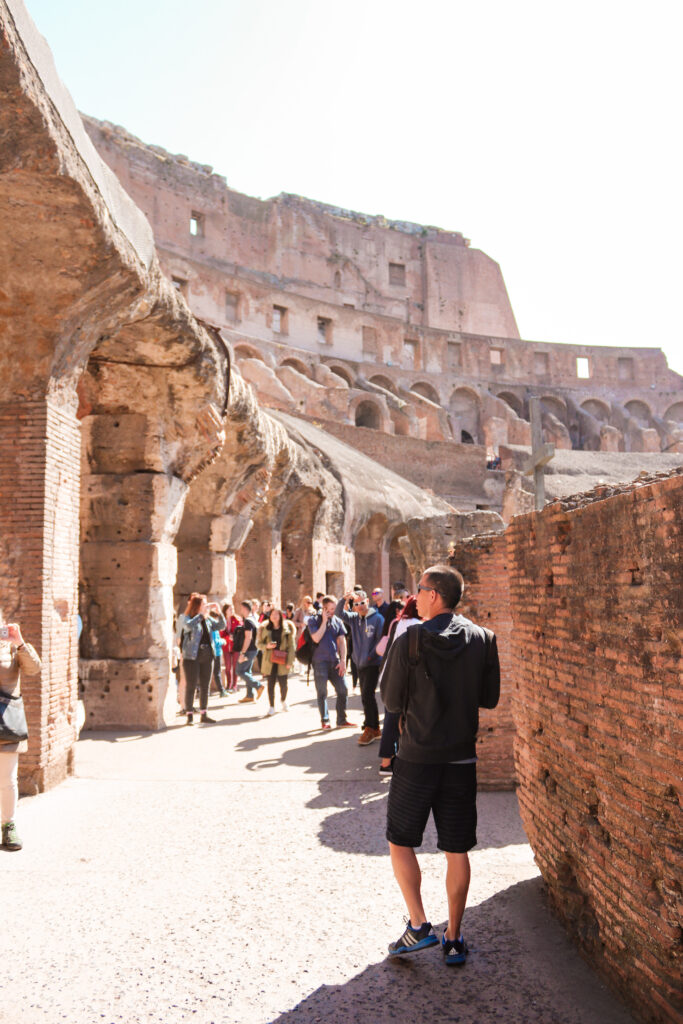
There are countless stories and historical facts just waiting to be absorbed. To make the most of your visit, book a guided or self-guided audio tour.
For the best photo op, walk across the street and up a set of stairs to Via Nicola Salvi. You’ll find some restaurants and a ledge that is perfect for capturing your photo in front of the Colosseum without the hordes of tourists and imminent construction.

2. Roman Forum
Just outside the west end of the Colosseum, you’ll find the entrance to the Roman Forum.
Most Colosseum tickets include admission to the Roman Forum and Palatine Hill as well, but you will need to go through a security checkpoint before entering the Forum.
Unfortunately, there are no “skip the line” ticket options here.
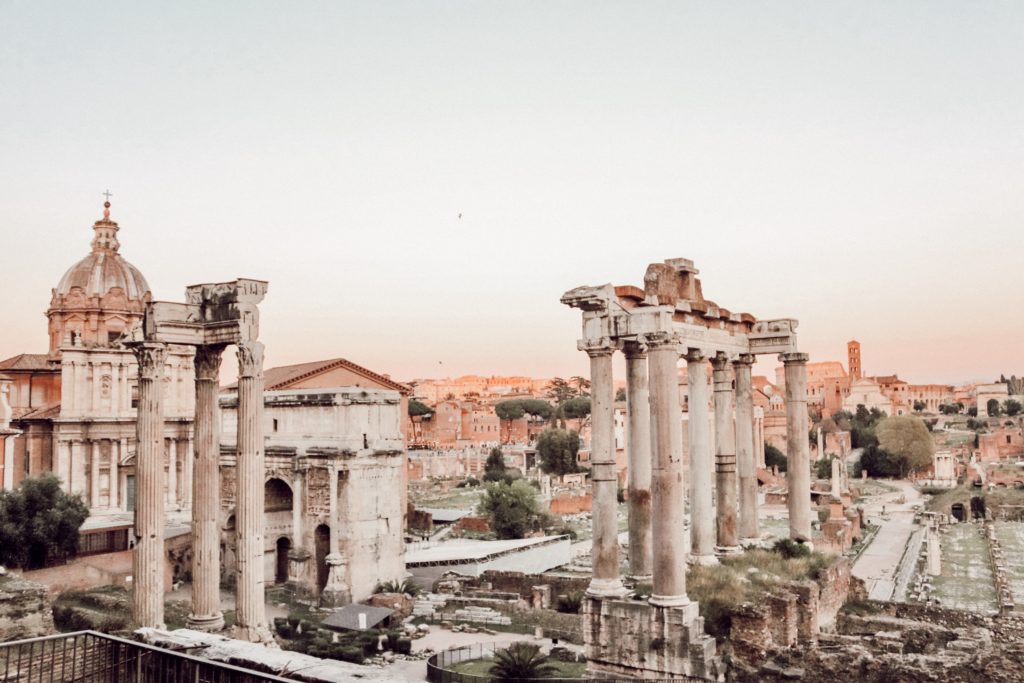
There are actually 3 separate entrances to the Forum. The one right off the Colosseum tends to be the busiest. If the line is long, head over to the entrance at Largo
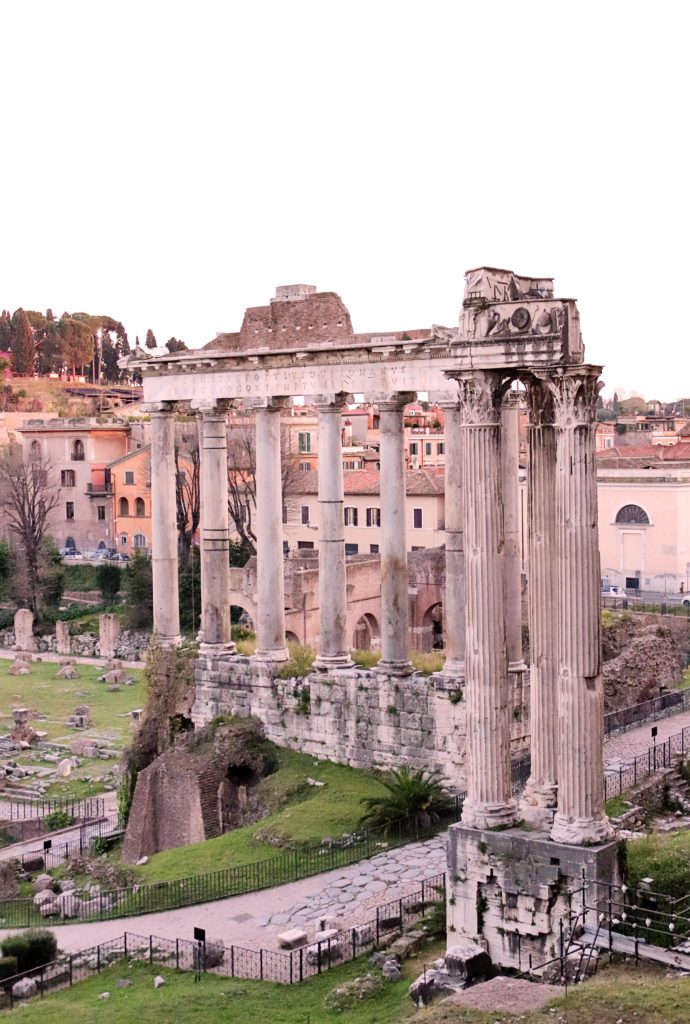
The Roman Forum was the beating heart of ancient Rome. It was the political, religious, social, and administrative center of the empire.
It took over 100 years to unearth the remains. As you walk among the ruins, it feels like a hodgepodge of buildings. That is because over the centuries, they would build over earlier ruins.
The Via Sacra is the main road through the Forum. It was part of the 50,000-mile network of paved roads throughout the empire.
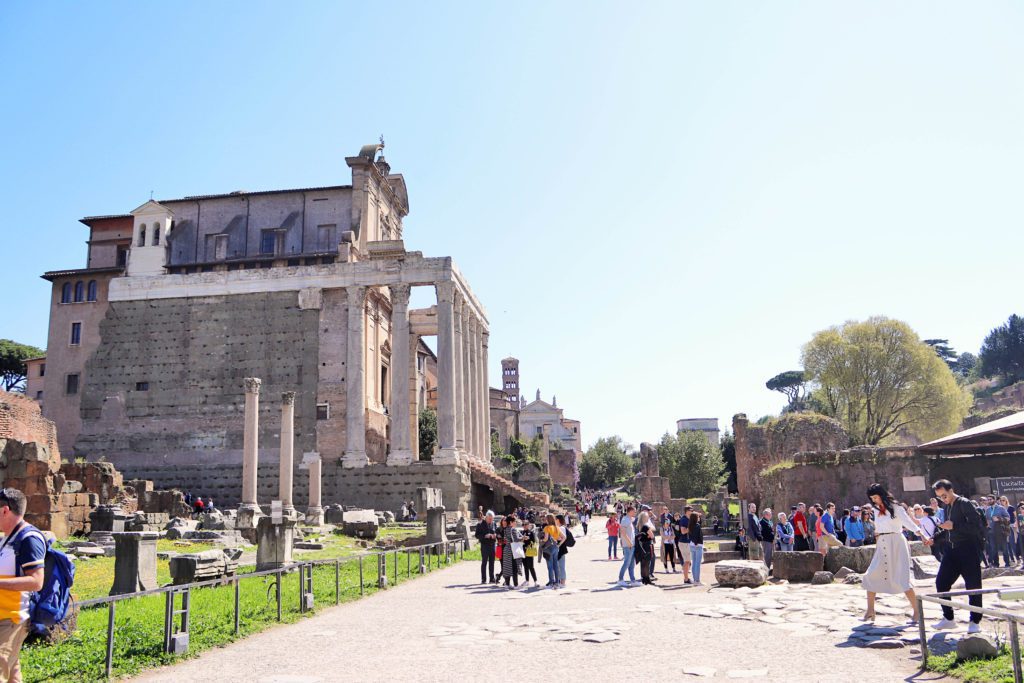
Most of the structures were built during the reign of Julius Caesar. Many important temples were erected here, the most prominent being the temple of Venus and Rome.
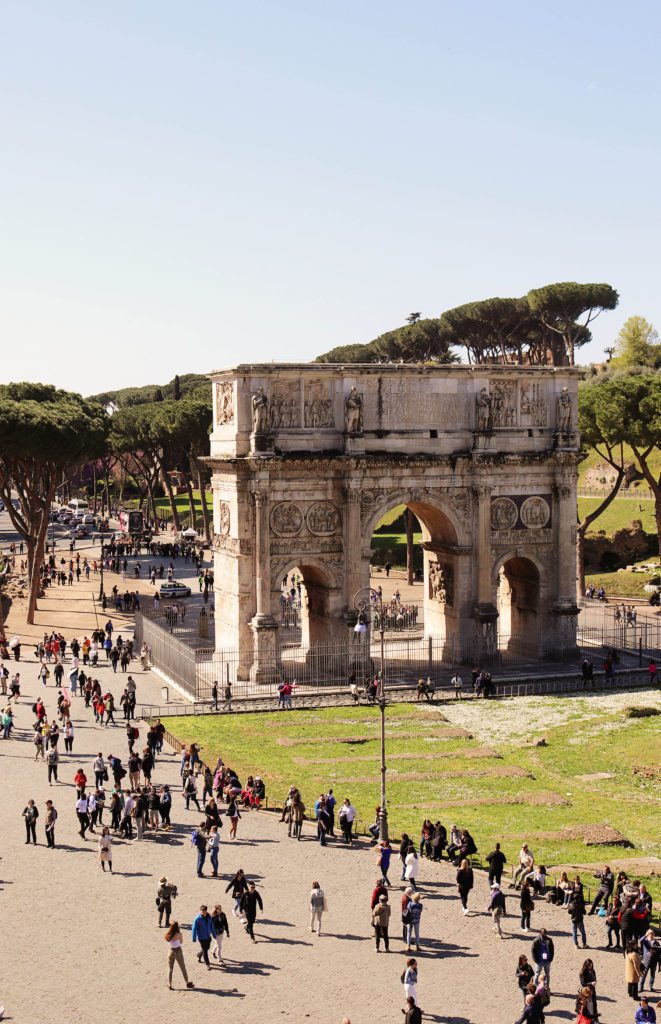
The Forum holds the ruins of banks, public bathhouses, market stalls, political venues, and three triumphal arches.
Another notable building is the Mamertine Prison, where it is believed Peter and Paul were incarcerated in its dungeon.
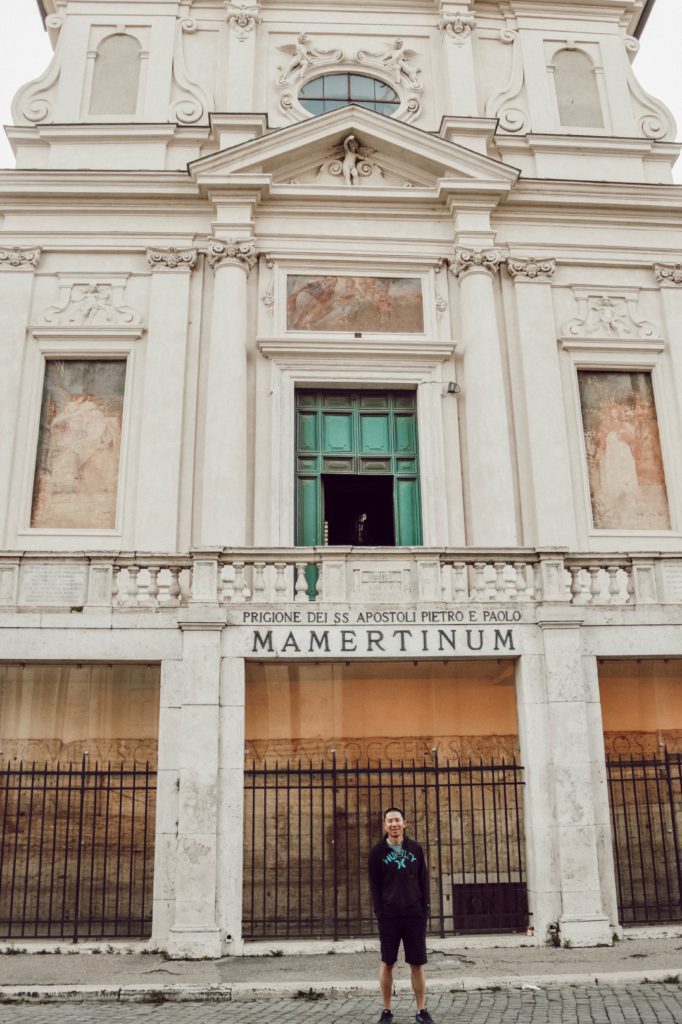
Palatine Hill is along the south side of the Forum and is considered to be the Beverly Hills of ancient Rome. Boasting lavish palaces and manicured gardens overlooking the Forum, this was home to Roman society’s most elite.
Today, you can walk up the stairs to a terrace with a large fountain overlooking the Forum.
The Forum truly is remarkable. Be sure to take advantage of a guided or self-guided audio tour to experience history coming to life.
3. Trajan Forum
Just north of the Roman
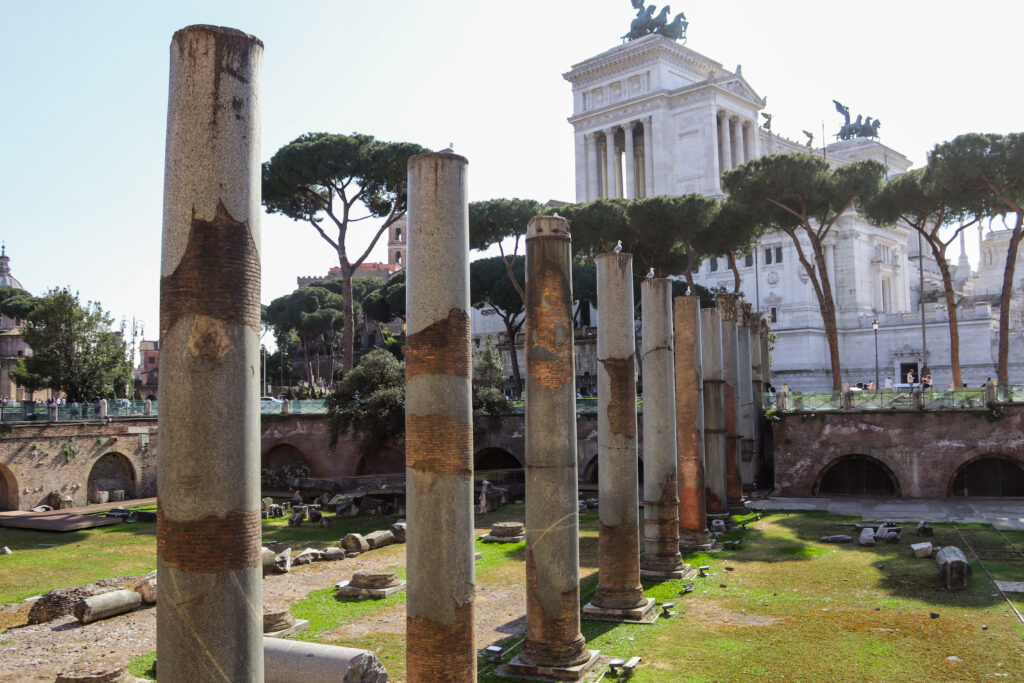
While there isn’t much left today, Trajan’s Forum was once seen as an architectural wonder of the world. It housed two massive basilicas, two libraries, and an impressive six-story market that would be the equivalent of today’s shopping mall. A temple was later added after Trajan’s death.
4. Piazza Venezia
At the end of the road, you’ll come to Piazza Venezia. This is a busy square where four major roads intersect. It may have a chaotic feel to it, but this piazza actually holds historical significance.
Piazza Venezia is where Mussolini would rally the crowds, and it is the spot where he declared the beginning of World War II.
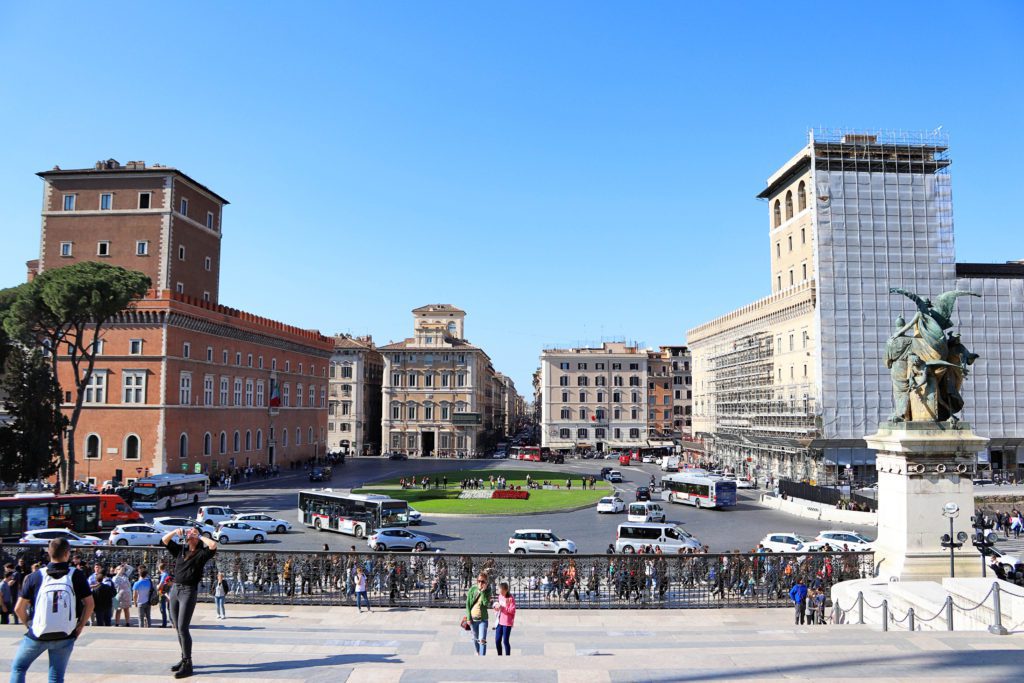
Overlooking the piazza on the south side, you’ll find the National Monument to Victor Emanuel II. This is Rome’s largest statue honoring the first king of the United Italy.
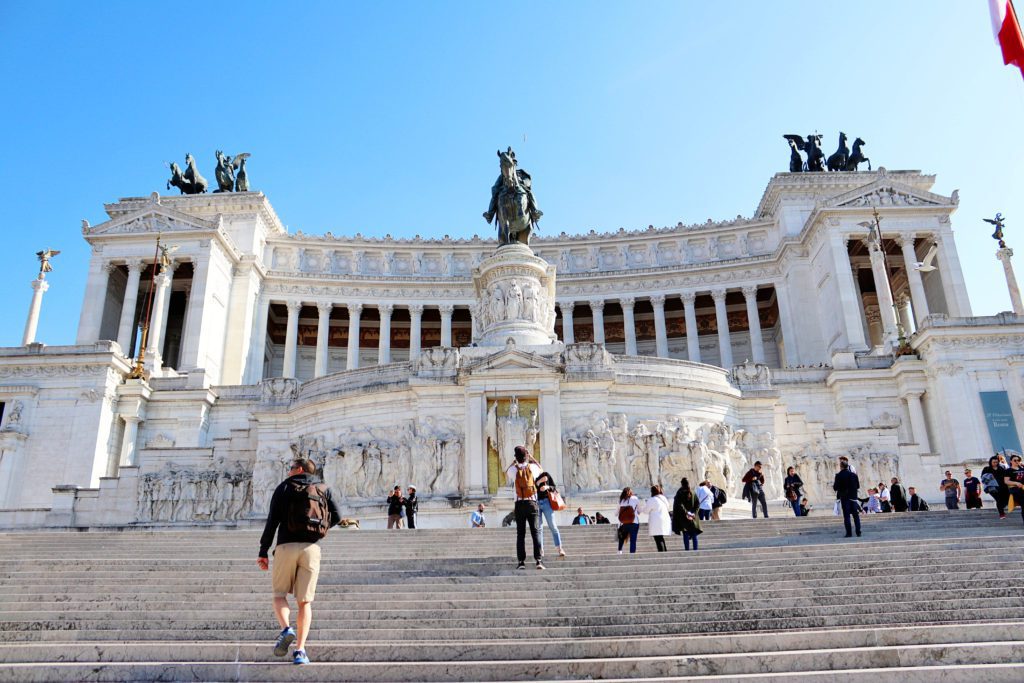
Underneath the statue, you’ll find the tomb of the unknown soldier.
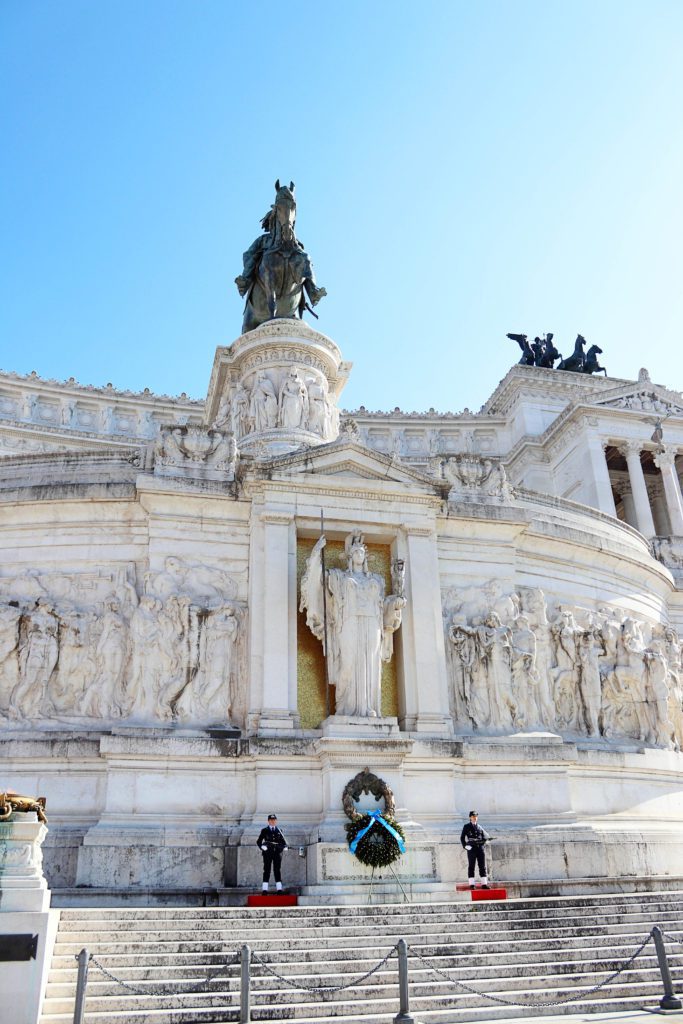
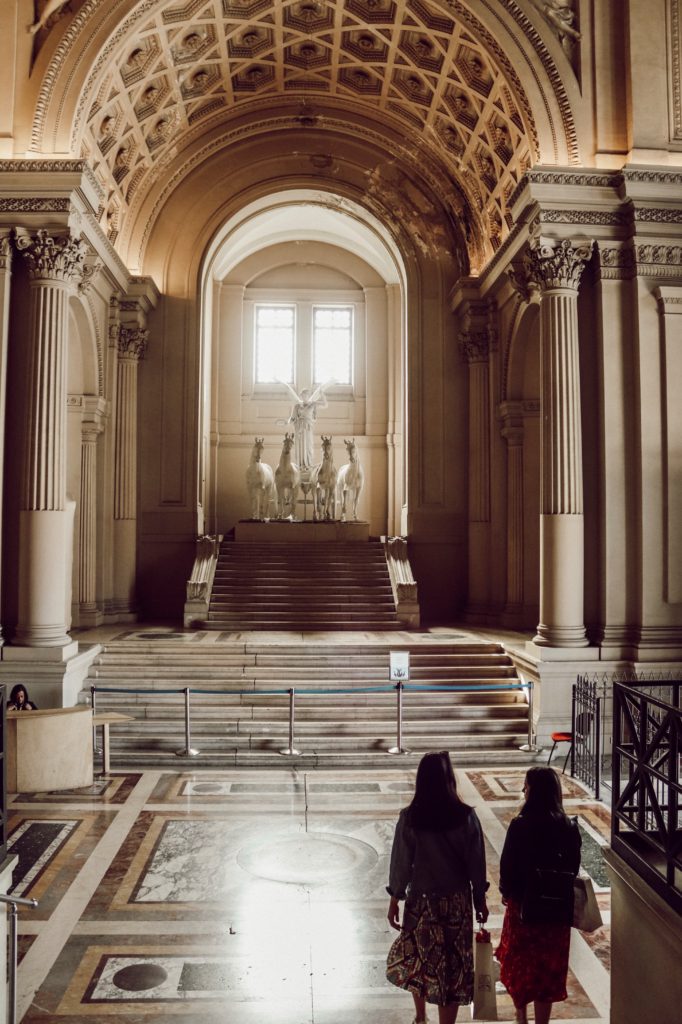
If you head up the stairs, you’ll discover a free museum inside the building.
5. Trevi Fountain
The Trevi Fountain is located about an 8-minute walk from Piazza Venezia.
The fountain is just as incredible in person as you may have imagined. The grandeur of this baroque fountain is truly magnificent.
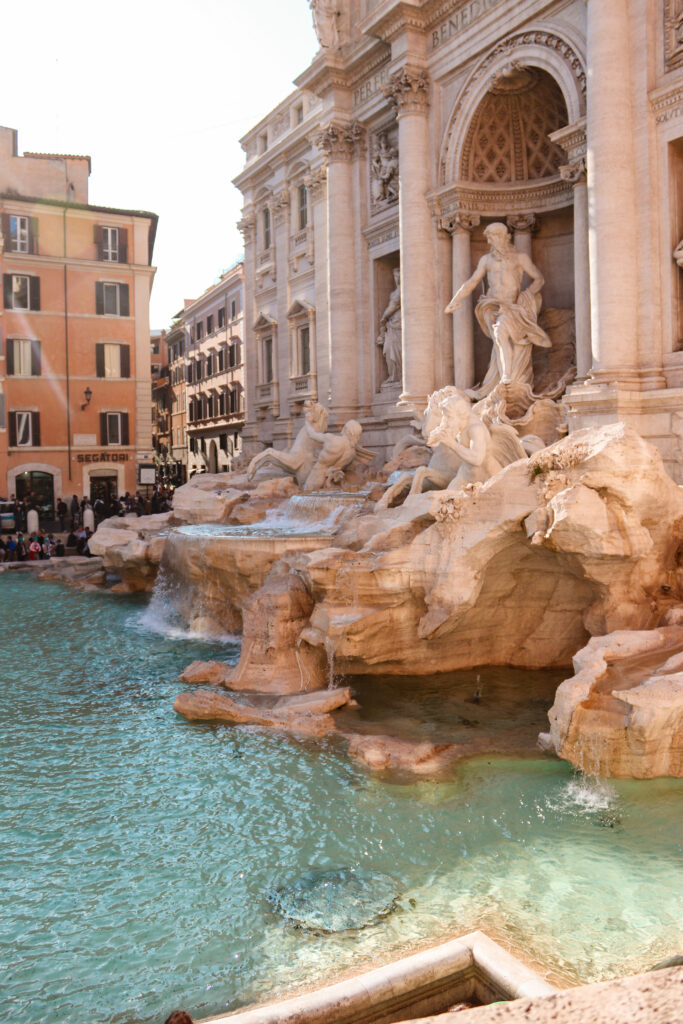
The Trevi Fountain took 30 years to build and was completed in 1762. It is interesting to note that the funding for the fountain came from the Roman lottery game.
Although the fountain wasn’t built during the Roman Empire, its water source comes from the only original Roman aqueduct still functioning today.
The fountain sits at the end of the Aqua Virgo Aqueduct, where three streets converge. “Three streets” translates to “tre vie”, which is how the fountain got its name.
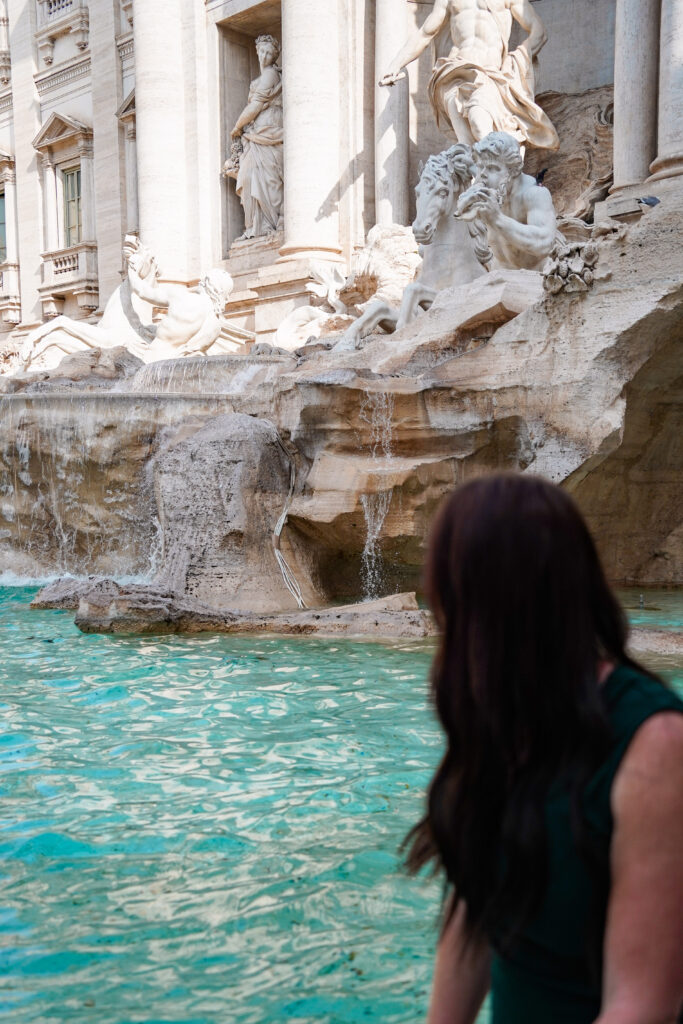
It’s been a long-standing tradition that visitors wishing to return to Rome throw a coin over their shoulder for good luck. With millions of tourists flocking to the fountain each year, that adds up to about 3,000 euros each day. The money is collected and donated to a local charity.
I wasn’t prepared for how crowded the Trevi Fountain would be. We visited in the offseason and were still elbow-to-elbow with tourists. As of February 2026, tickets are required to visit the lower steps near the fountain. If you visit before 9 am or after 10 pm, it is free to visit, and there aren’t as many crowds.
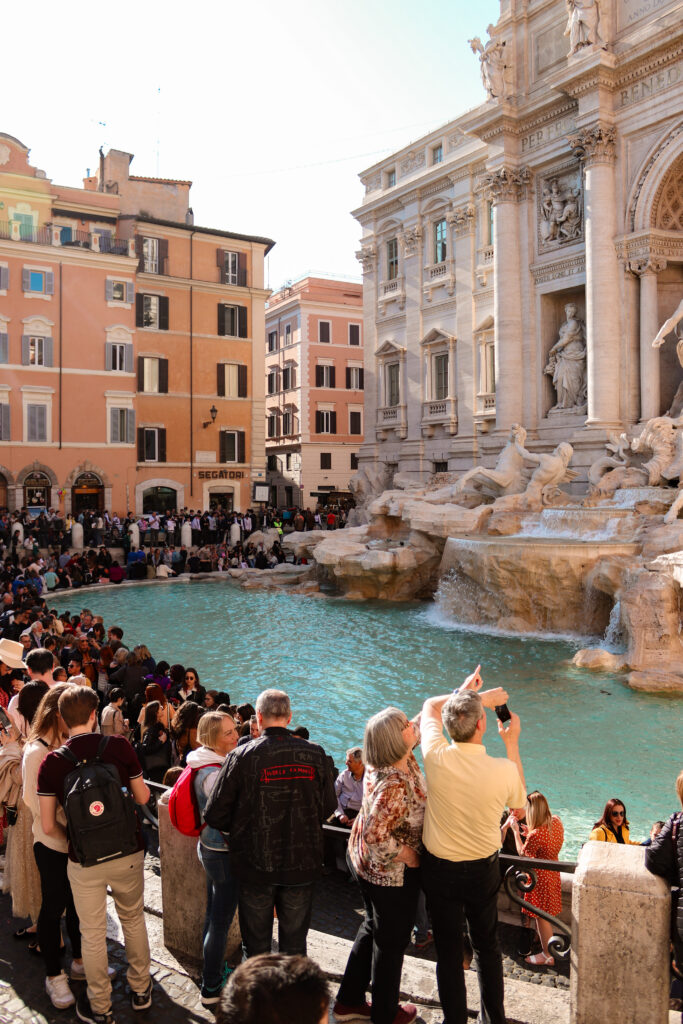
All the crowds make this a hot spot for pickpocketing. Be sure to keep your valuables close.
It’s a good idea to use a travel money belt, and if you have a backpack, be sure to carry it in the front. You might feel silly, but so many people do it, even the locals.
If you want to escape the crowds and experience the Trevi Fountain in a unique way, check out this secret archeological site under the Trevi Fountain!
Another little hidden gem is the Lovers’ Fountain to the right of the Trevi Fountain. Legend has it that if lovers drink from the fountain, they will find lasting love.
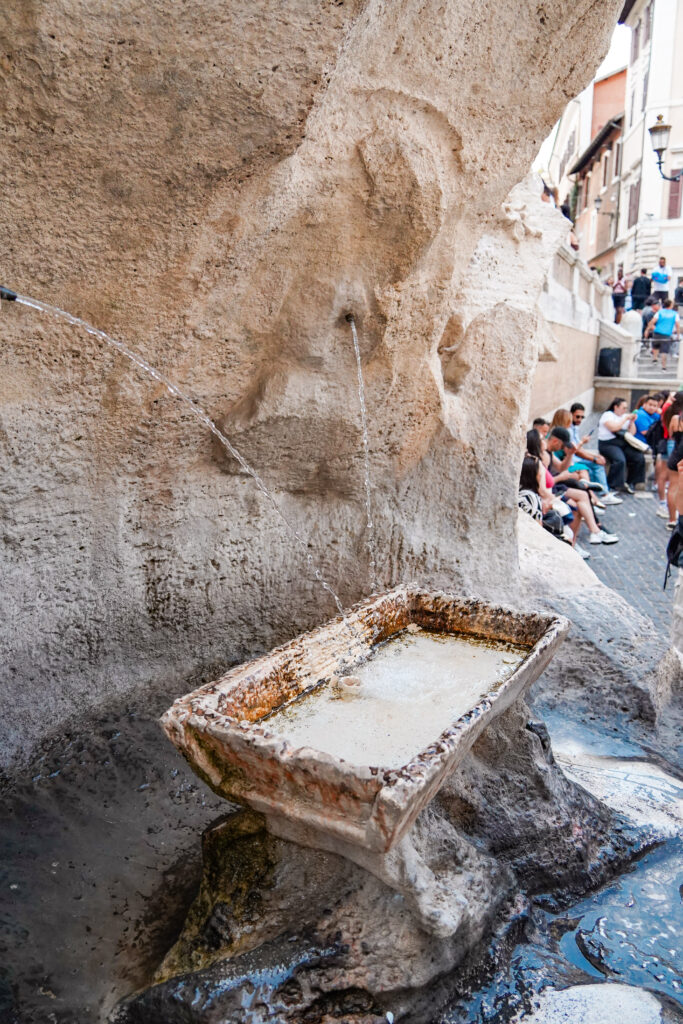
The tradition started during WWII when the soldiers had to leave their fiancés behind. The girl would come to the fountain with a brand new glass and fill it with water for her boyfriend to drink. After drinking it, she had to break the glass to seal their love.
6. Spanish Steps
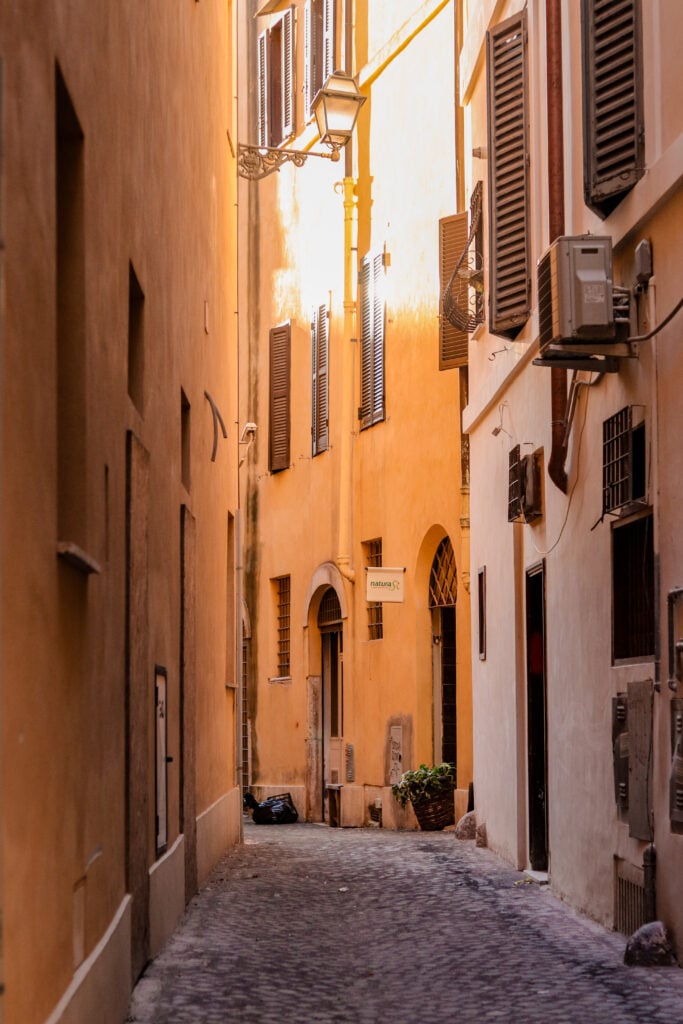
The short walk to the Spanish Steps will take you through charming pastel alleyways and past open-air cafes. You’ll feel like you’re in a movie set.
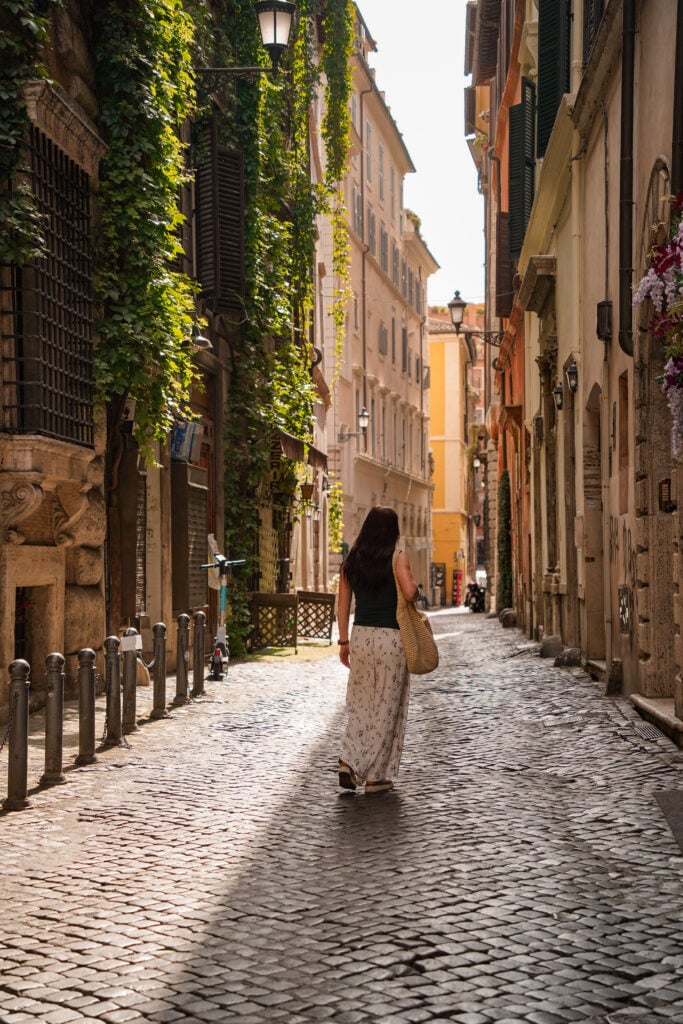
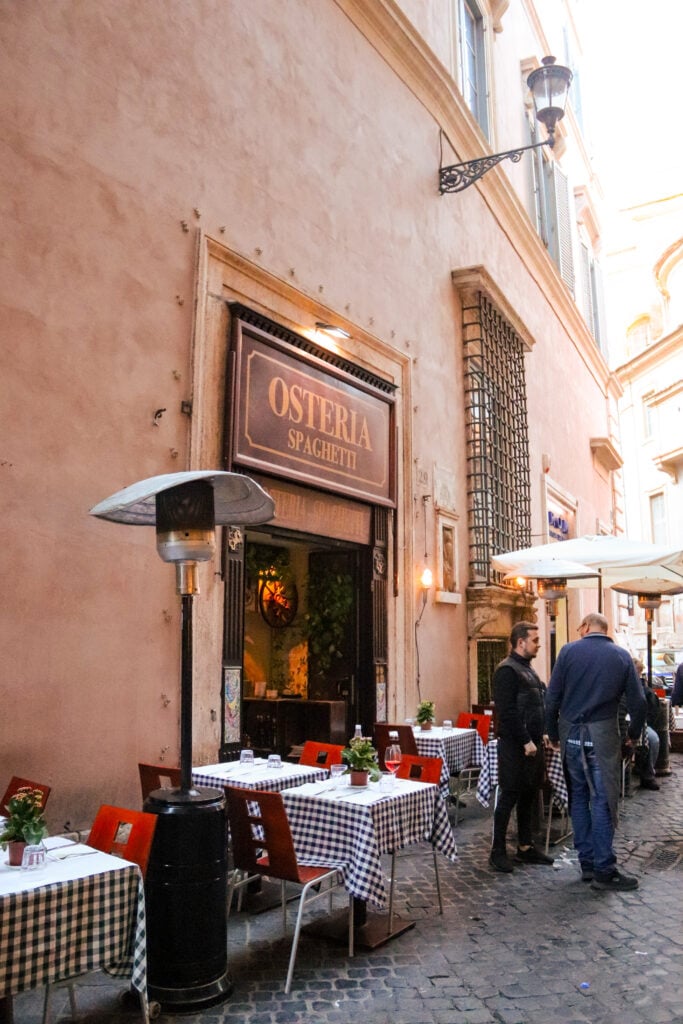
Once you arrive at the Spanish Steps, it may feel a little anti-climactic. I have to admit, I didn’t really see what was so special about a staircase.
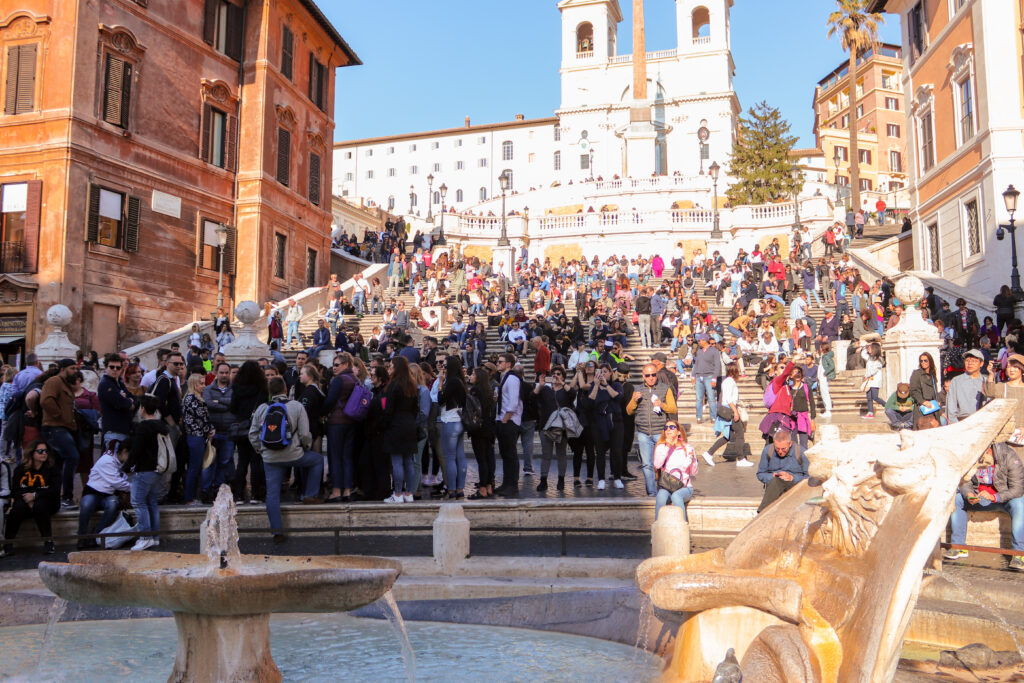
This is the widest staircase in all of Europe with 138 uniquely shaped steps, but they are just steps after all. And really crowded steps at that.
Hundreds of people can be found lounging on the steps, although keep in mind that it is illegal to eat on the steps, and there are police keeping an eye out.
But once we walked to the top of the steps, I understood why this is one of the most visited landmarks in the city.
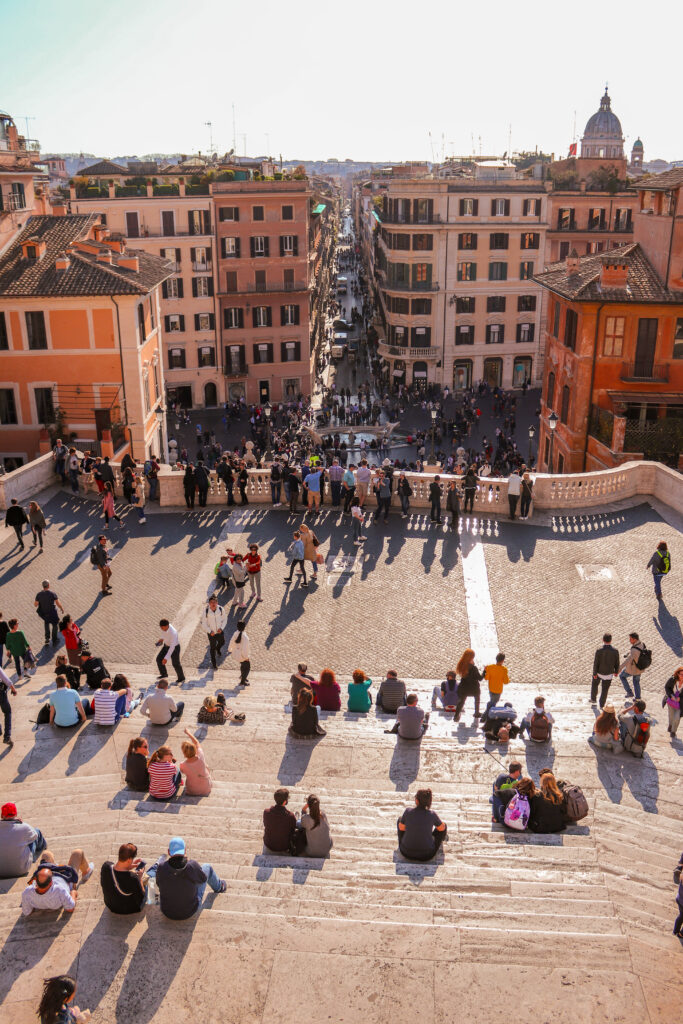
The view over the rooftops and through the narrow streets makes this one of the best viewpoints in Rome.
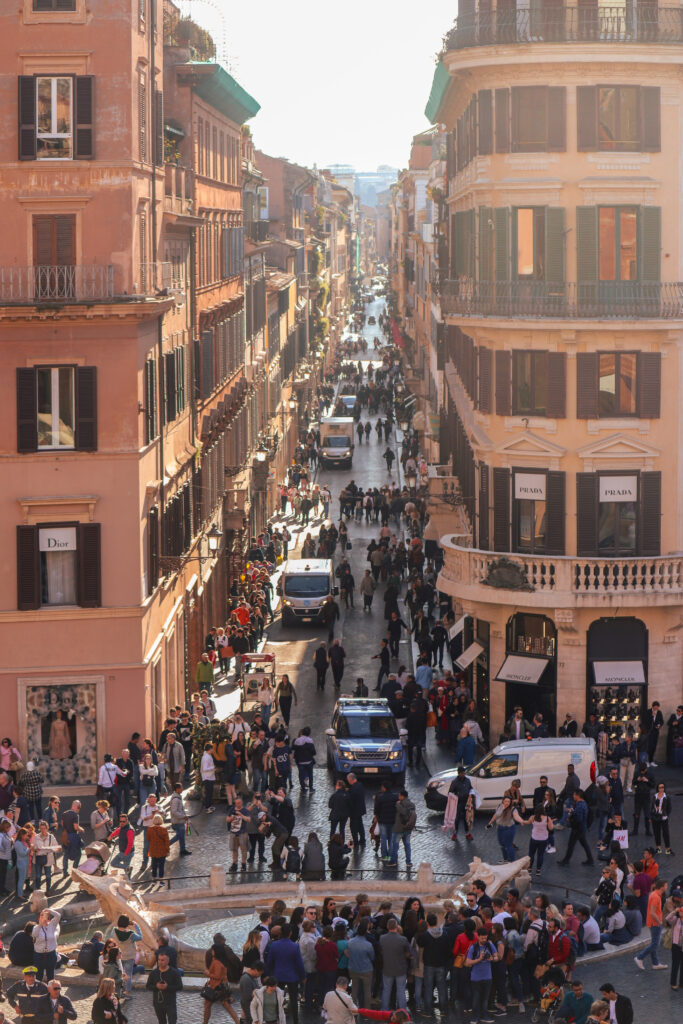
Once you make it to the top, take in the sweeping views, then step inside the beautiful Trinità dei Monti church.
Around the corner, you’ll find a small pasta shop called Pastificio Guerra. This no-nonsense mom-and-pop shop came highly recommended to me by a friend, and it did not disappoint.
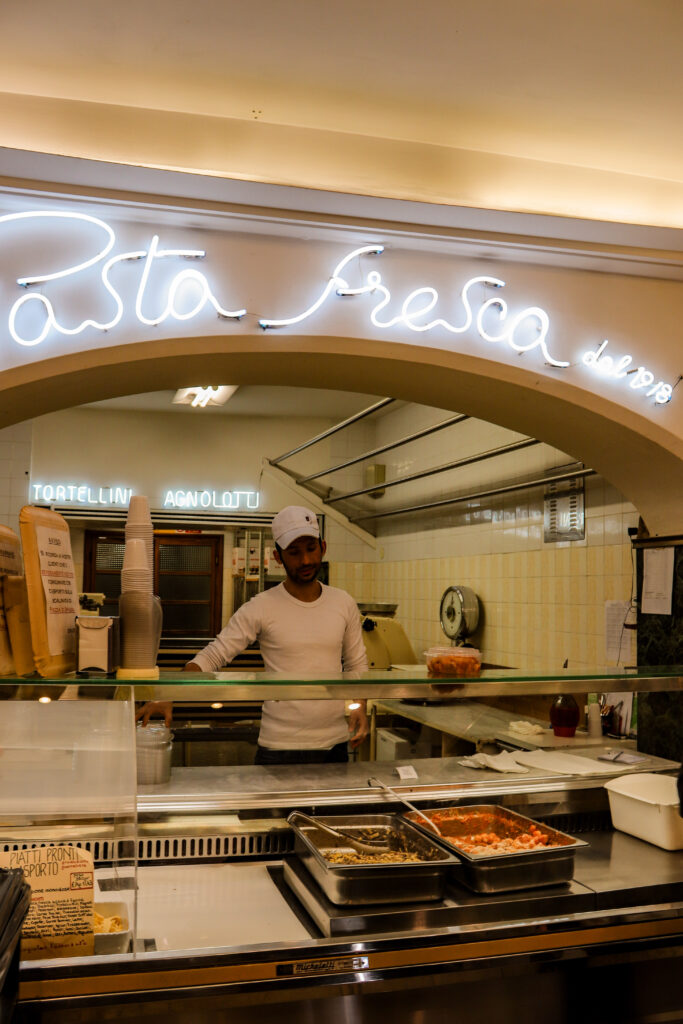
Each day, they make only 2 or 3 types of pasta. The generous portions are served up in a to-go container for a reasonable price. This gnocchi was some of the best I’ve ever had!

After you get your order, head up the hill to the Borghese Gardens for a little picnic.
These city gardens are reminiscent of New York’s Central Park. They offer a breath of fresh air and a nice break from the crowds.
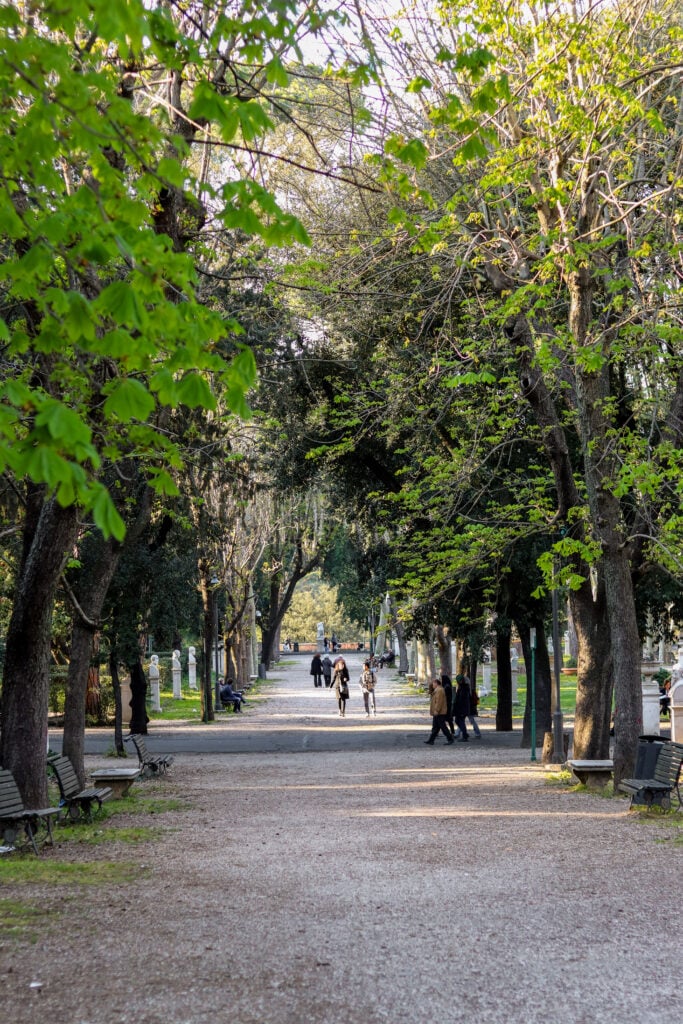
You could easily spend a few hours strolling the paths, visiting the museum, renting rowboats on the lake, or renting bicycles and exploring the “secret gardens”. The park also offers spectacular views over the city.
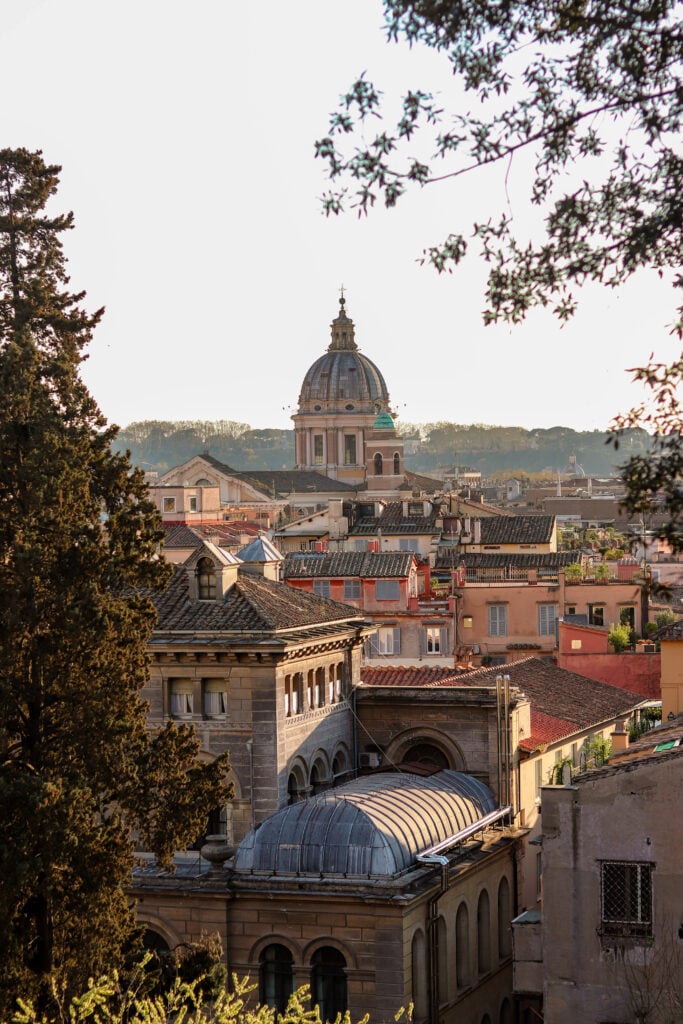
We didn’t have much time to spend here, but click the link for more information about visiting the gardens.
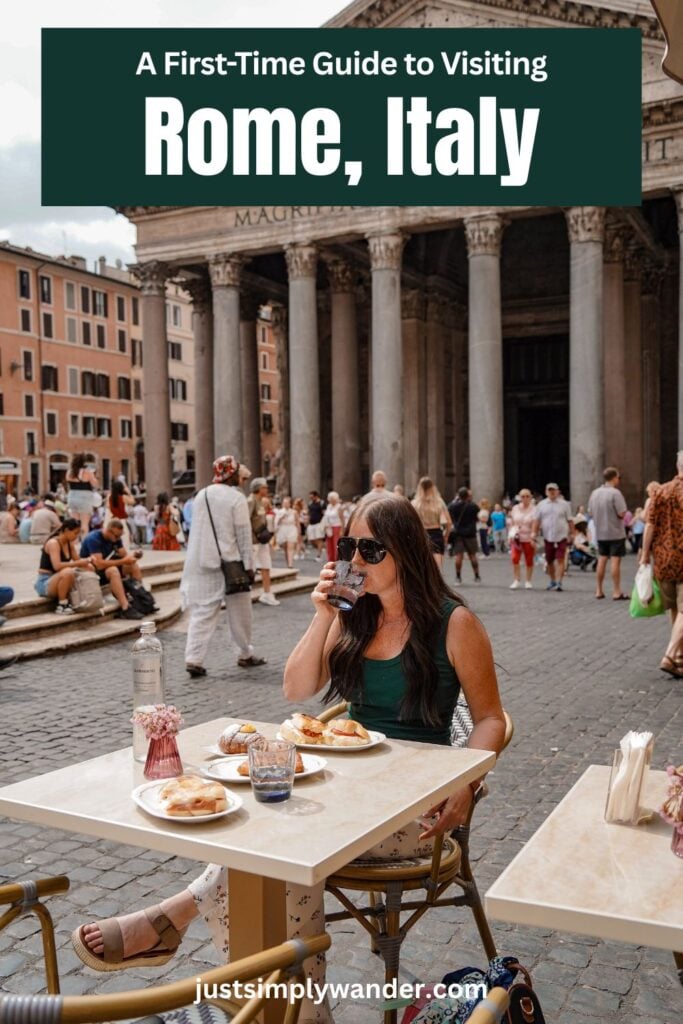
7. The Pantheon
From the Spanish Steps, head over to the Pantheon and prepare to be amazed.
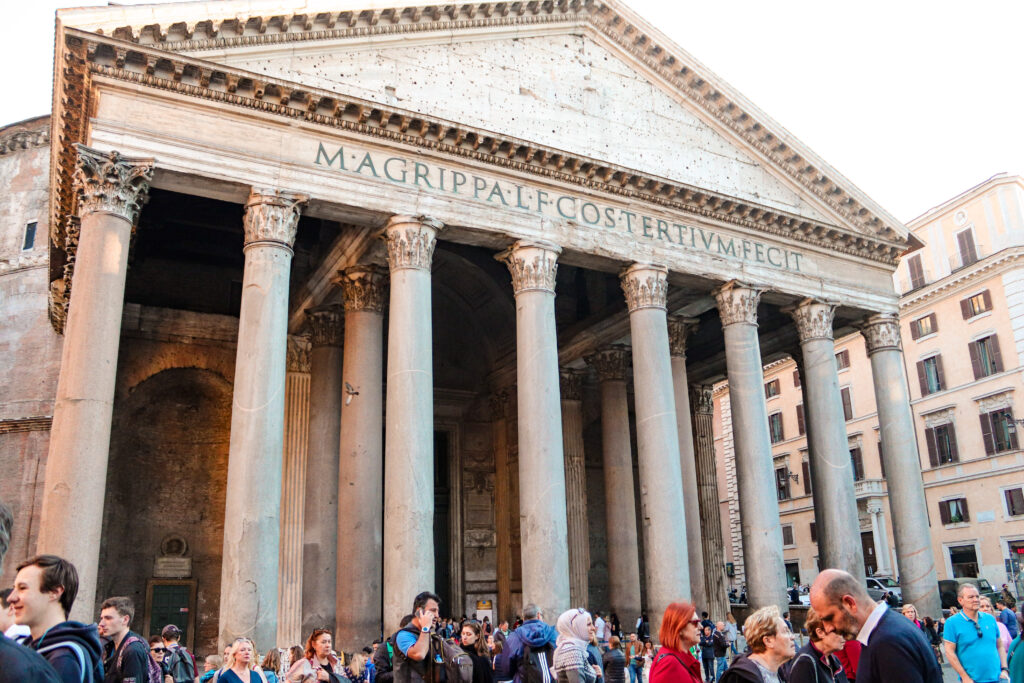
I had seen pictures, but pictures can not do the Pantheon justice. The sheer scale of the columns alone is enough to leave you speechless.
As you enter the 2000-year-old temple through the double 21-foot bronze doors, your eyes will be immediately drawn up to the enormous domed ceiling.
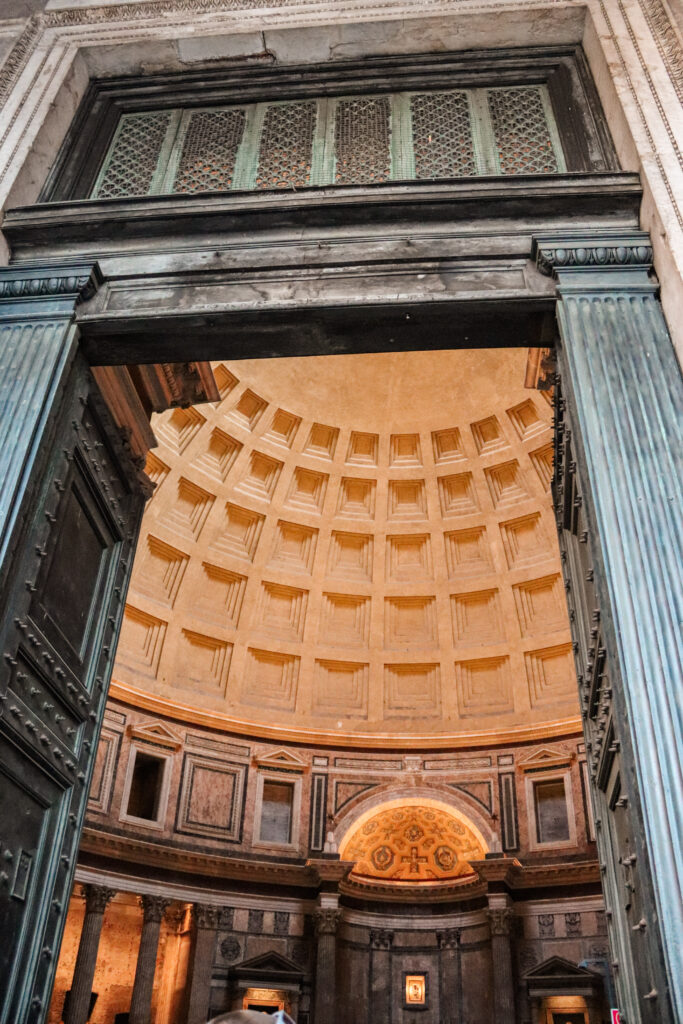
This is the largest non-reinforced dome in the world, and it is unfathomable to consider the logistics of how it was constructed by hand thousands of years ago.
At the center of the dome, you’ll find the Oculus. This is an open hole, so notice the drains on the floor to catch the rain if it comes in.
If you’re lucky enough, you’ll see the sun shining through and creating the world’s longest pillar of light at 142 feet.
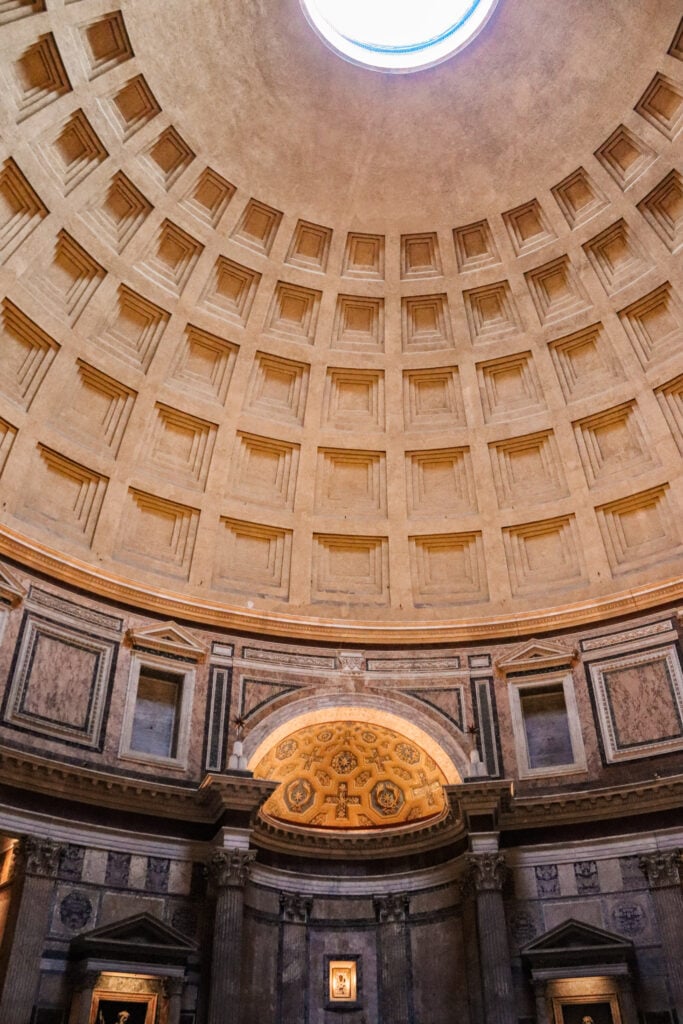
The Pantheon is one of the most well-preserved buildings in all of Rome. It was originally a temple but is currently an active church. In fact, it has been in continuous use since it was first dedicated.
It is also the final resting place for Victor Emmanuel II (the first king of unified Italy), Raphael, and other beloved artists and notable dignitaries.
Tickets are 5 euros, cash only, and can be purchased on-site.
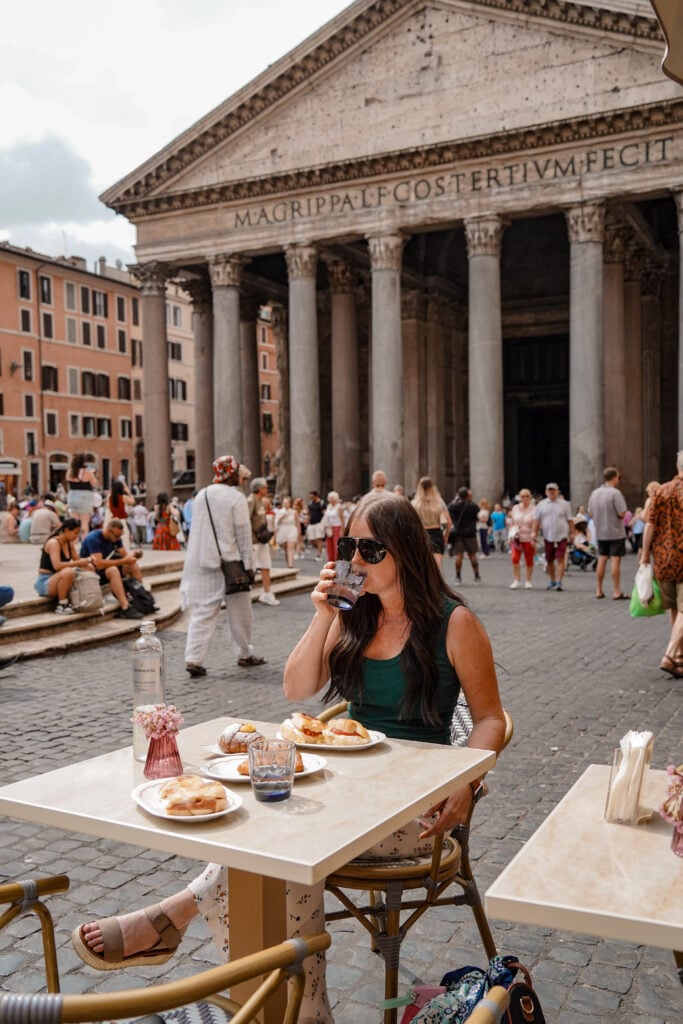
The Piazza della Rotonda in front of the Pantheon is dotted with cafes, street buskers, and the Fontana del Pantheon (one of the 280 fountains you’ll find in the city).
Not far from the Pantheon, you’ll find our favorite gelato shop, Gelateria del Teatro.
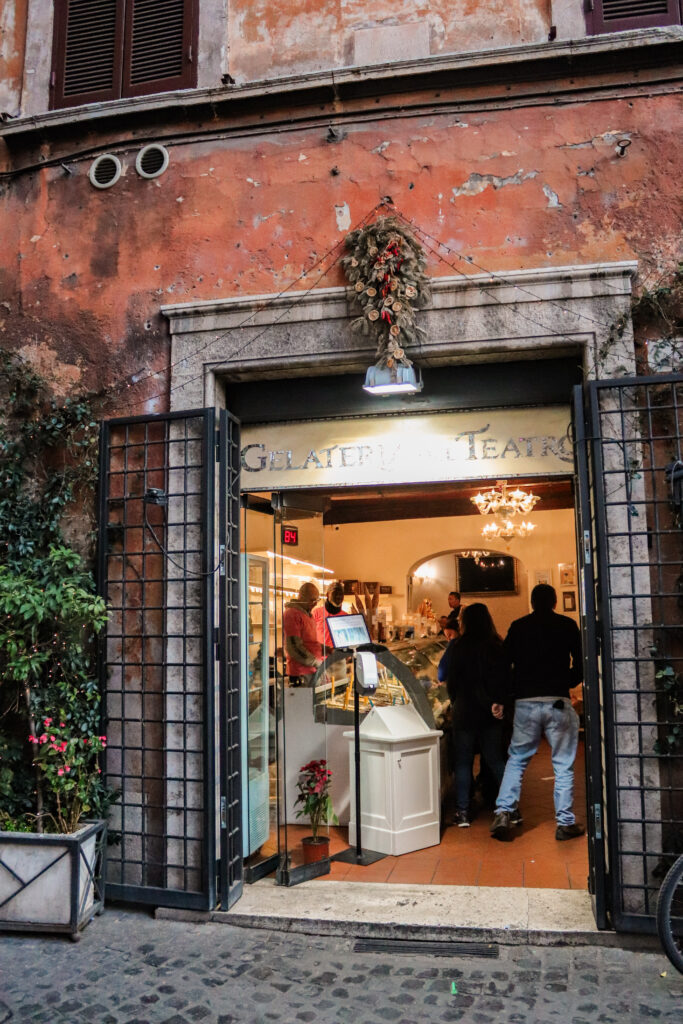
My favorite is the Ricotta + Fig or the White Chocolate + Basil. You have to get adventurous and try unique flavors when in Rome! At only about 4 euros a cone, you can afford to go back and try a variety of flavor combinations!

Gelato shops are a dime a dozen around the city, but a friend shared a tip on how to spot authentic gelato. The real stuff is kept flat in the metal tins.
If you look into a shop and see the gelato whipped high and fluffy, just keep walking. It’s like the Dairy Queen version whipped with additives.
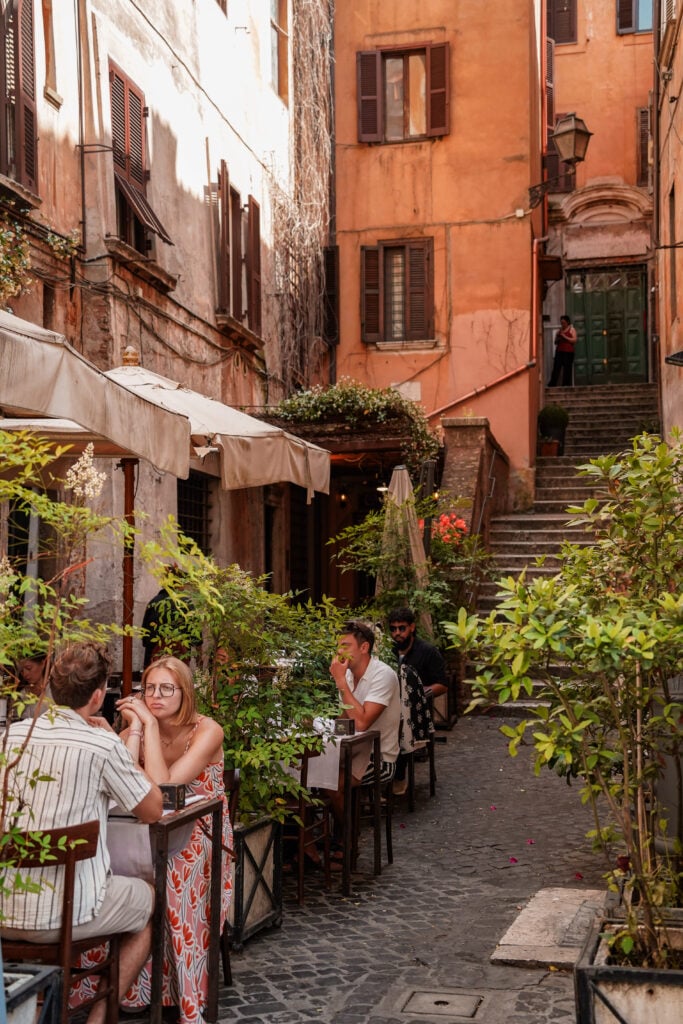
Around the corner from the gelato shop, you’ll find Cucina del Teatro. This cute outdoor cafe is tucked into an alleyway and captures the essence of Rome.
For more hidden gems and recommendations, see our guide 15 Bucket List Places to Visit in Rome.
8. Piazza Navona and Campo di Fiori
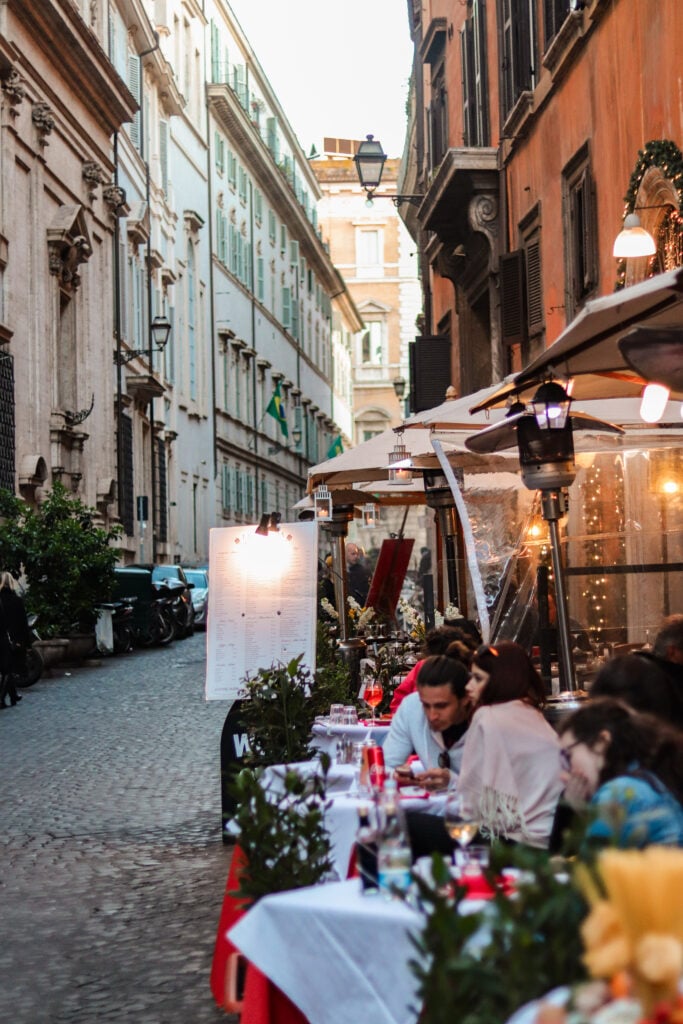
You’ll find many piazzas scattered throughout the city that are an irresistible mecca for tourists and locals alike. Two notable Piazzas near the Pantheon are Piazza Navona and Campo di Fiori.
They are both lined with shops, cafes, churches, and winding side streets.
In the center of Piazza Navona, you’ll find Bernini’s Fountain of Rivers. Campo di Fiori is home to the statue of the philosopher Giordano Bruno.
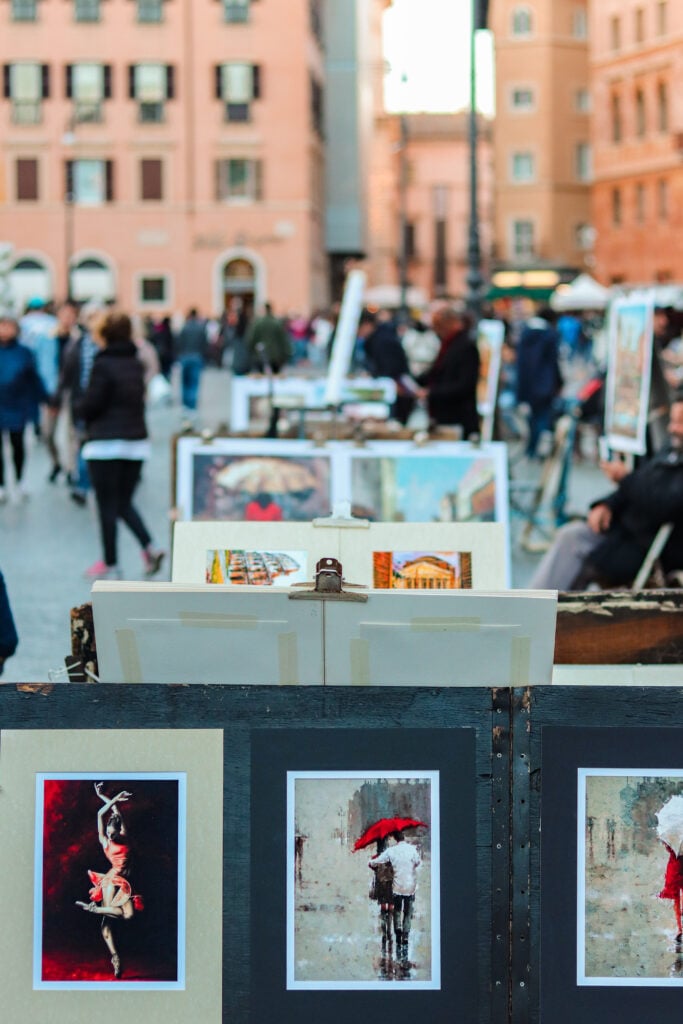
Music fills the air of both Piazzas as you stroll around shopping for trinkets and admiring the work of local artists. It is the perfect spot to spend a warm summer evening.
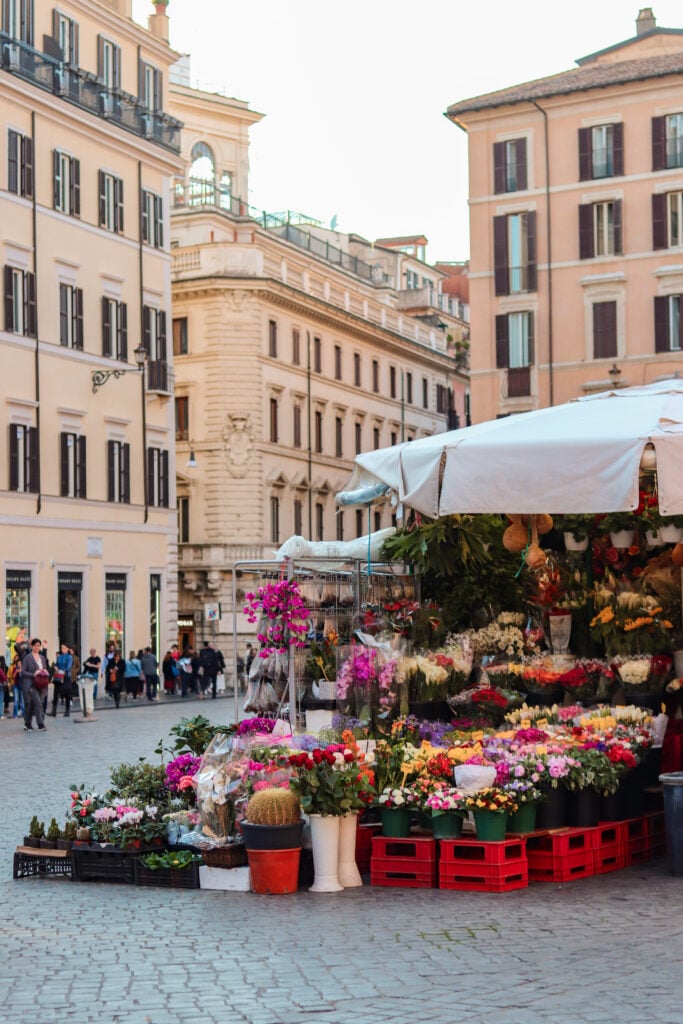
Campo di Fiori hosts a morning market selling fresh produce and goods from local artisans. It is reminiscent of a busy medieval marketplace.
If you’re looking for a place to eat near Piazza Navona, Pizzeria Baffetto was recommended as a delicious and inexpensive option.
9. Castel Sant’ Angelo and the Tiber River
The Castel Sant’ Angelo (Castle of the Holy Angel) is situated on the banks of the Tiber River. This building has had an interesting history over the years.
This imposing structure was originally constructed as a mausoleum for the emperor Hadrian and his family in 130 AD.
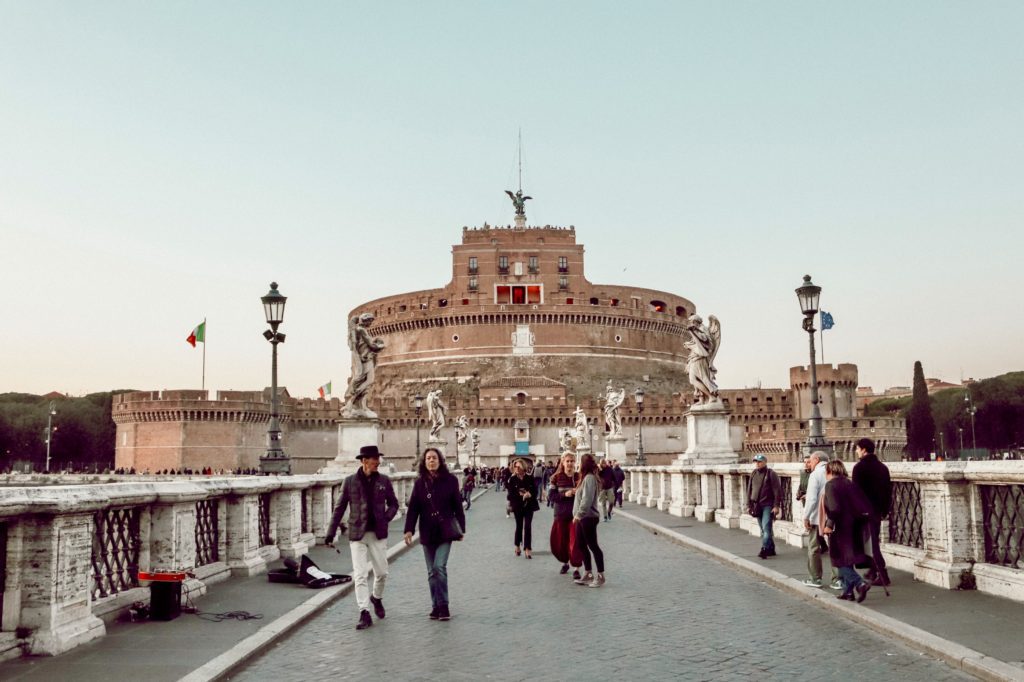
It was later incorporated into the city wall and became an impenetrable fortress defending the northern entrance of Rome during the Barbarian invasions.
In the 14th-century, a secret fortified passageway from the Vatican was constructed for the protection of the pope and papal community. A treasury room was also created to safeguard the pope’s valuables.
A more dark and sinister part of the mausoleum’s history is when it was used as a brutal prison where prisoners were tortured and even executed in the courtyard.
Today the Castel Sant’ Angelo serves as a museum, and can be reached by crossing a bridge over the Tiber River.
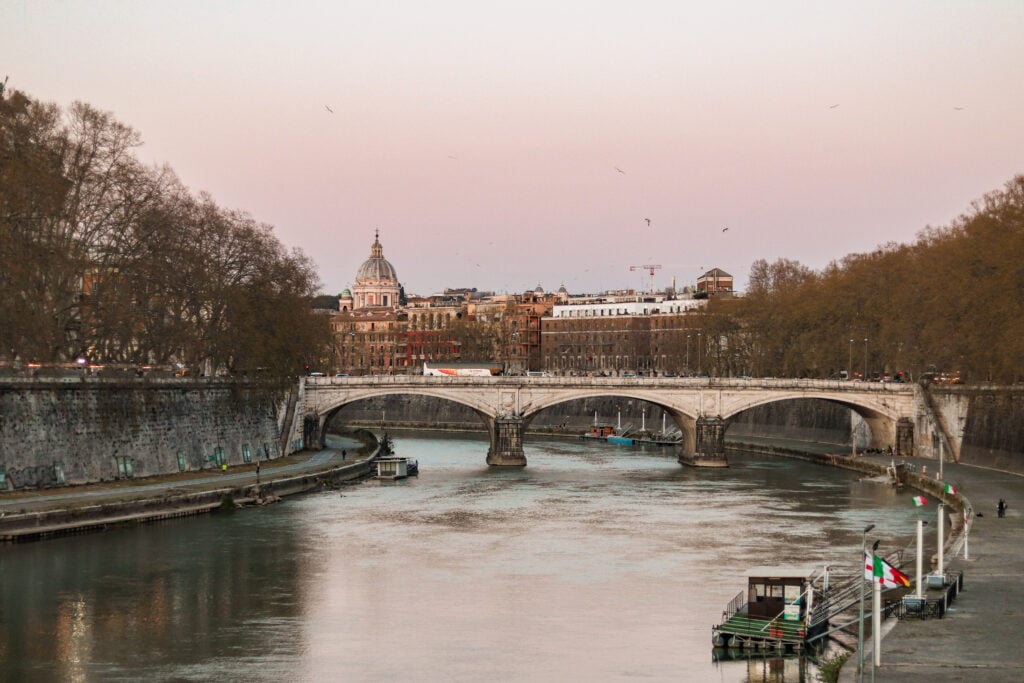
The Tiber River itself has long since been an important vein running through the heart of Rome. It served a vital role in the early trade and commerce of the city as ships brought goods up and down the river.
Legend also has it that the mythical founders of Rome, twins Romulus and Remus, were abandoned as infants on the banks of the Tiber River where they were rescued by the she-wolf, Lupa.
Today, you can enjoy a leisurely scenic stroll along the banks where you can find multiple bridge crossings leading to the Vatican City and Trastevere.
10. The Vatican City
You could easily spend a half day exploring the Vatican City, which is considered the world’s smallest country.
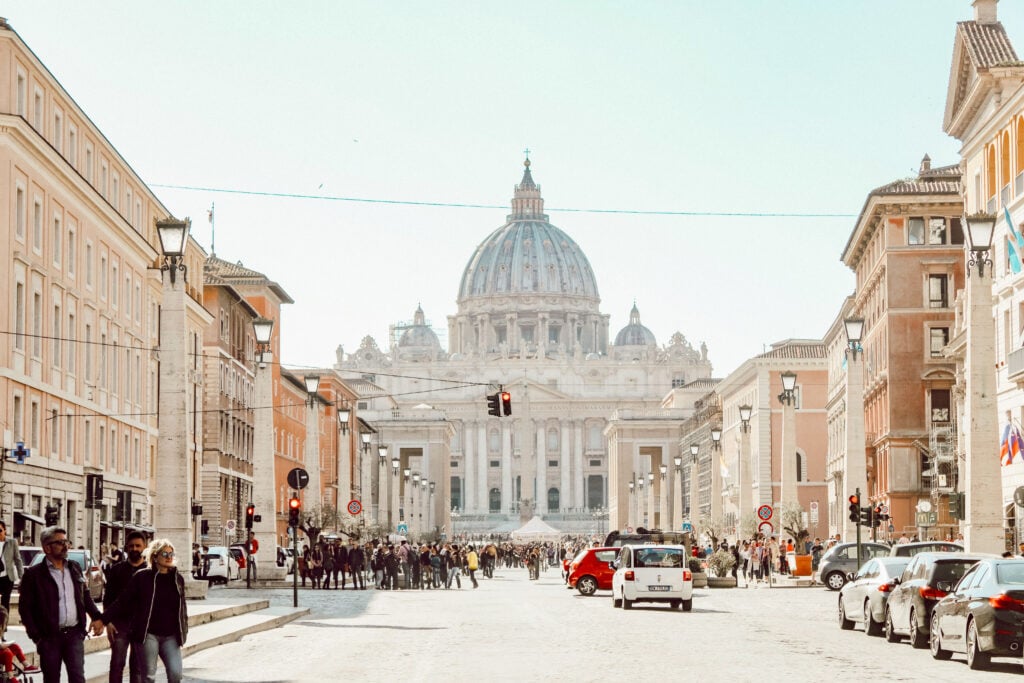
The Vatican City is home to St Peter’s Basilica, the Vatican Museum (where you can find Michelangelo’s Sistine Chapel), and the Vatican Gardens.
The Vatican Museum is a feast for the eyes and can be borderline sensory overload.
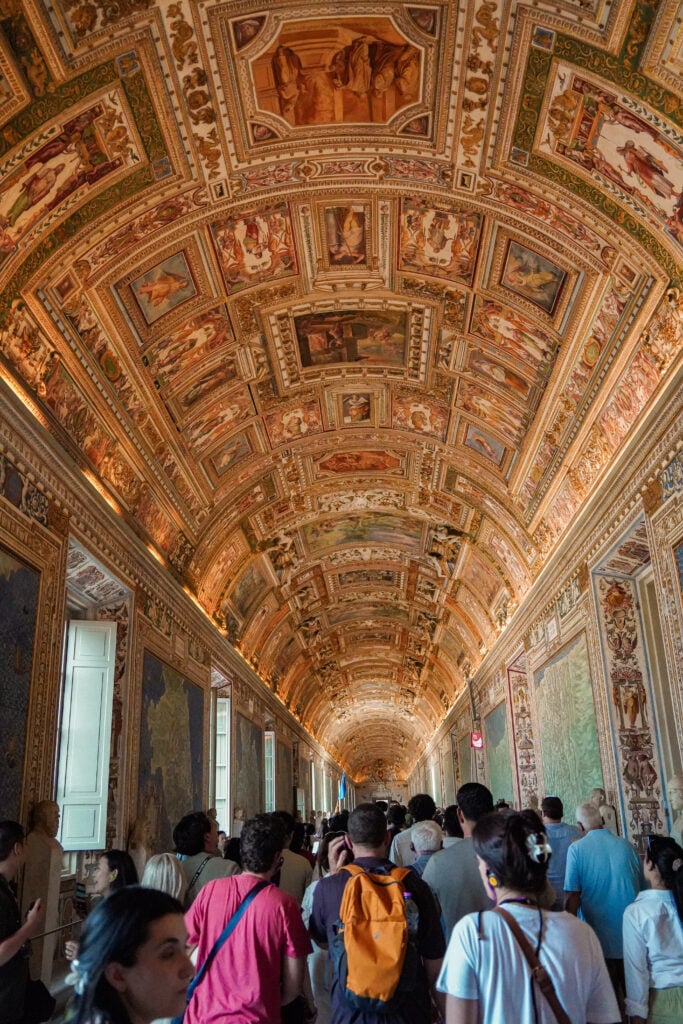
With over 20,000 of the most renowned sculptures and Renaissance masterpieces, it is one of the largest museums in the world and the 4th most visited.
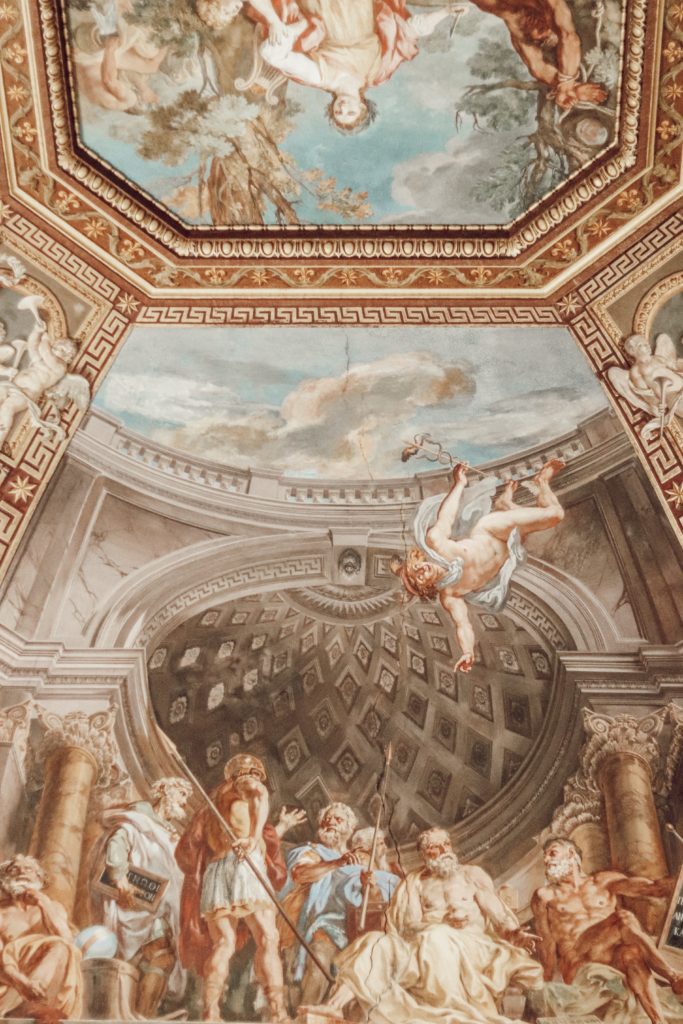
There is just so much to take in, each opulent room is in competition with the next.
Visitors are herded through a maze of seemingly endless hallways and rooms until finally reaching the crowning jewel, the Sistine Chapel.
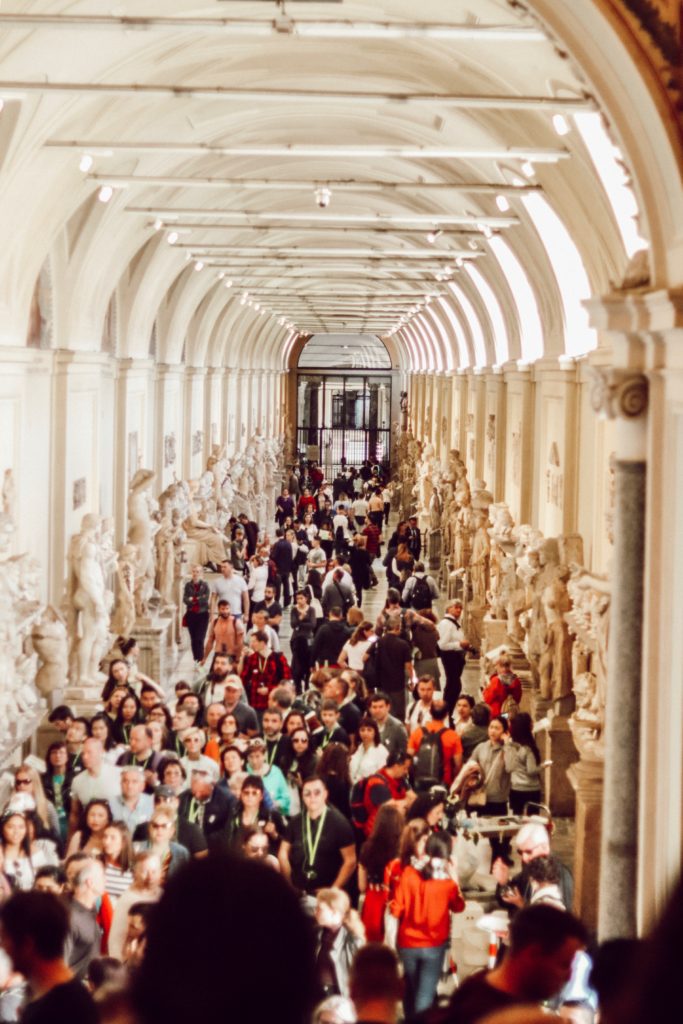
Although it is a bit claustrophobic at times, it is worth a visit. Experiencing one of Michelangelo’s greatest works of art in person is surreal.
No matter what time of year you visit, it is bound to be crowded so a skip the line ticket is highly recommended. You’ll need to purchase a separate ticket to visit the Vatican Gardens.
Near the entrance to the Vatican Museum, you’ll find an excellent sandwich shop called Deucentogradi, or 200 Gradi. This was a local referral from our Airbnb host so we knew it would be good. There is a wide selection and the ingredients are fresh. The bread is perfectly crusty and chewy, I am still craving it!
Continue around the city wall to enter Saint Peter’s Square.
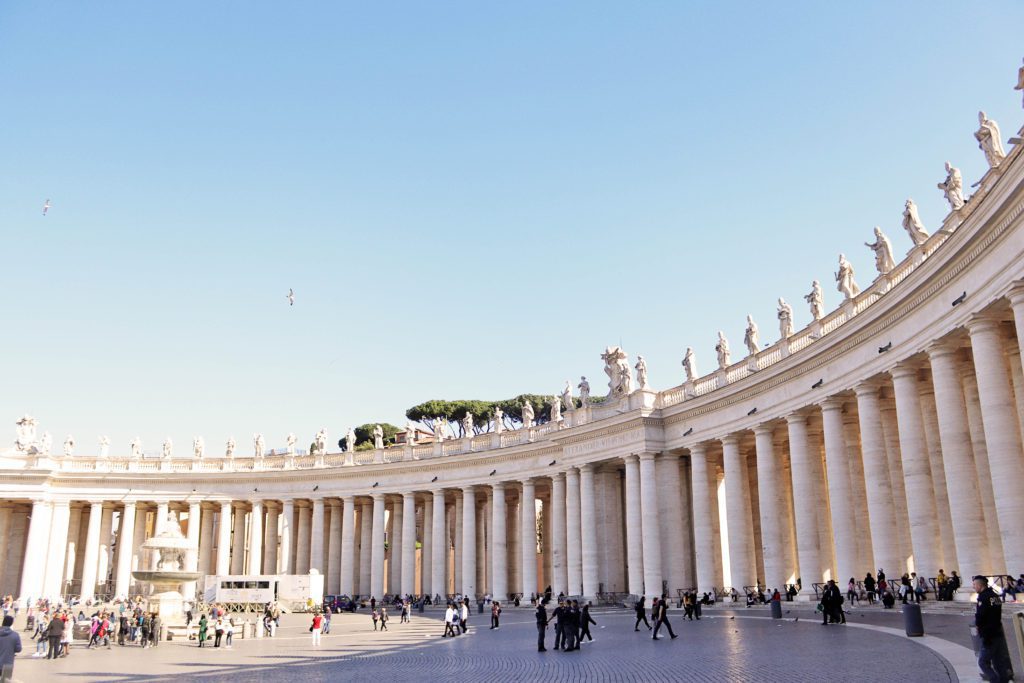
Here you’ll find St Peter’s Basilica, the largest Christian church in the world, and the final resting place of the apostle Peter.
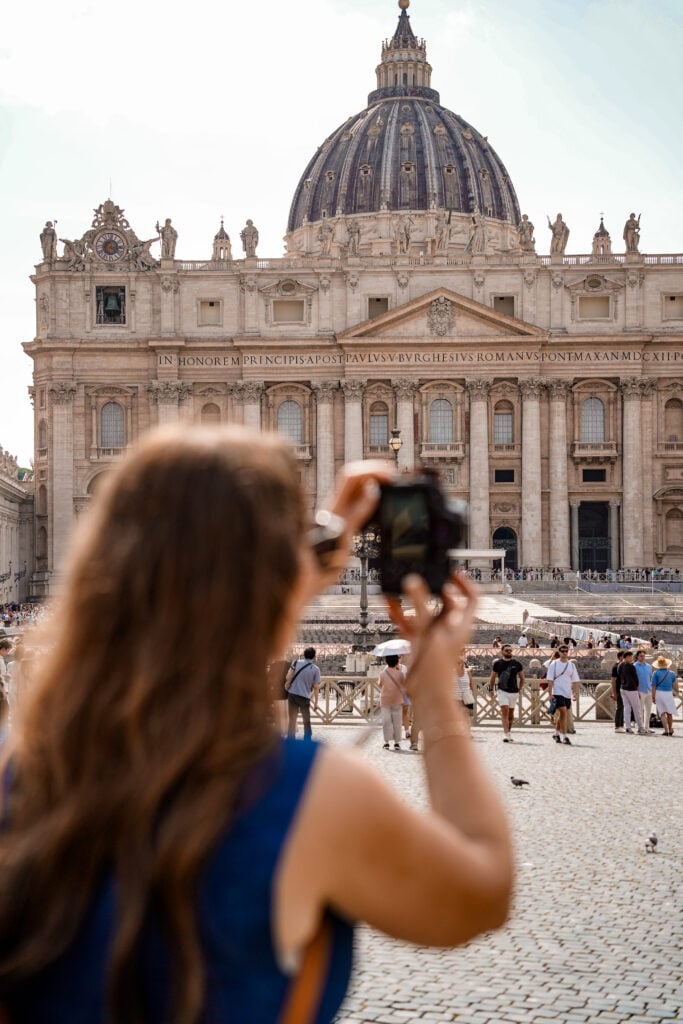
Entrance is free but there is often a long line to get through security. You can purchase skip the line tickets online, as well as tickets to climb to the top of the dome (“cupola”).
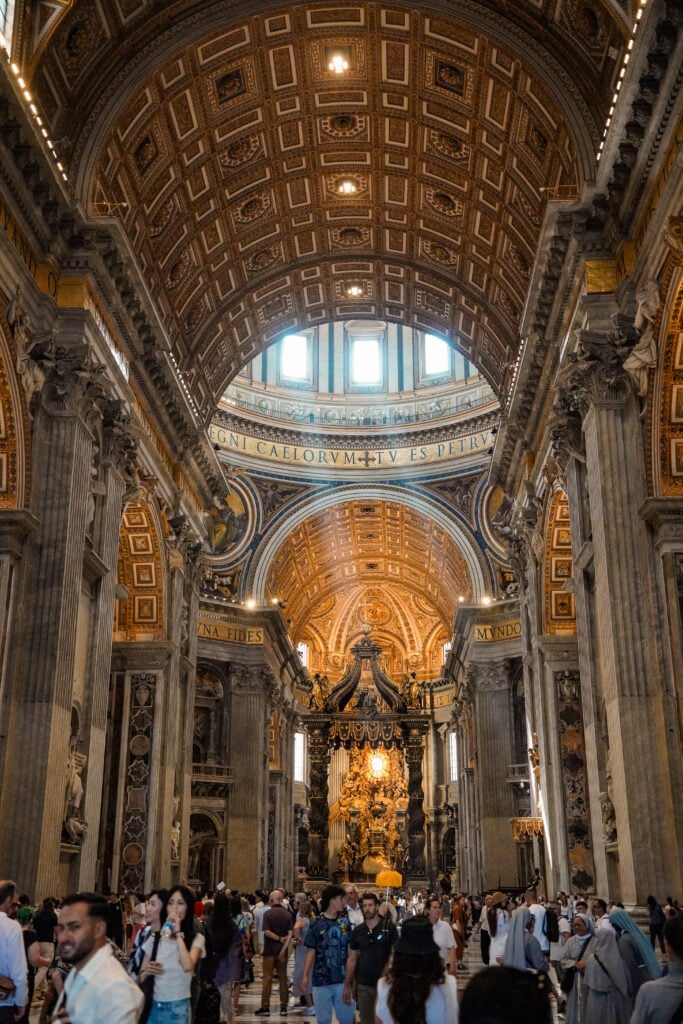
To access the dome, you can climb 320 steps or pay extra to take an elevator to the roof level. From there it is an additional 231 steps to the top of the dome.
The best time to visit is first thing in the morning when the crowds are smaller and the square takes on a more reverent and tranquil feel.
11. Trastevere
Trastevere has a reputation for being the most authentic neighborhood in Rome.
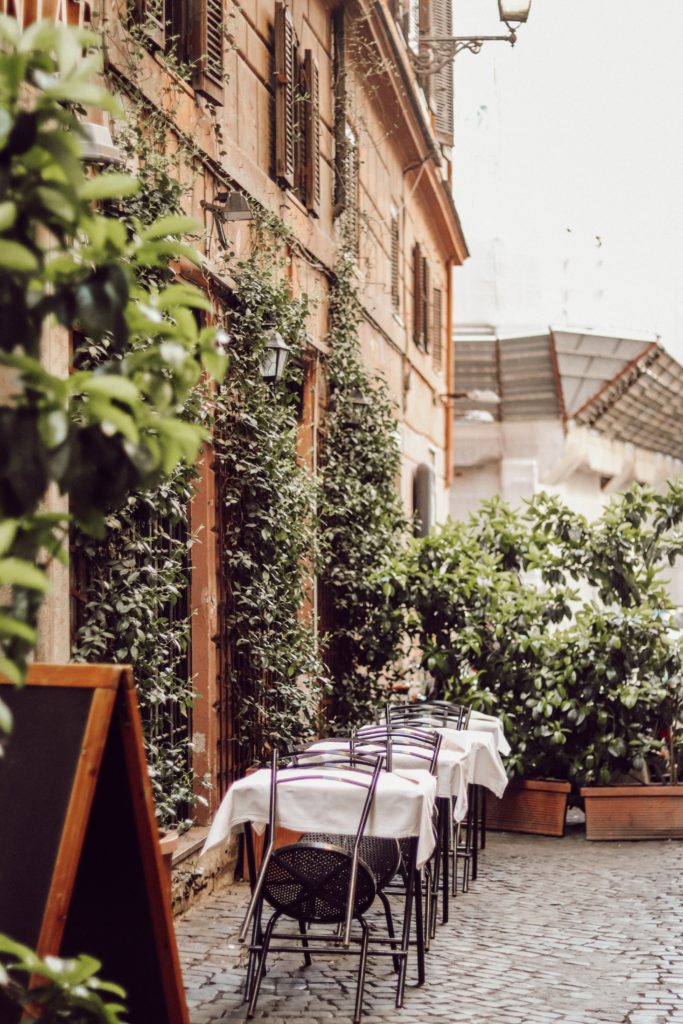
It’s the kind of place where you’ll find yourself getting willingly lost in the meandering streets.
Trastevere is full of personality, with laundry hanging on lines, vines growing up the side of weathered buildings, and loud laughter spilling out from bars. It is the perfect blend of subtle sophistication and a comfortable low-key vibe.
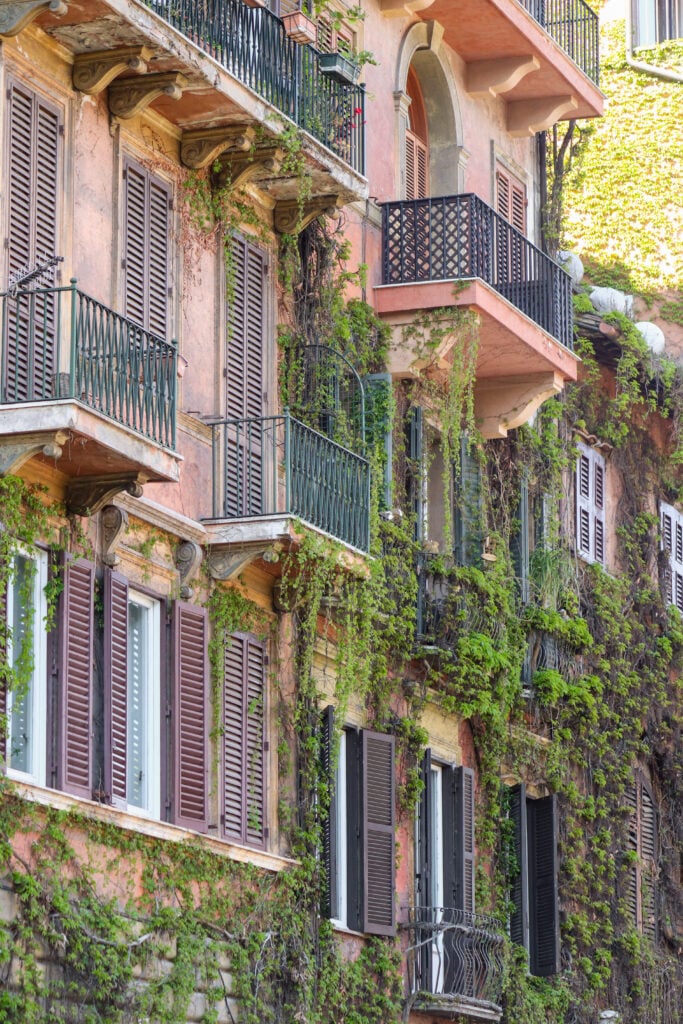
You’ll find plenty of spots to satisfy your craving for a home-cooked Italian meal.
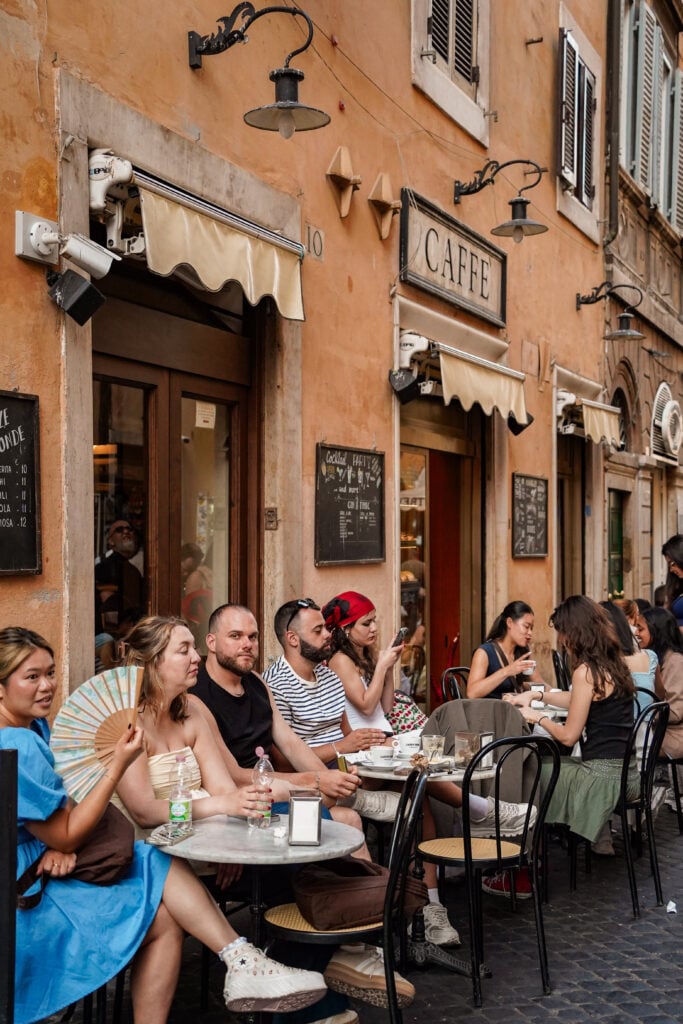
Dar Poeta was recommended to us by friends as well as our Airbnb host, and we ate here for our last meal in Rome. We enjoyed fire-baked pizza while tucked in an alley underneath a starry sky. It was perfection.
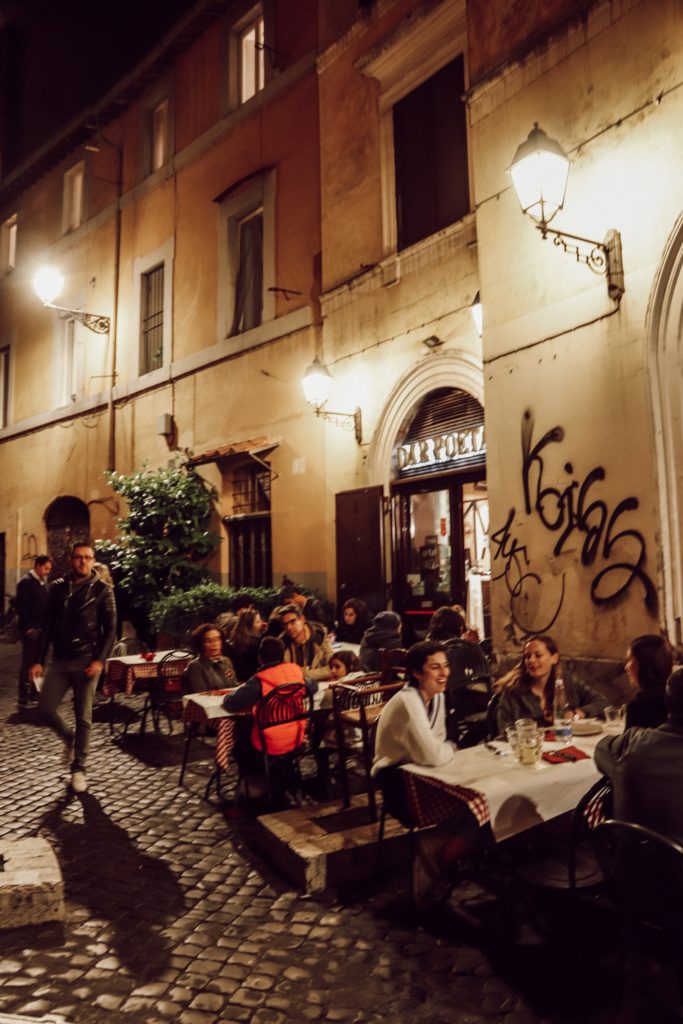
You have to order their Ricotta and Nutella calzone. We took ours to go and it made for the perfect midnight snack.
Impiccetta is also a favorite restaurant among locals in Trastevere.
My hope is that this guide will help you make the most of your time in Rome as you fall in love with the Eternal City!
Related Posts:
- How to Spend One Day in Florence
- 5 of the Best Places to Go on the Amalfi Coast
- The Best Things to Do in Venice
- 8 Things to See in Taormina, Sicily
- The Best Things to Do in Naples
- The Best Places to Explore, Stay, and Eat in Bellagio
Pin it for later:

Love your pictures. It’s a very detailed post. My kids haven’t been, but we have twice. It’s a great wrap up!
Lucky that you’ve been twice! We fell in love and are already figuring out how we can get back there! I would love to take our kids next time too!
First of all – your photos are STUNNING! I literally want to book a trip to Italy right now! Saving this for the future – walking tour sounds like the perfect way to explore in Rome!!
Thank you, Amanda! So glad it has inspired you to visit, hopefully you get a chance to go, you will love it!
I am so inspired to visit Rome after reading this post! So much great info and I seriously want to pin like every picture!!! Just beautiful! Thanks for sharing!
I’m so glad it has inspired you! I’m excited about your upcoming trip to Italy, you’re going to love it!
Oh my goodness those crowds!! Love this walking round up, so going to follow it the next time we’re in Rome!
Seriously! We planned our trip in March because we heard that was the offseason, if that is the case then I wouldn’t want to travel in the summer during peak season! It really was lovely though, and I’m so glad you found this helpful!
This is perfect! You’ve got me itching to go back to Rome.
Lucky that you’ve been before! I’m already itching to go back too!
My goodness these pictures are amazing! I’m definitely taking the kids some day!
Wow, incredible blog layout! How long have you been blogging for? you make blogging look easy. The overall look of your site is wonderful, as well as the content!