Alberobello is a fairytale village in Italy’s Puglia region. It has been on my bucket list since I first saw a photo of this adorable town years ago, so I was excited to finally experience it in person. I immediately fell in love with its photogenic architecture, winding streets, and hidden cobblestone alleys. It’s unlike anywhere else I’ve visited and definitely deserves a spot on your Italy itinerary.
Alberobello is about a 1-hour drive from Bari, so it’s easy to visit on a day trip if you are staying near Bari or if it’s your port stop on a cruise.
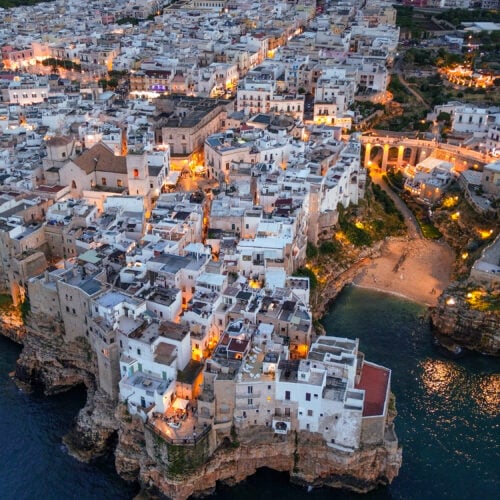
During our time in Puglia, we based ourselves in Polignano a Mare and took a day trip to Alberobello and Matera with Pugliamare. It was an inexpensive way to visit both amazing cities in one day.
If you are planning to visit Alberobello on a day trip, keep reading to discover the best things to see while you are there!
*Disclaimer: This post contains affiliate links. If you book a stay through the link provided, we will receive a small commission at no extra cost to you. We really appreciate your support!
The Best Things to See on a Day Trip to Alberobello
Rione Monti
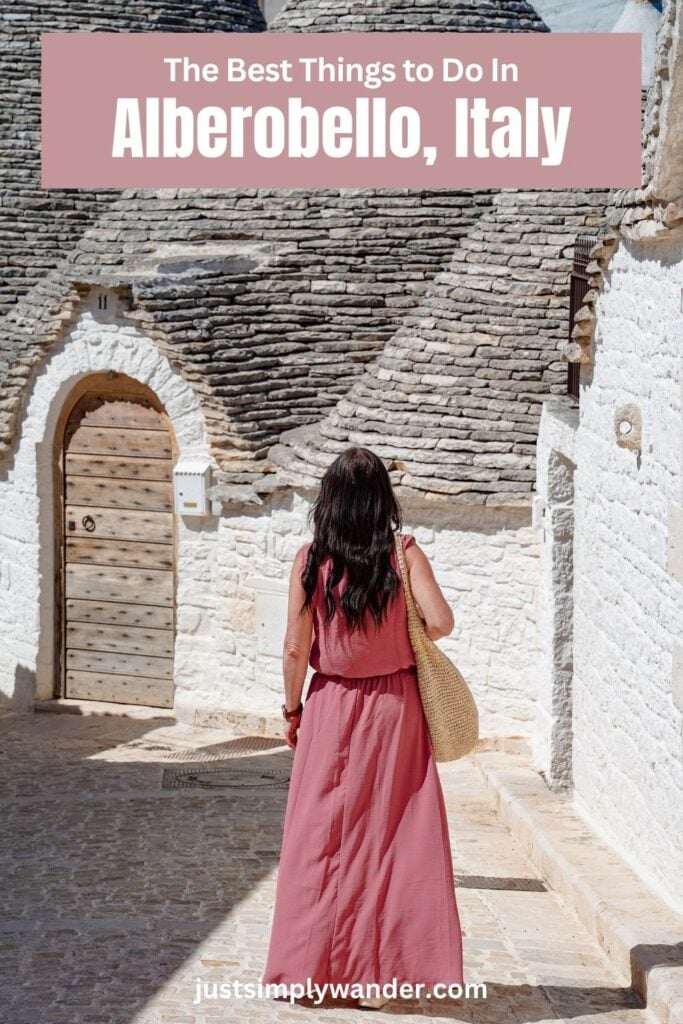
Alberobello is best known for its iconic whitewashed limestone huts with distinctive cone-shaped stone roofs, known as trulli.
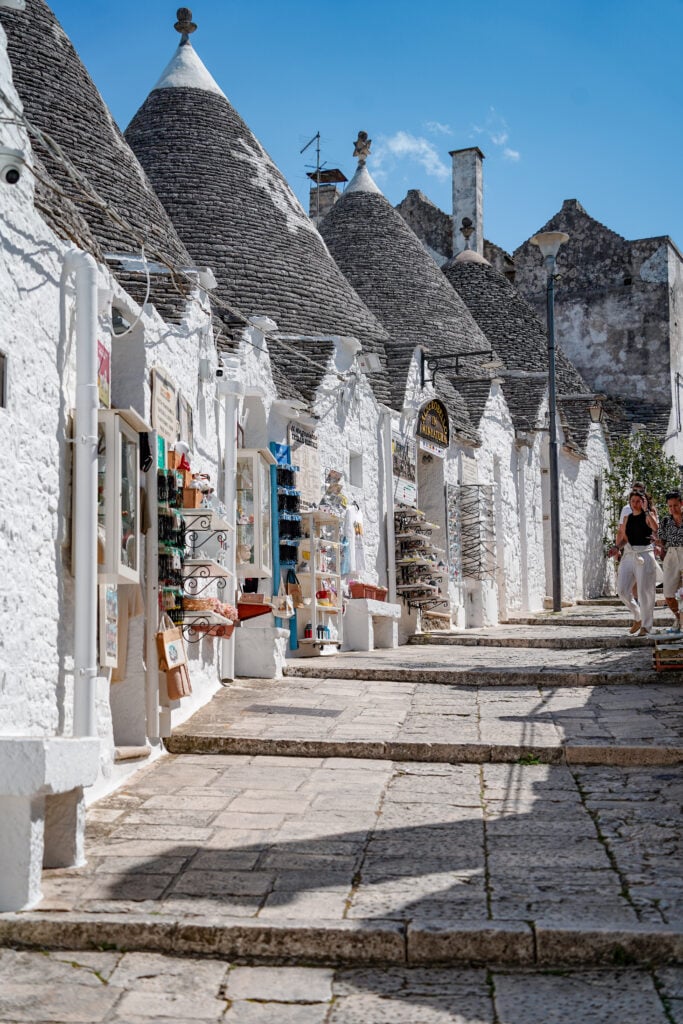
The traditional building technique used to construct these unique homes dates back to the 14th century. Under feudal rule, farmers and shepherds were required to build temporary homes using dry-stone construction, without mortar. This was done to evade property taxes that were placed on permanent settlements by the Kingdom of Naples. If a tax inspector were to come, the structures could be easily disassembled by removing the keystone.
Around 1,500 traditional trulli fill the town’s historic districts, earning Alberobello a designation as a UNESCO World Heritage Site.
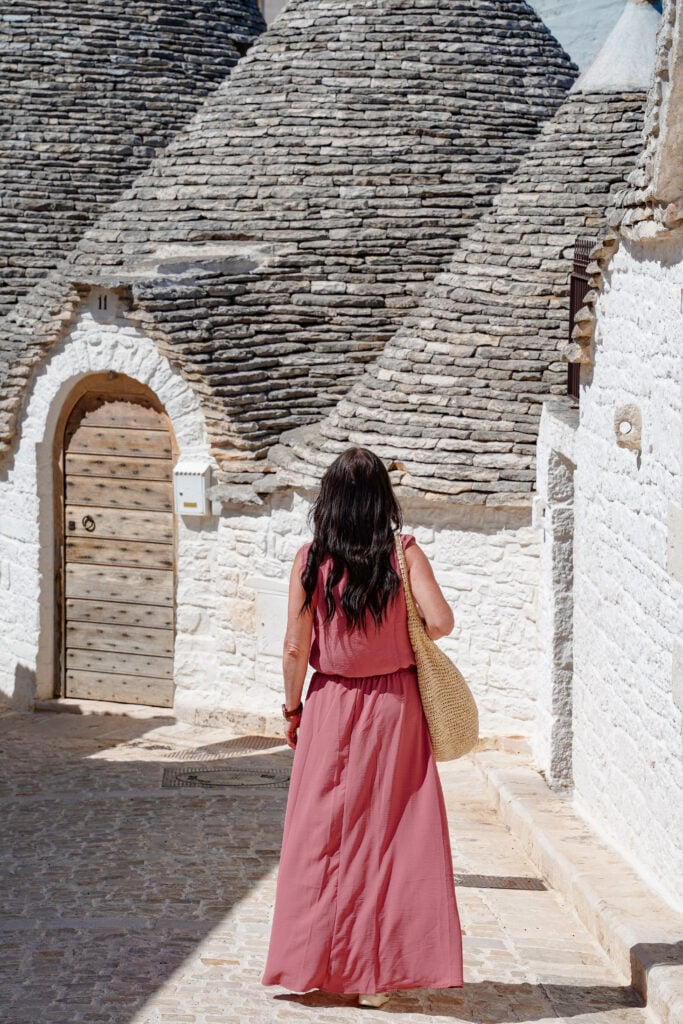
It’s fascinating to think that these charming homes, which now attract visitors from around the world, were once the humble dwellings for peasant families and were viewed as a symbol of poverty.
Alberobello’s historic center is divided into two districts, Rione Monti and Rione Aia Piccola.
Rione Monti is located on the southern side of town and is the more popular and touristy of the two districts. It is home to the largest concentration of trulli, with more than 1,000 of these distinctive homes packed into its maze of narrow streets.
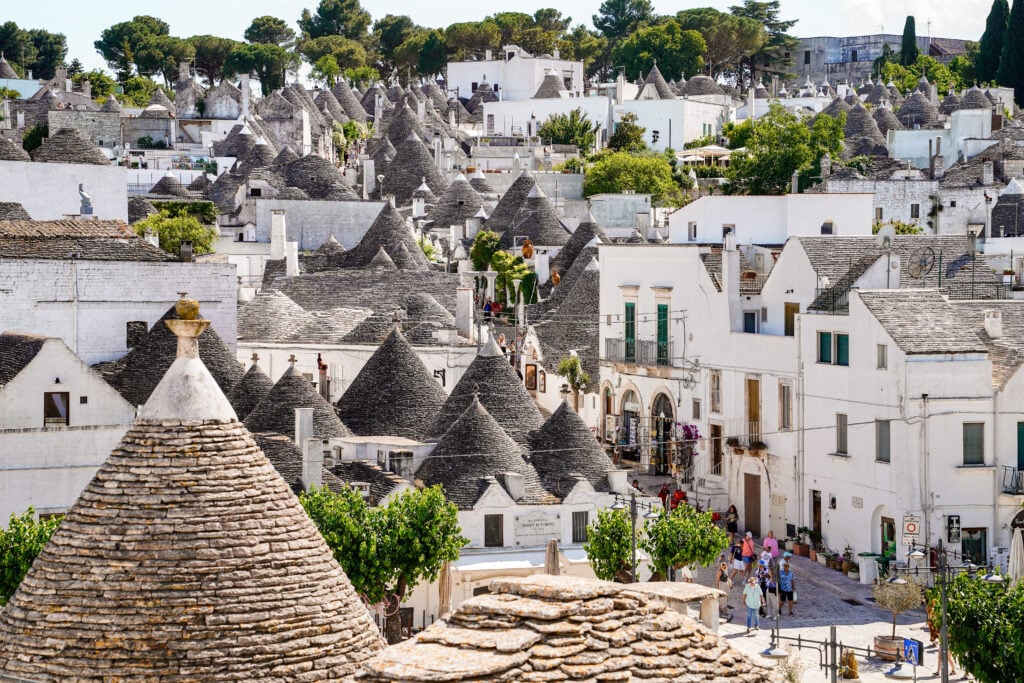
We loved just wandering through the streets and taking photos around almost every corner.
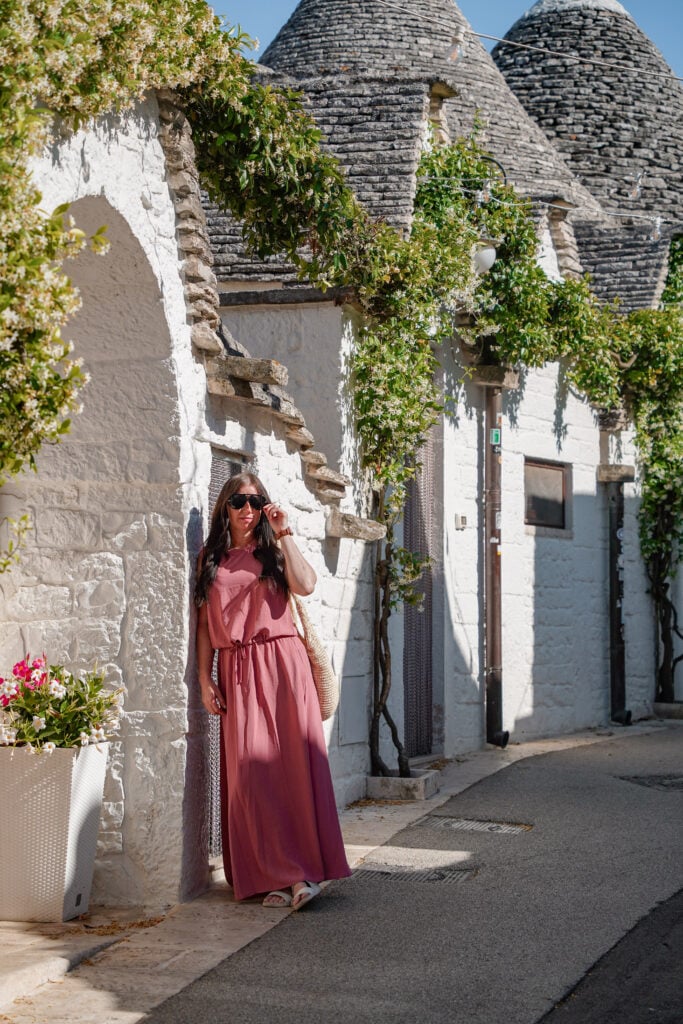
Via Monte S. Michelle
Via Monte S. Michelle is the most iconic and most photographed street in Alberobello.
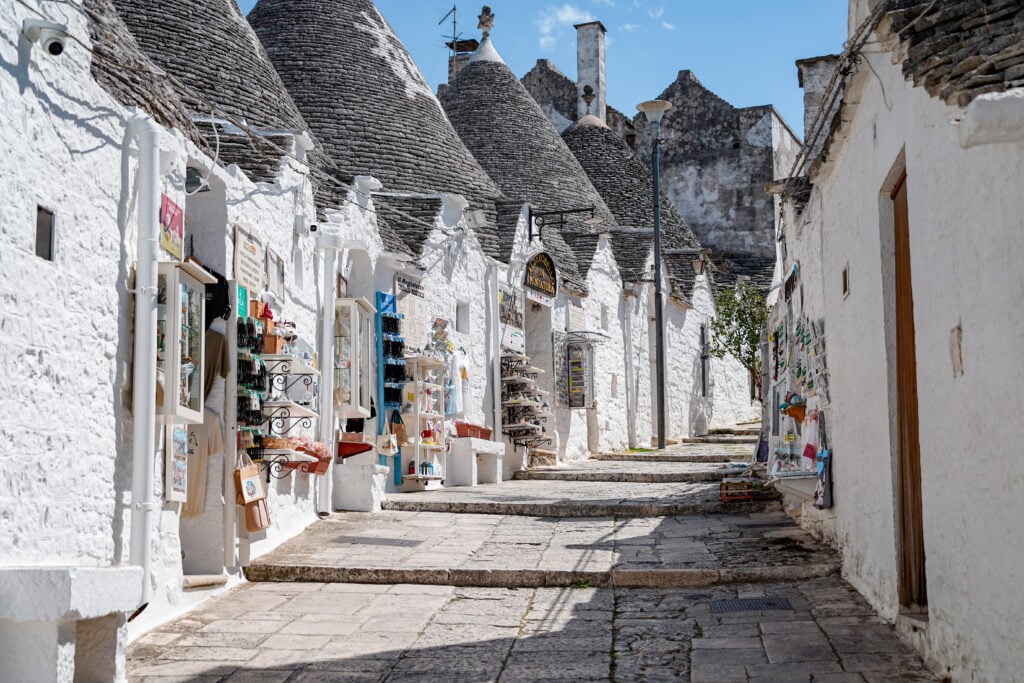
This charming cobblestone lane winds through the heart of Rione Monti and is lined with traditional trulli homes decorated with colorful flower boxes, whimsical decor, and charming storefronts. It’s one of the best places in town to soak up Alberobello’s fairytale atmosphere.
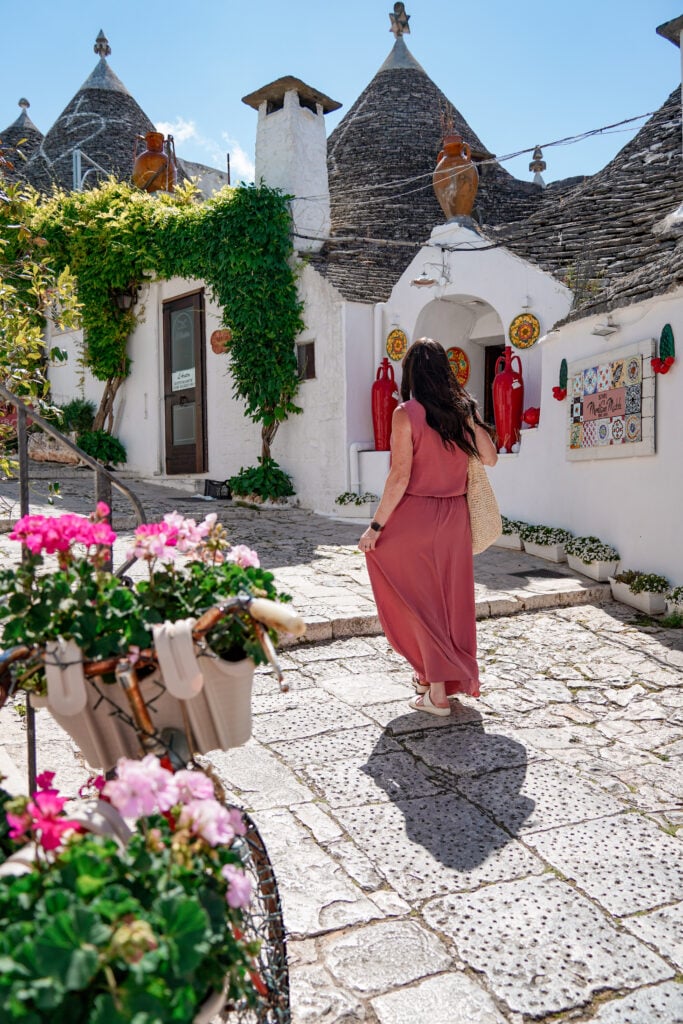
You’ll find several shops, cafes, and restaurants lining the street.
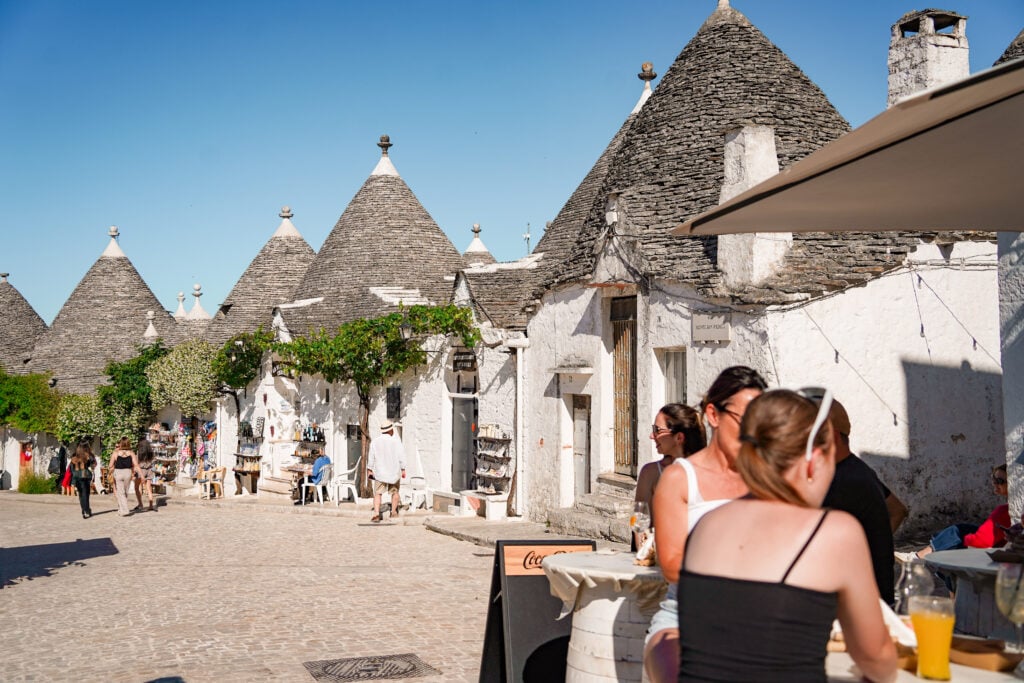
Ristorante L’Aratro is a popular restaurant that specializes in seafood and traditional homemade pasta. The only downside is that it is a little pricey, and the space is small, so you’ll want to make reservations in advance.
Personally, I’d recommend Ristorante Pizzeria Il Pinnacolo instead. It is located just a few streets away, tends to feel less touristy, is more reasonably priced, and the homemade pasta is absolutely divine!
If you’re craving something sweet, Martinucci Laboratory has been serving handmade cakes, pastries, and desserts since 1950. It’s reasonably priced and is a great place to grab a sweet treat after lunch.
I also recommend stopping at Il Trulletto Cafe. This cozy coffee shop is housed in a trullo and is known for its famous chili coffee and patio views.
Notable Trulli Houses in Rione Monte
Trullo Pia Piccolo
Trullo Pia Piccolo sits on the corner of Via Duca D’Aosta and Via Monte S. Michelei, and is considered the smallest trullo in Alberobello.
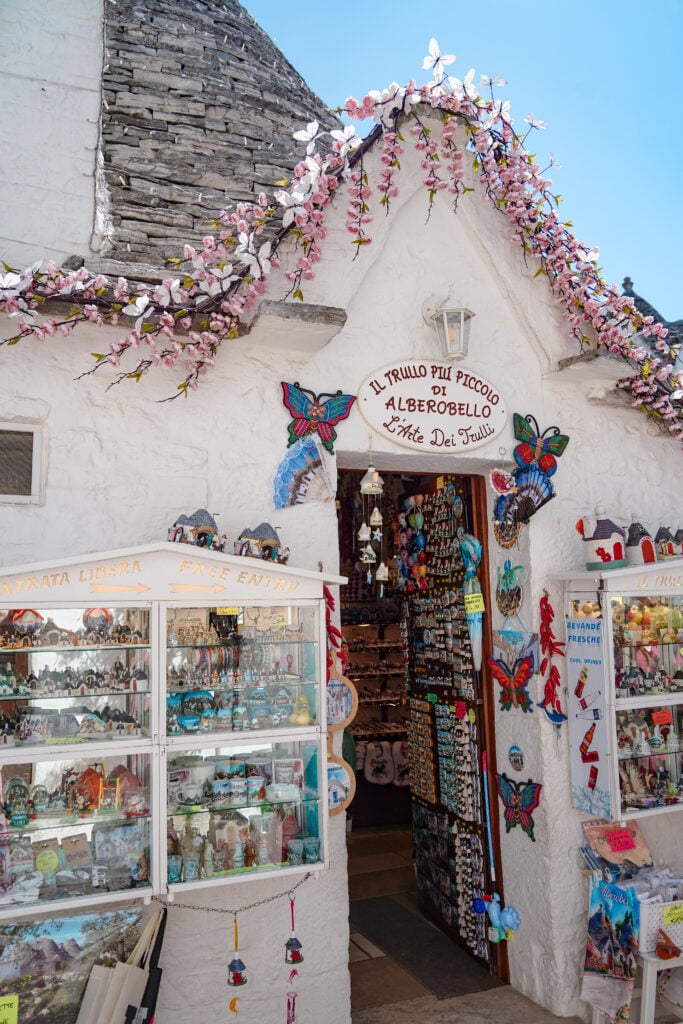
When we visited, the shop owners told us that the tiny trullo was originally home to a local family of seven. It’s hard to imagine so many people living together under such a small roof! You can still see the ladder leading up to the attic where the family slept.
The trullo remained inhabited until 1957 and has since been transformed into a popular souvenir shop. It’s fun to step inside and try to imagine what it would be like to live in a traditional trullo.
Trullo Sovrano
Trullo Sovrano is another notable trullo that is worth visiting. It was built in 1797 for the wealthy family of a local priest and is the only 2-story trullo in Alberobello.
It has since been transformed into a heritage museum where you can learn the history of the area and get a glimpse into what life was like inside a traditional trullo.
Casa d’Amore
Another trullo of interest is Casa d’Amore. While the traditional trulli homes were built using the dry-stone method, Casa d’Amore was the first house in Alberobello to be built using mortar and terracotta.
This wasn’t just a change in building technique, it actually symbolized the end of the town’s feudal restrictions and marked an important turning point in Alberobello’s history.
Casa Pezzolla
Casa Pezzolla is a collection of 15 interconnected trulli homes, including the former home of local physician Giacomo Pezzolla, that now serve as a small museum.
It’s worth stopping by to learn more about Alberobello’s history, the traditional construction of trulli, and the everyday lives of the peasant families who once called these unique homes their own.
Church of Saint Antony
The Church of Saint Antony was built in 1927 and is believed to be the only church in the world constructed in the distinctive trulli style.
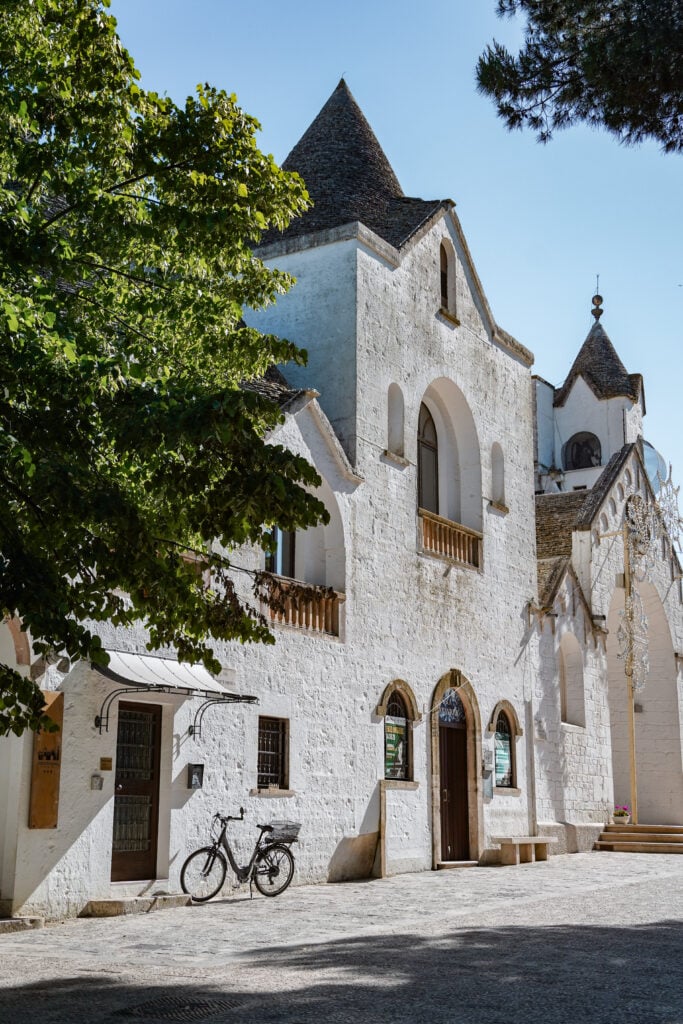
At the time, wealthier residents were moving north and building larger, more modern homes, while the southern district, made up almost entirely of trulli, was considered the poorer part of town.
The local parish wanted to create a place of worship where residents of the southern district would feel comfortable and at home. So, rather than building a traditional church, they designed the Church of Saint Antony to resemble the trulli homes where many of the local residents lived.
The church is small and simple inside, but it’s worth stepping in for a quick look if its open during your visit.
Rione Aia Piccola
Rione Aia Piccola is the second district in Alberobello. It sits on the north side of town and is the older of the two districts. It offers a much quieter, more authentic experience than the bustling Rione Monti.
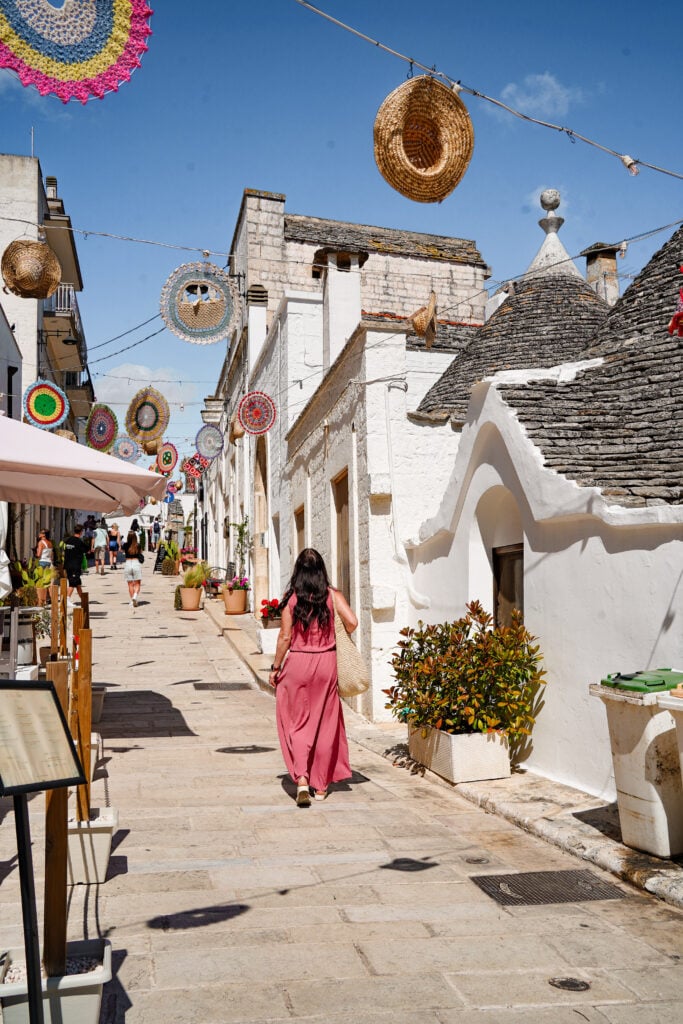
This neighborhood is home to just over 400 trulli, compared to around 1,000 in Rione Monti. While many of the trulli in Rione Monti have been converted into restaurants, cafes, bakeries, and souvenir shops, the trulli in Rione Aia Piccola are still primarily used as residential homes. In fact, commercial businesses are prohibited within the district, resulting in quieter streets and fewer tourists.
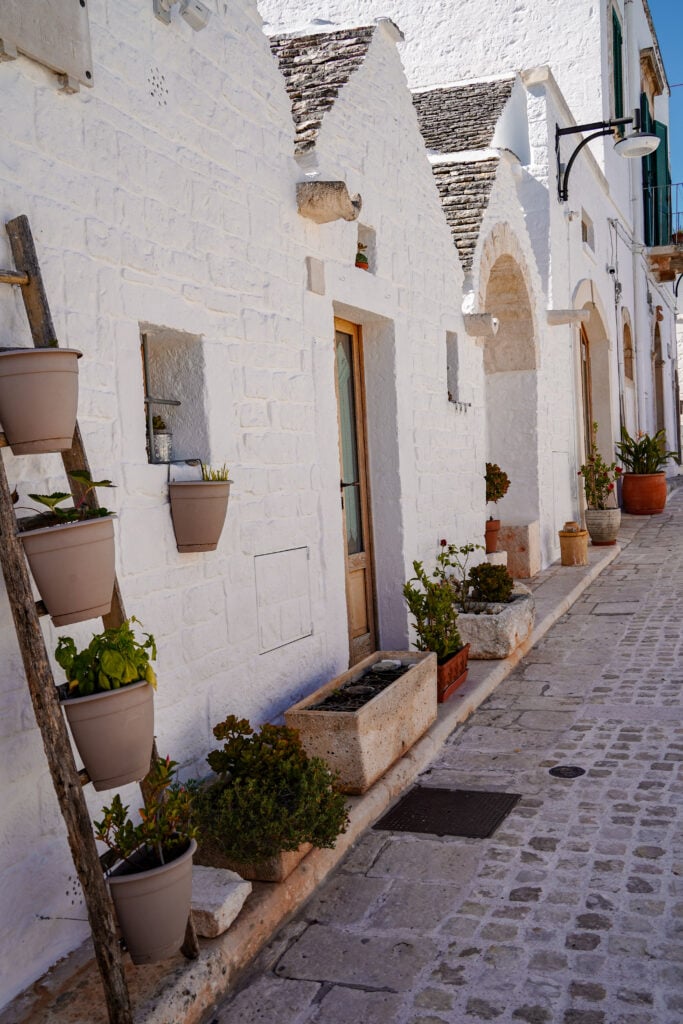
We loved exploring these streets and getting a true feel for how the locals live.
If you have time to spend more than a day here, you can even experience the magic of Alberobello firsthand by staying overnight in a traditional trullo.
A few that have caught my eye include this trullo in Rione Aia Piccola and this trullo in Rione Aia Piccola. And if you don’t mind staying just outside the historic district, this beautiful trullo vacation rental even has its own private pool!
Via Duca Degli Abruzzi
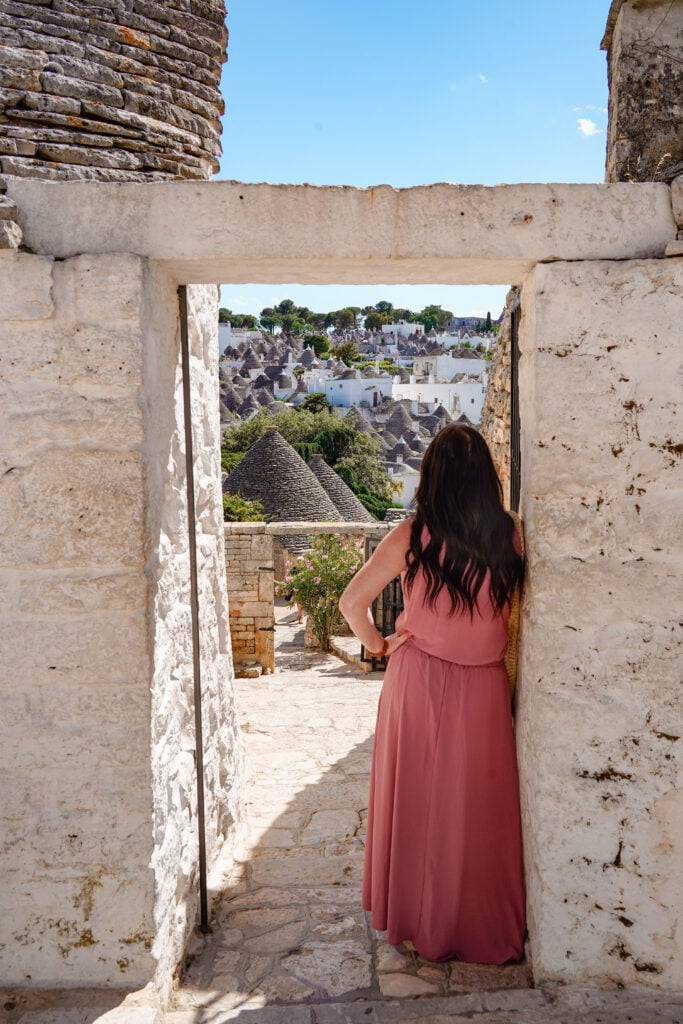
My favorite photo spot in all of Alberobello is a hidden gate along Via Duca Degli Abruzzi in the Rione Aia Piccola district. With its rustic stone entrance and trulli-lined backdrop, it feels like a secret gate to a fairytale village!
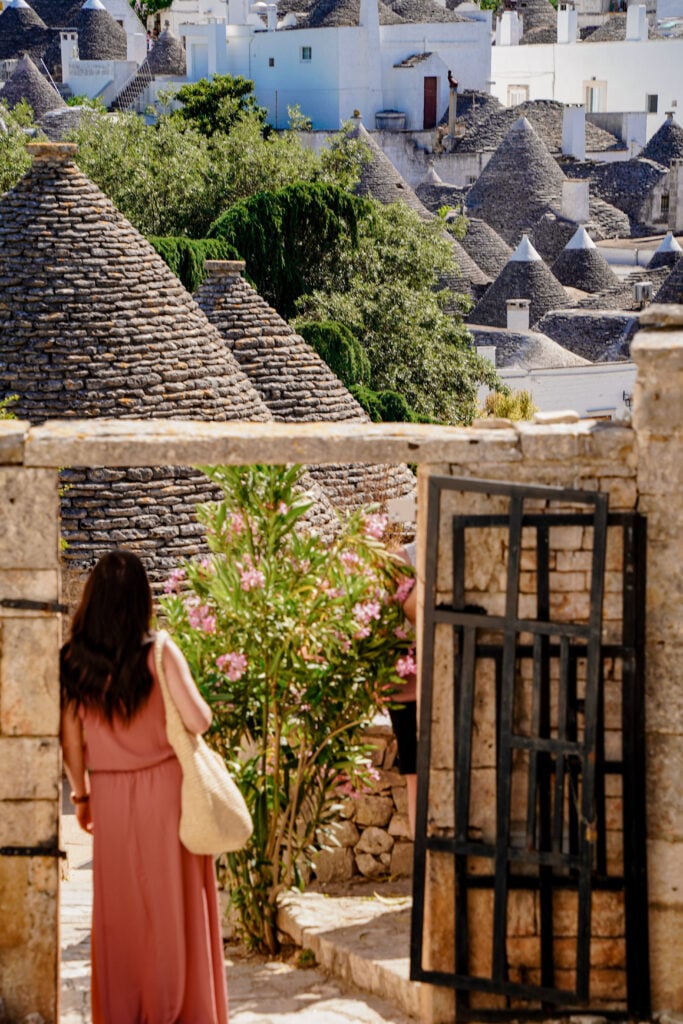
The gate is located next to this popular vacation rental and offers a beautiful vantage point overlooking the sea of trulli homes clustered throughout the Rione Monti district.
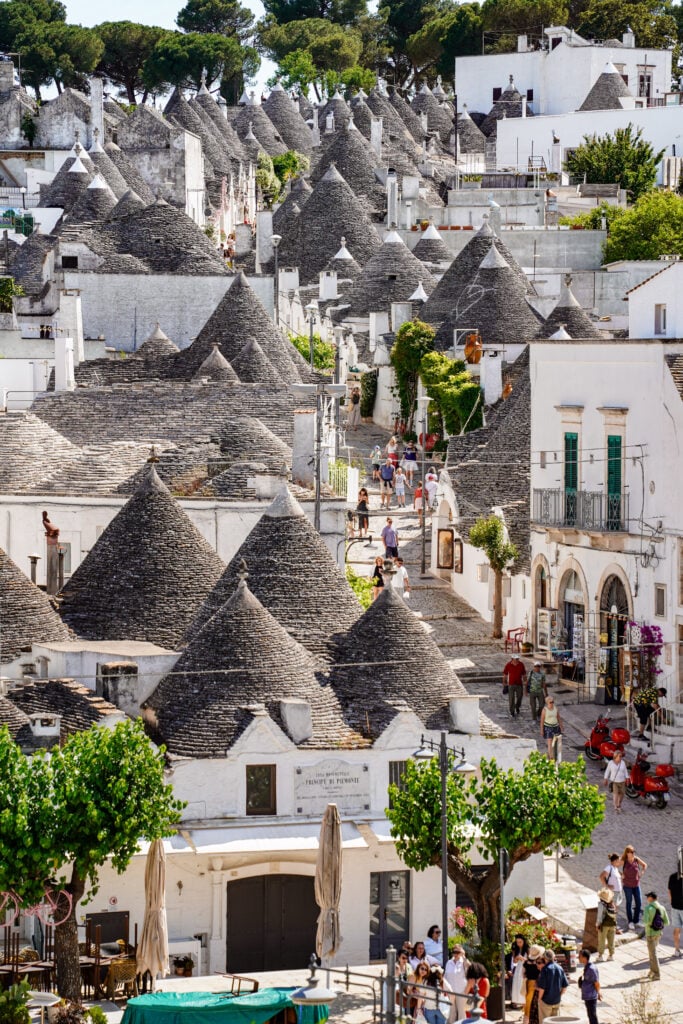
It’s a little off the main tourist path, making it a great spot to capture a photo without the crowds.
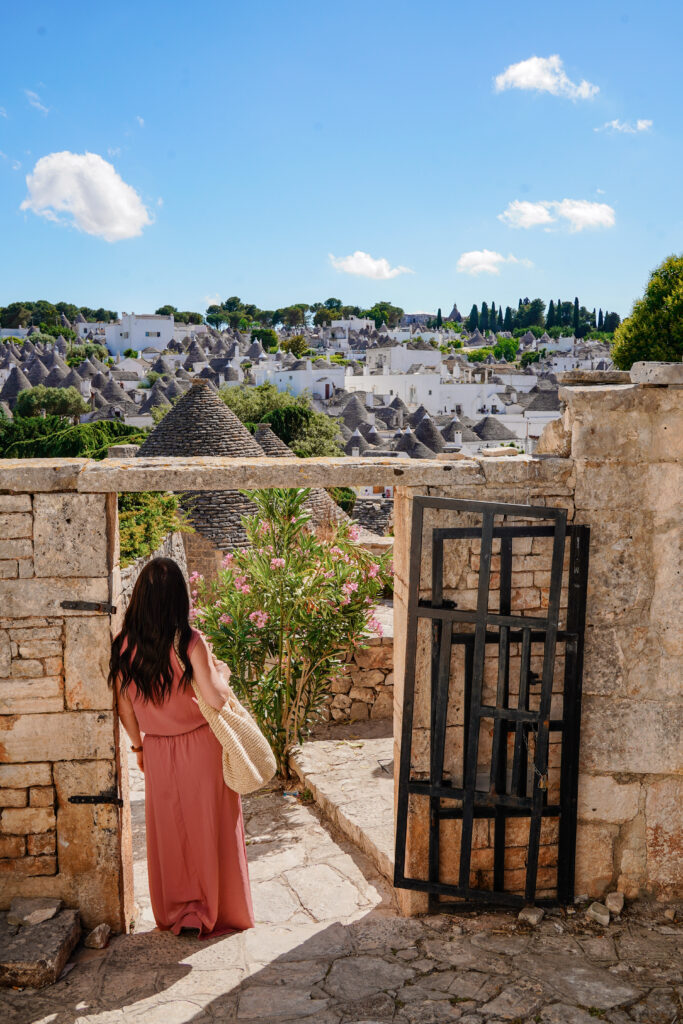
If you follow the path down, it will take you to Villa Communale Franco Maria Luberto, a pretty little city park with views overlooking Rione Monti.
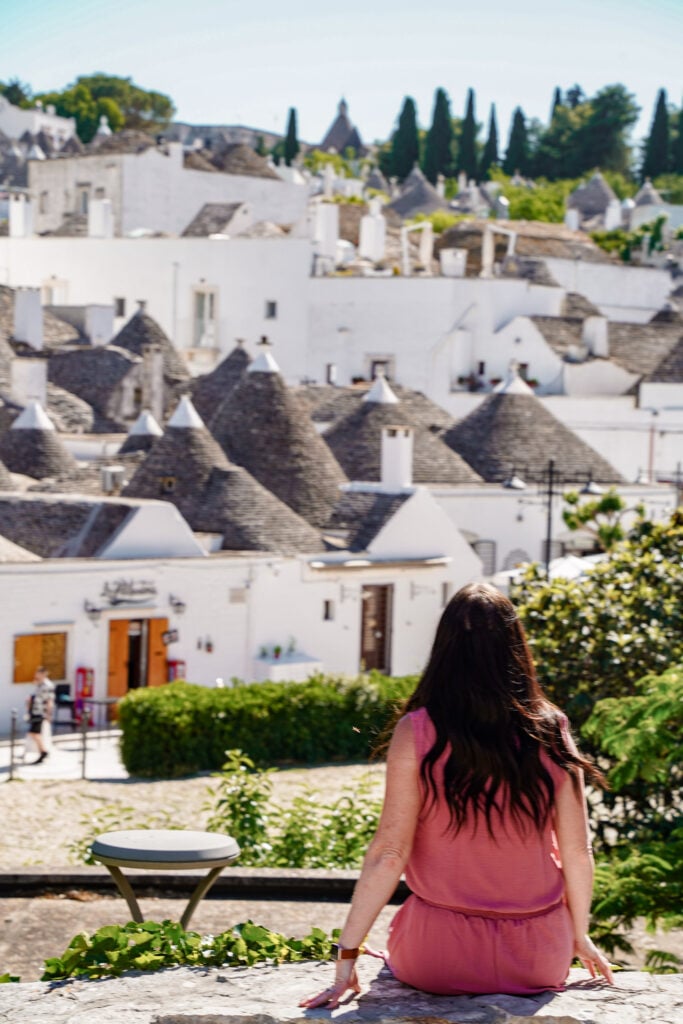
Another popular viewpoint is Belvedere Santa Lucia. To reach it, climb the Scalinata dell’Amore, or “Stairs of Love,” toward Chiesa di Santa Lucia. The viewpoint is located right next to the church and offers a sweeping view over Alberobello’s iconic trulli rooftops.
Largo Martellota
The two historic districts of Alberobello are separated by Largo Martellotta, a bustling public square lined with cafes, bakeries, and shops.
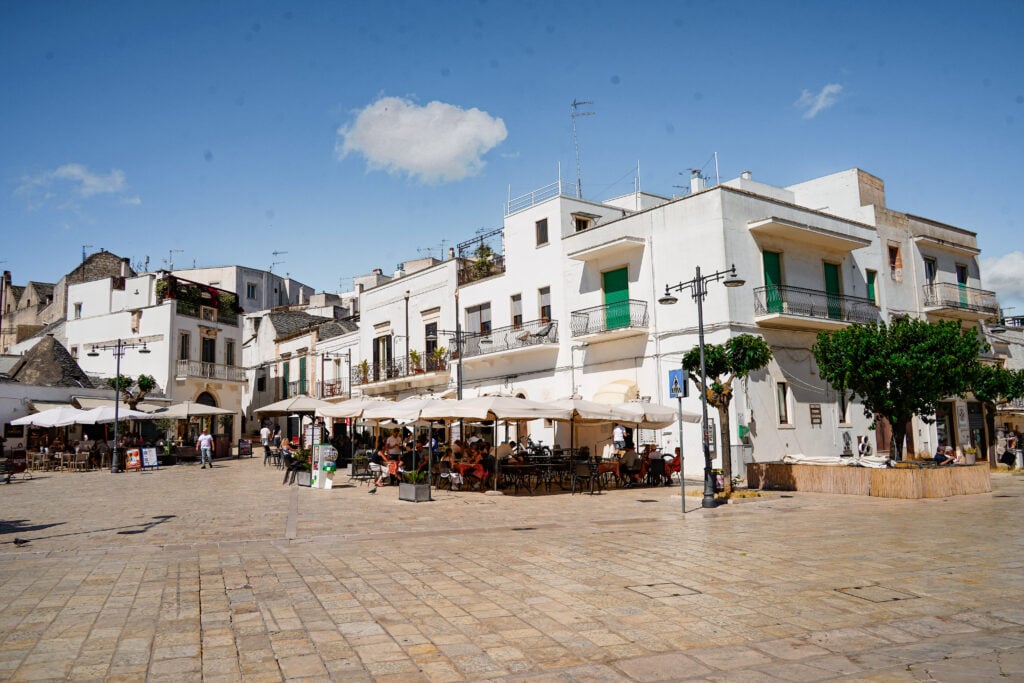
It has a distinctly unique feel, with modern buildings standing in contrast to the surrounding historic trulli homes.
This is a great place to take a break and grab a bite to eat. A few recommended restaurants include La Lira Focaccieria for pizza, 100METRICUBI for pasta, Gelateria Arte Fredda for gelato, and Pane e Mozza for pastries and sandwiches.
If you visit on a Thursday morning, Largo Martellotta is filled with market stalls selling goods, and the nearby Via Barsento hosts a farmers market selling local produce.
Final Thoughts
I hope this guide helps you make the most of your day in the beautiful town of Alberobello!
The historic districts are relatively compact, and we felt like we were able to see all of the main sights in a single day. That said, I would love to return someday, spend the night in a traditional trullo, and slow down enough to wander the streets without an itinerary, discovering all of the little hidden gems along the way.
If you are planning a trip to Puglia, be sure to add Polignano a Mare and Matera to your itinerary as well. We visited both during our time in the region and loved exploring each one. Click the links for our full travel guides to help you plan your trip!
A few more posts you might like:
- A First Time Guide to Rome
- The Best Things to Do in Naples
- 5 of the Best Places to Go on the Amalfi Coast
*CLICK THE BUTTON TO DOWNLOAD AND PRINT THIS GUIDE
Pin it for later:

Leave a Reply