Rome is one of the most incredible cities in the world. You could easily spend months, and even years, exploring the city and still not see it all. However, after visiting Rome several times, here are 15 spots I think everyone needs to visit at least once!
*Disclosure: This post contains affiliate links. If you make a purchase through the link provided, we will receive a small commission at no extra cost to you. We really appreciate your support!
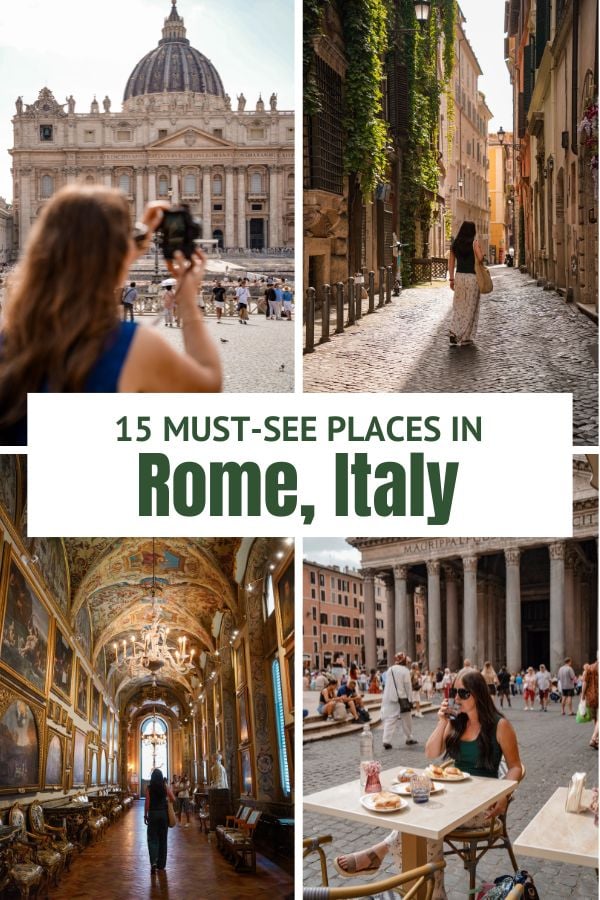
15 Bucket List Places to Visit in Rome, Italy
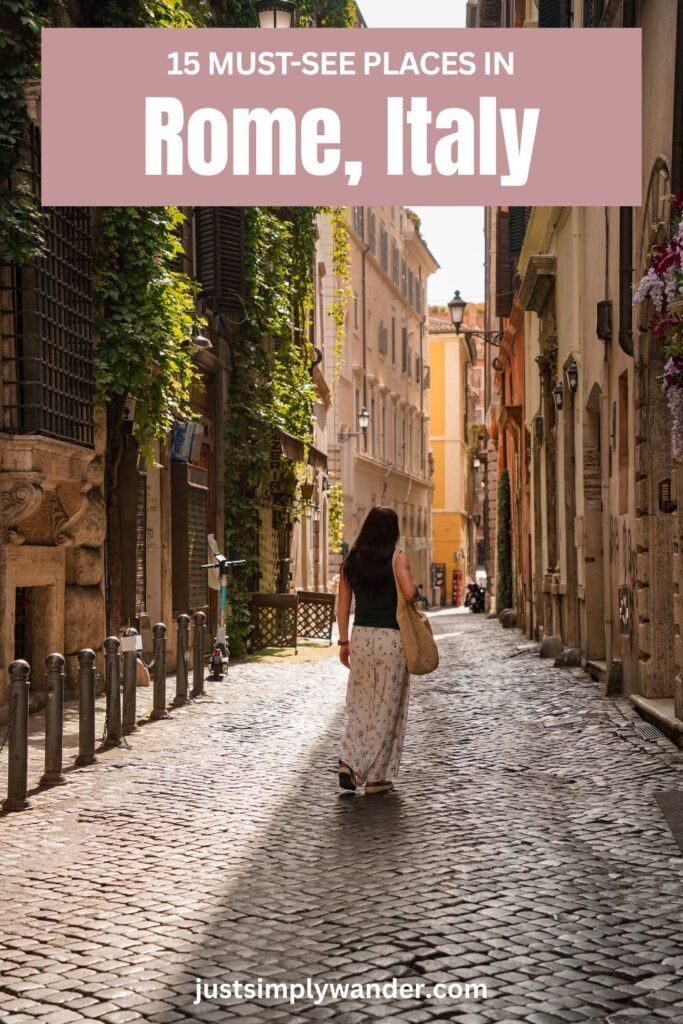
St. Peter’s Basilica
St. Peter’s Basilica is considered the largest Christian church in the world, and is definitely worth a visit!
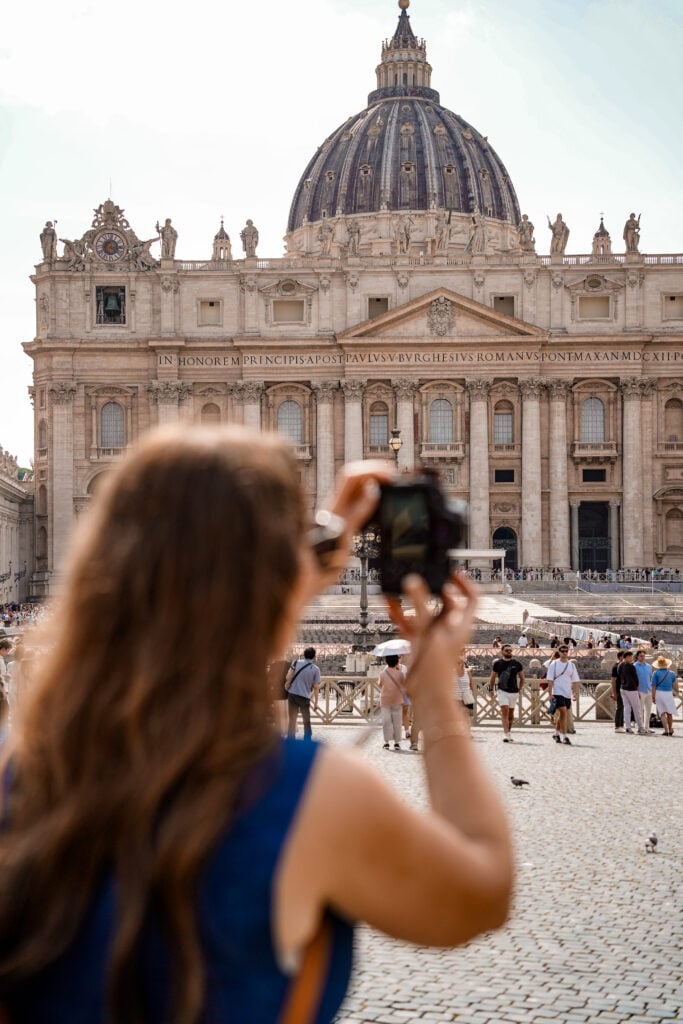
The current basilica was completed in 1626 after 120 years of construction. It is quite the masterpiece, with contributions from renowned artists and architects like Michelangelo, Raphael, and Bramante.
It features the tallest dome in the world, and the interior covers 3.7 acres. The nave alone is larger than an American football field!
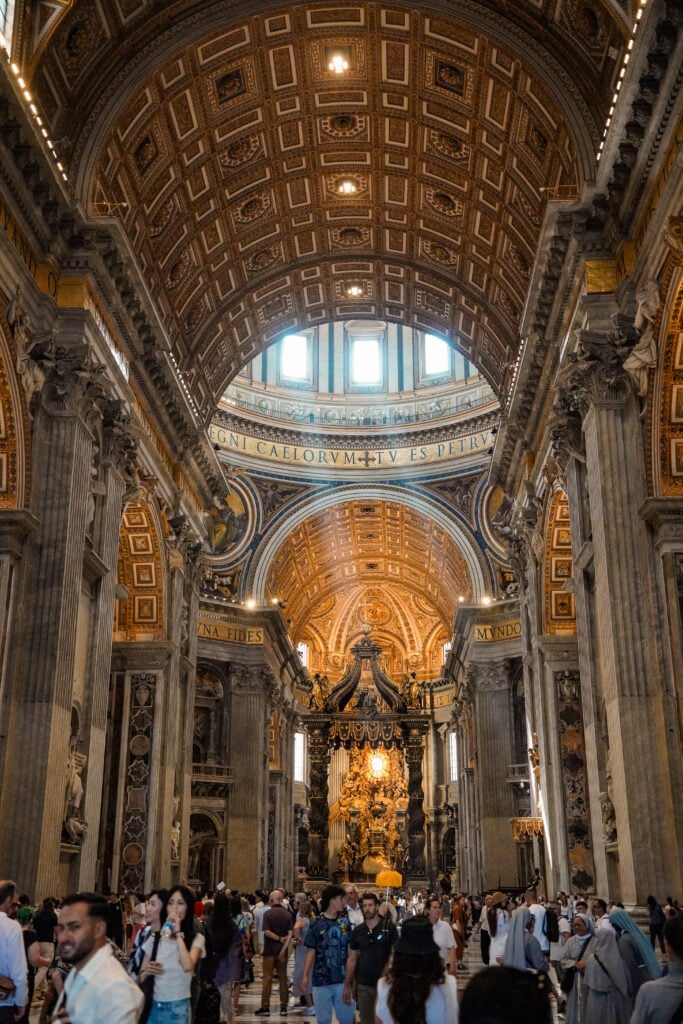
Not only is St. Peter’s Basilica known for its incredible architecture, but it also has historical significance. The basilica sits above the tomb of Peter, one of the original 12 apostles. Scholars also believe that the basilica was built on the site where Peter was actually crucified.
Another fun fact, St. Peter’s Basilica is located in Vatican City, which is considered the smallest country in the world.
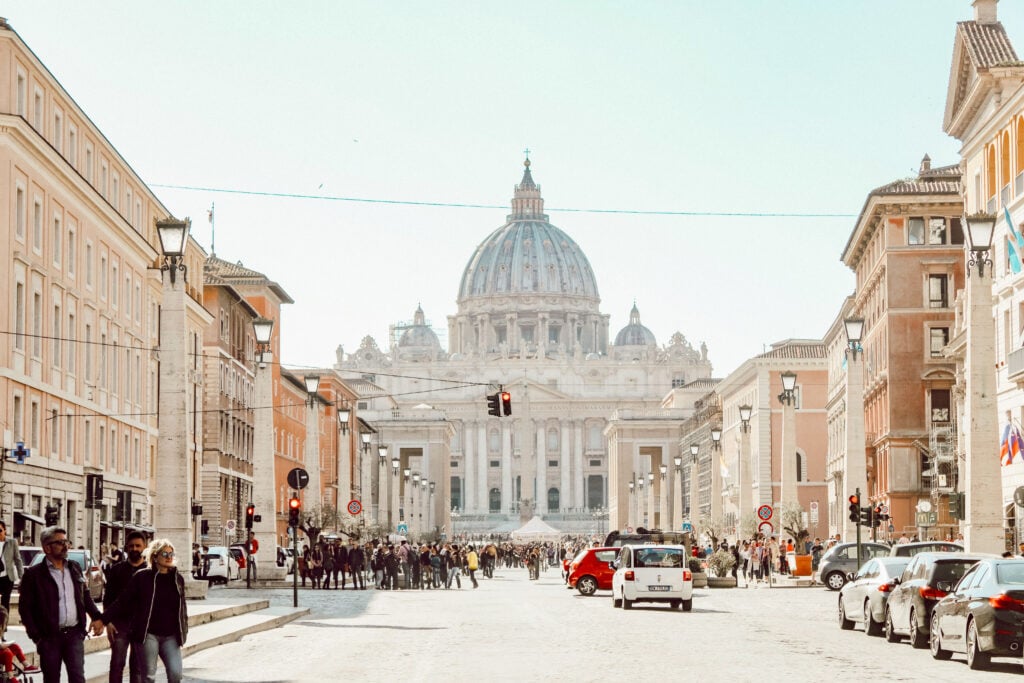
It is free to visit the basilica, but the wait can be quite long. When we visited, the line was about an hour long, but we were told that we could purchase tickets online for 7 euros and skip to the front of the line.
Other tour companies offer skip-the-line tickets for at least double the price, but it only took about 5 minutes to get through security after purchasing tickets directly on the website. You can also purchase timed-entry tickets for the dome climb or a guided tour.
Trevi Fountain
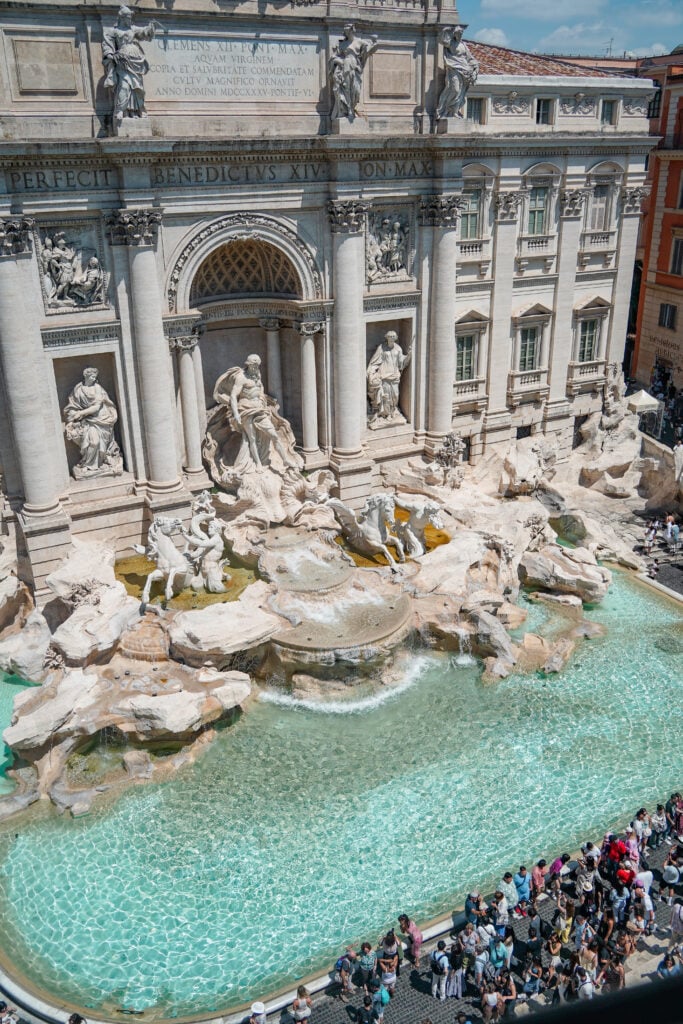
The Trevi Fountain took 30 years to build and was completed in 1762. While it isn’t the oldest fountain in Rome, the water source dates back to 19 BC, and the fountain is filled with water from the only original Roman aqueduct still functioning today.
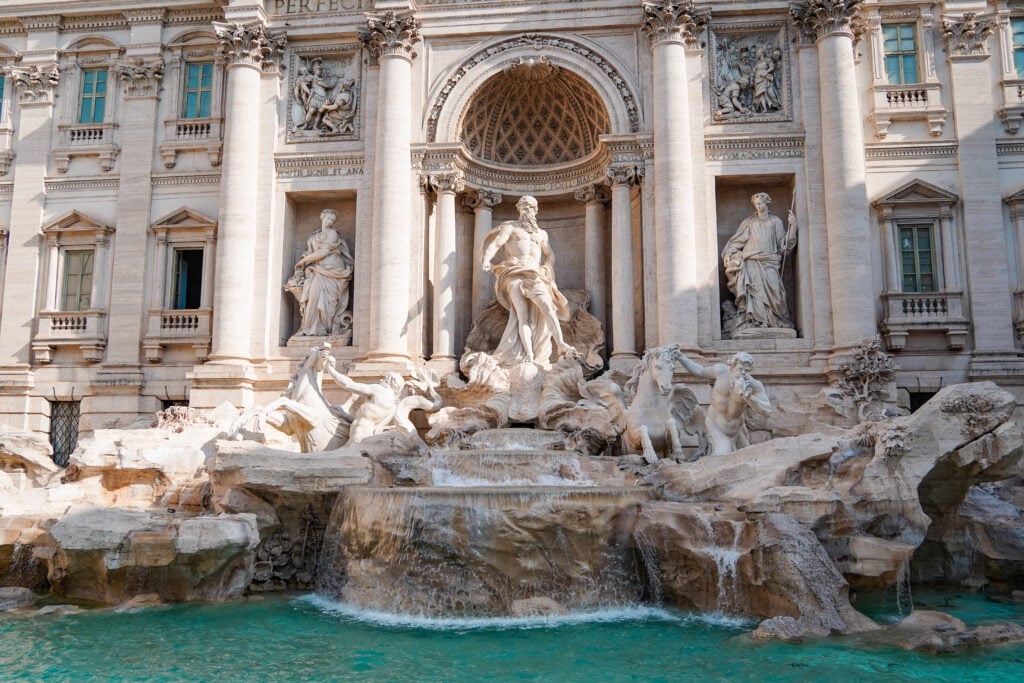
This is one of the most iconic landmarks in Rome, so you can expect large crowds.
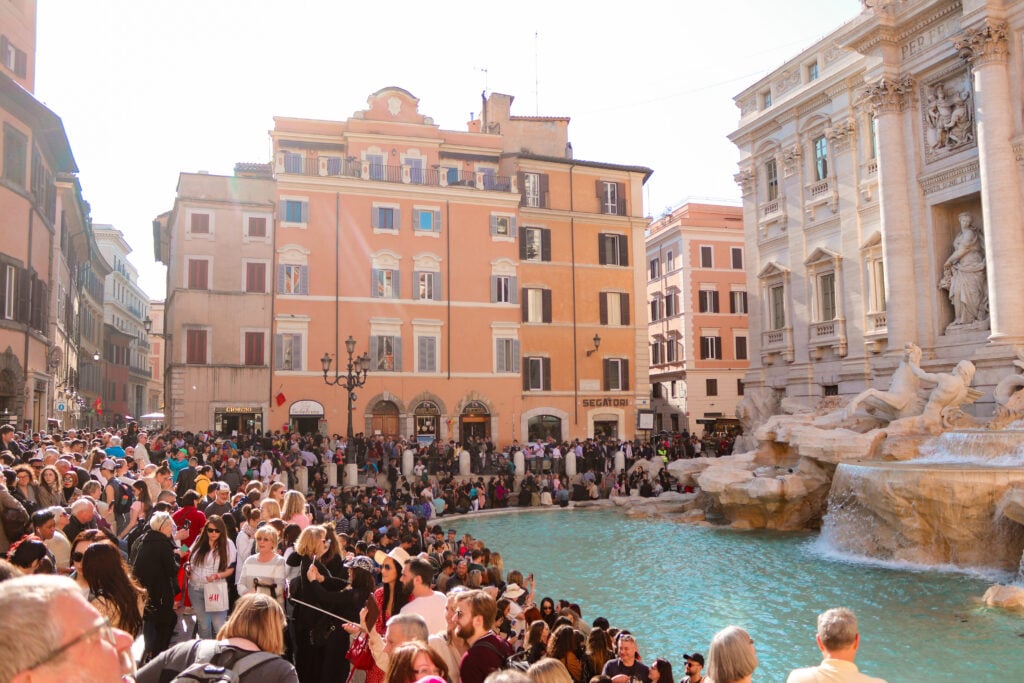
As of February 2026, they have started charging a minimal fee of 2 euros (cash only) to help reduce the crowds and preserve the fountain. You can still see the fountain from above, but you’ll need a ticket to get to the lower viewing area by the water basin.
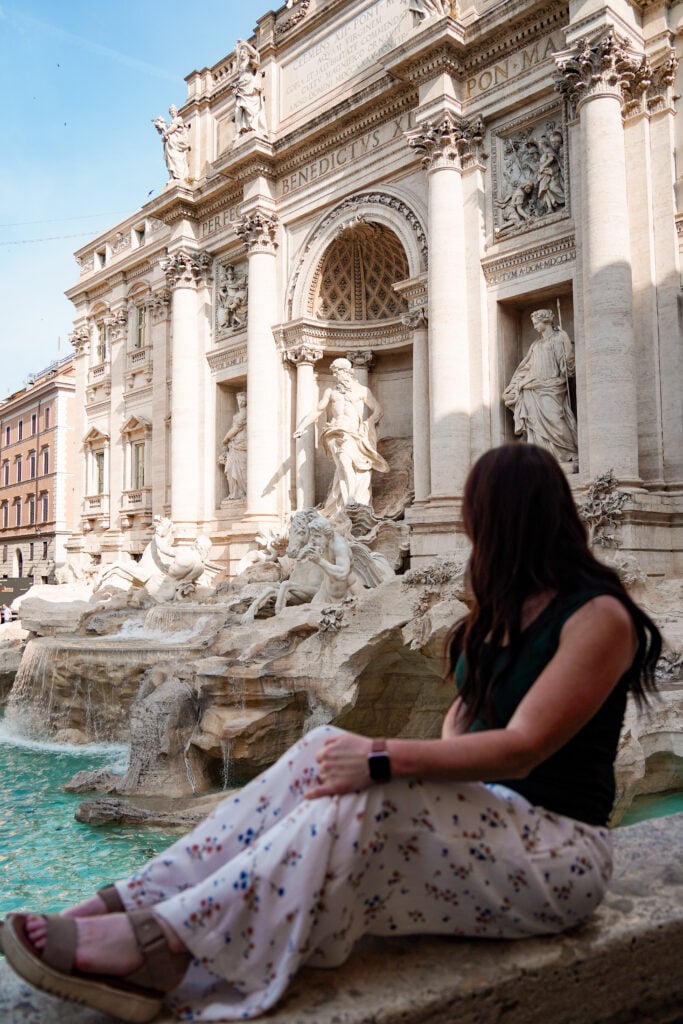
The ticket line can be long, however, tickets aren’t required if you visit before 9 am or after 10 pm. We went around 7:30 am and were able to get right up to the fountain without any crowds.
For a unique experience, try booking a hotel room overlooking the Trevi Fountain. A few options include this Romantic Apartment, this Chic Apartment, or Hotel Fontana.
You can also pay 25 euros to enjoy an aperitivo (drinks and snacks) at the cafe overlooking the Trevi Fountain at Hotel Fontana.
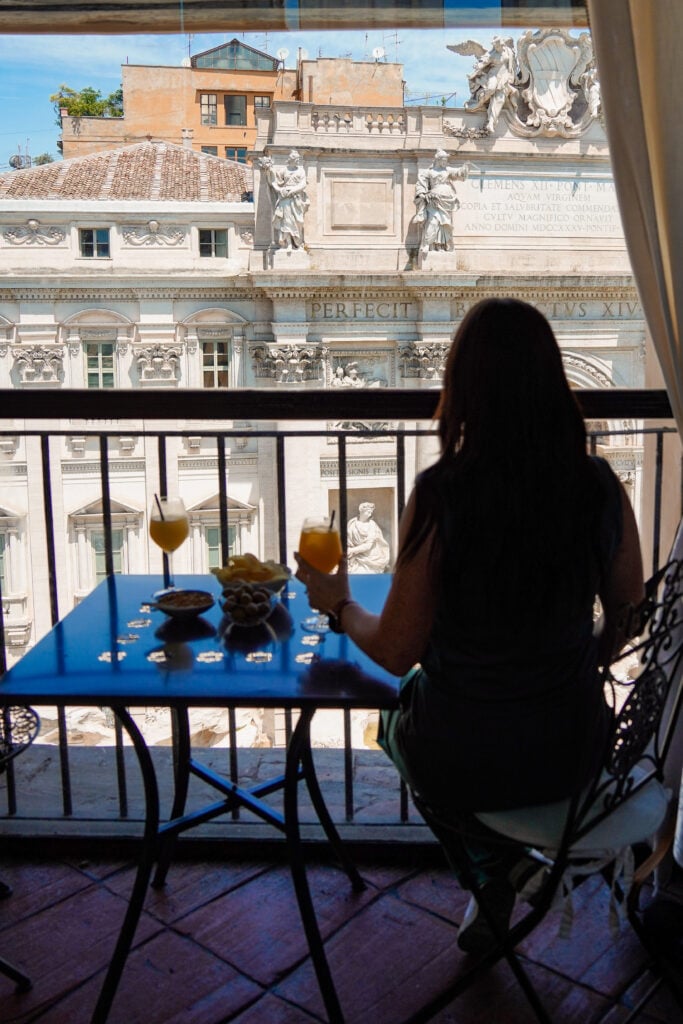
We thought it was a little pricey for snacks, but it was worth doing at least once for the unique and unobstructed view.
Spanish Steps
The Spanish Steps are made of 138 uniquely shaped steps, and is considered the widest staircase in Europe.
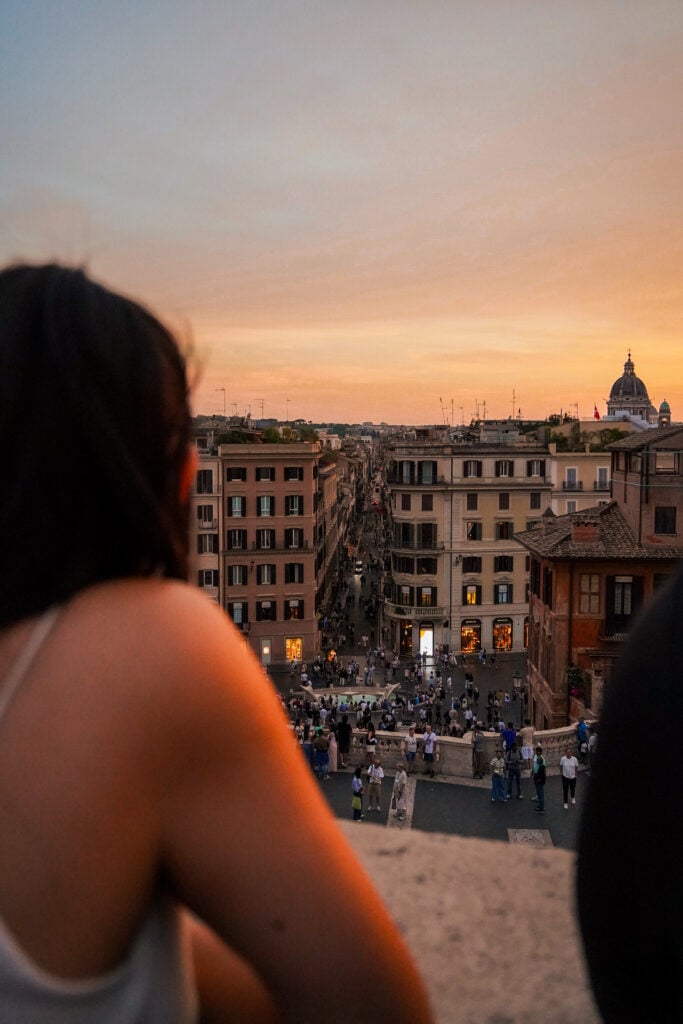
I have to admit, when I first saw the steps from the bottom, they seemed a little underwhelming. However, when we climbed to the top of the steps, I understood the draw. The view from the top is incredible, as you look out over the rooftops and narrow city streets.
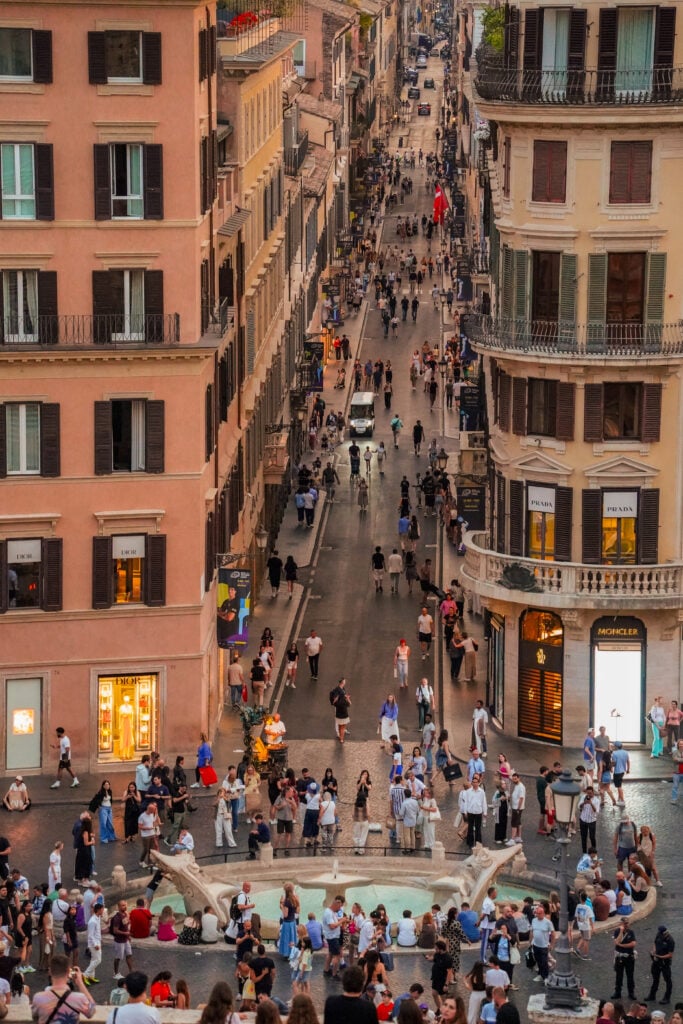
It is especially beautiful at sunset, so try to plan your visit around that time.
Pantheon
The Pantheon is mind-blowing to me. It was completed in 128 AD and features the largest non-reinforced dome in the world. It is hard to imagine how they could build a structure of this scale almost 2000 years ago without modern machinery.
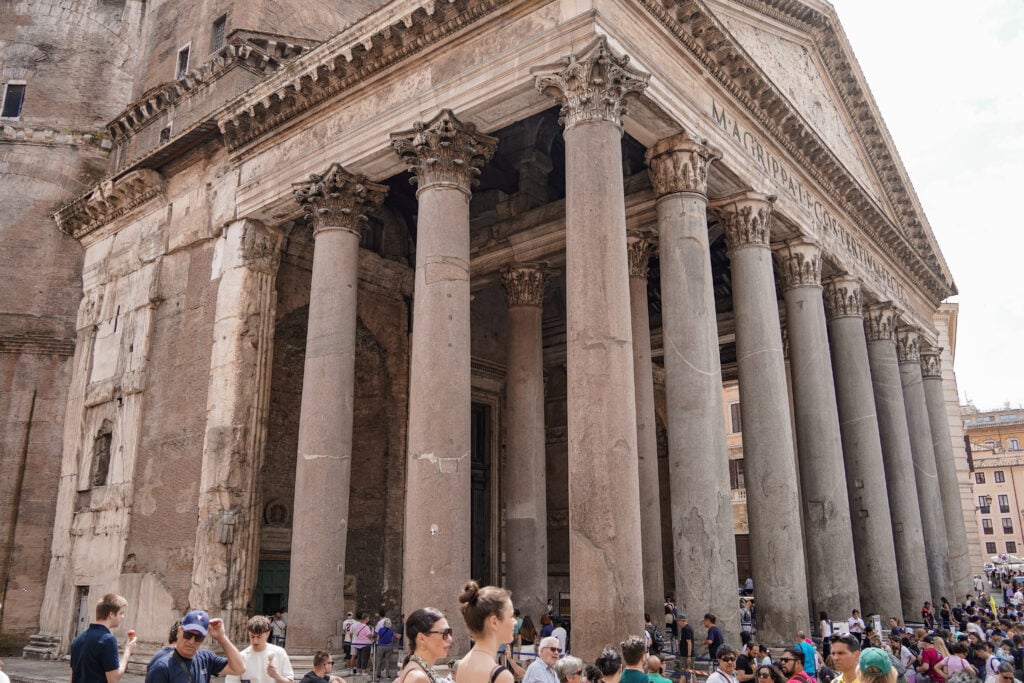
At the center of the dome, you’ll find a large opening, known as the Oculus. You’ll notice that there is no glass covering the hole, which they believed allowed a direct connection to heaven. Since it is open to the elements, there are drains on the floor to catch the rain when it comes in.
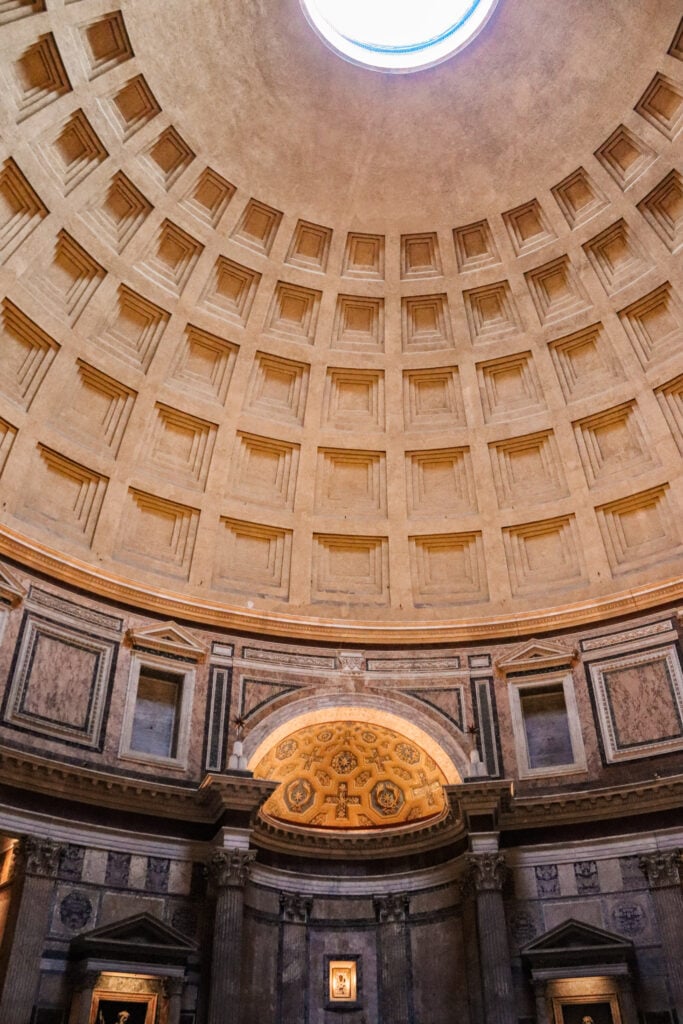
If you’re lucky enough to time it right, you can see the sun shining through the oculus, creating the world’s longest pillar of light. The best time to see the light pillar is on a sunny day from 11 am to 1 pm.
Tickets to visit the Pantheon are 5 euros each (cash only), and you can expect a line. Out of respect, please cover your shoulders and knees when visiting.
For an epic lunch view, grab a bite to eat at one of the cafes lining the piazza in front of the Pantheon.
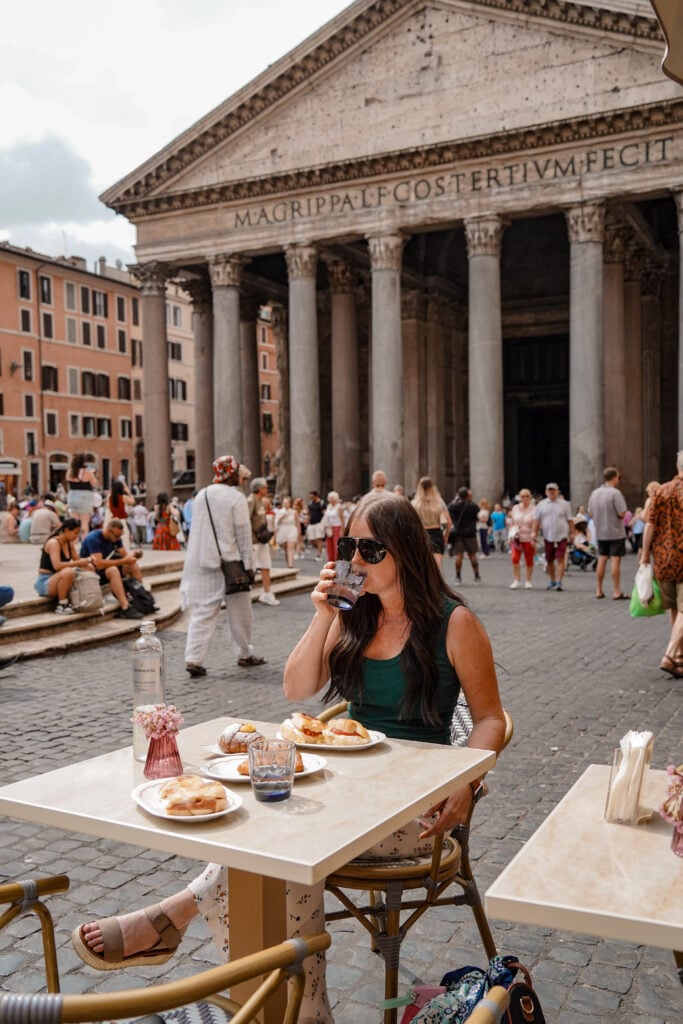
We dined at Ristorante Di Rienzo, and thought that the food was mediocre, but the view was fantastic. Osteria Da Fortunata seems to have better reviews.
Vatican Museum
The Vatican Museum is one of the largest museums in the world. It is also the 4th most visited and is a must-see when in Rome!
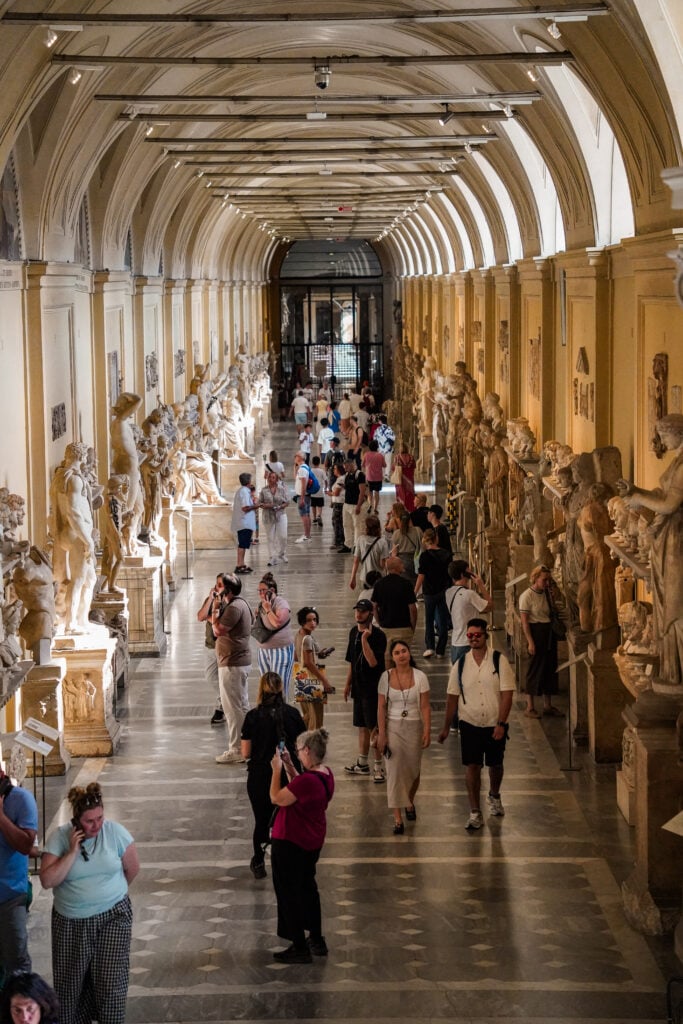
It is home to the world-famous Sistine Chapel and over 20,000 of the most renowned Renaissance sculptures and masterpieces.
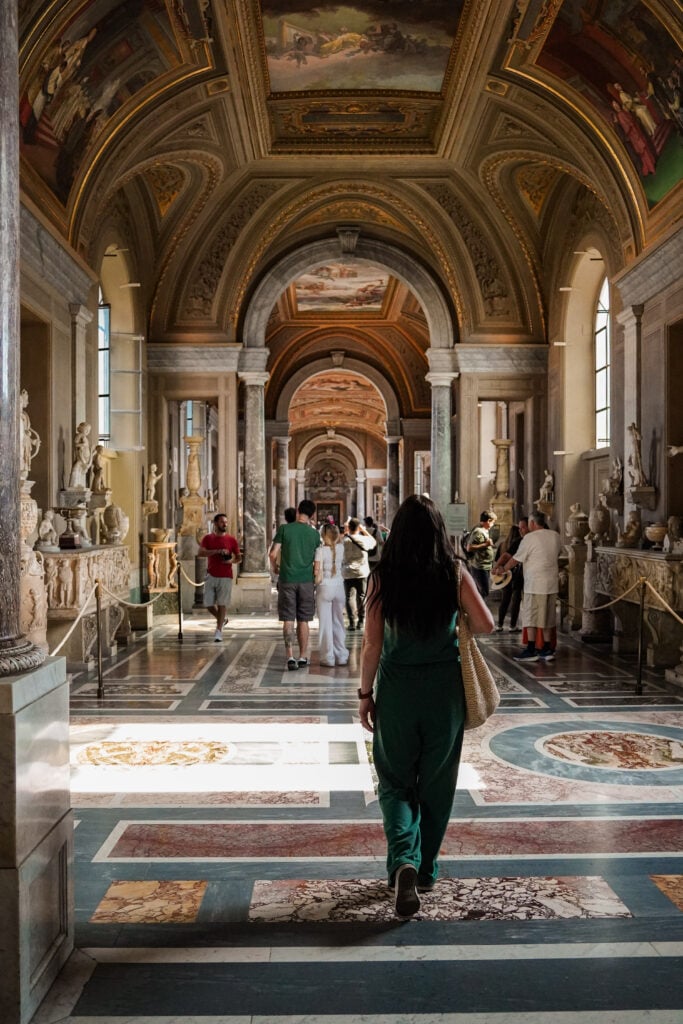
On our first visit, we underestimated just how massive the museum is. You’ll want to set aside at least a few hours to wander the maze of corridors and galleries.
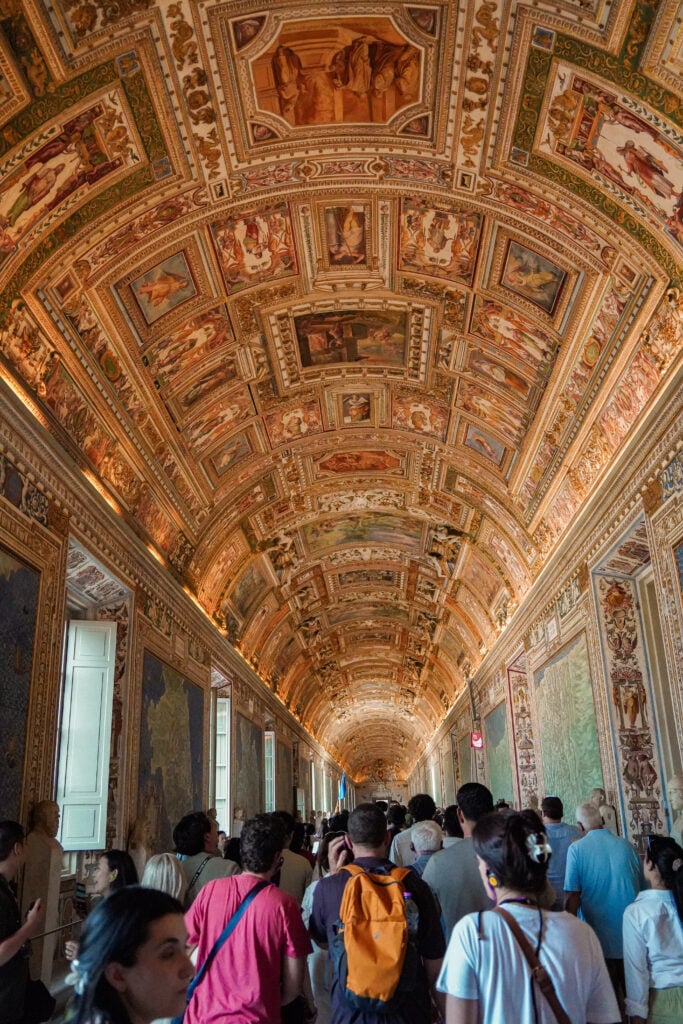
Timed-entry tickets are required to visit, and they often sell out. I recommend booking tickets directly through the official website instead of a third party. Even with a timed ticket, you can still expect a long wait to get through security.
If you want to avoid the crowds, a great option is to book a Breakfast Tour that includes breakfast in the Vatican courtyard before going on an early-access guided tour through the museum and St. Peter’s Basilica.
Church of Saint Ignazio
The Church of Saint Ignazio has been making the rounds on social media lately. This 16th-century Baroque church is absolutely stunning, but it has become Insta-famous for the giant mirror in the nave that lets you take selfies with the intricate hand-painted ceiling frescoes.
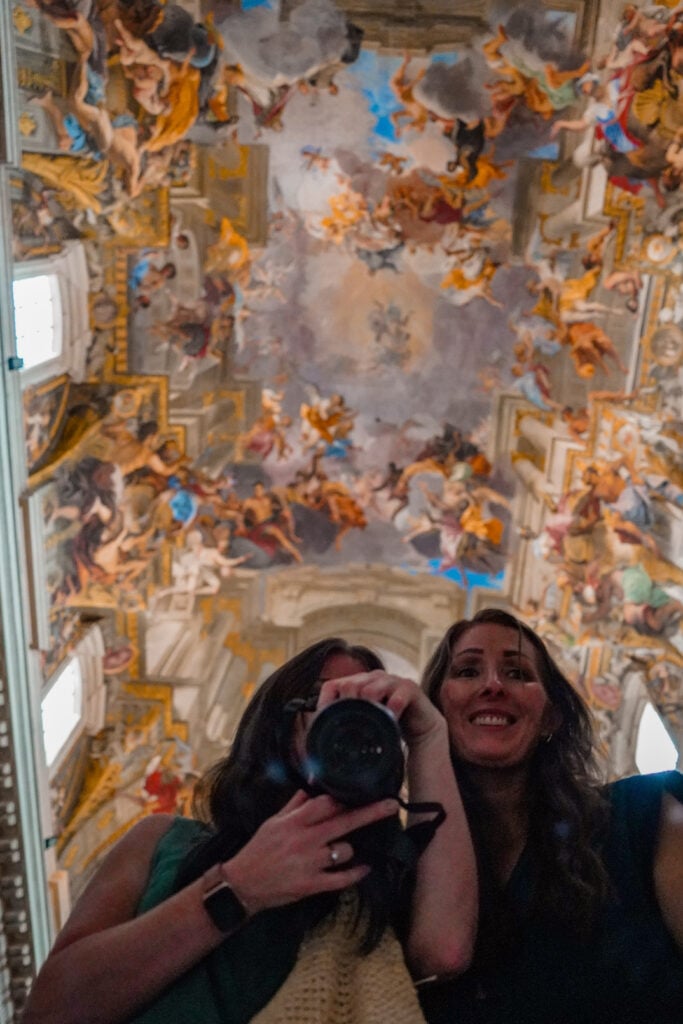
I love the unique perspective that the mirror gives, but we waited in line for over an hour to take a photo with the mirror. I’m still not sure if it was worth it!
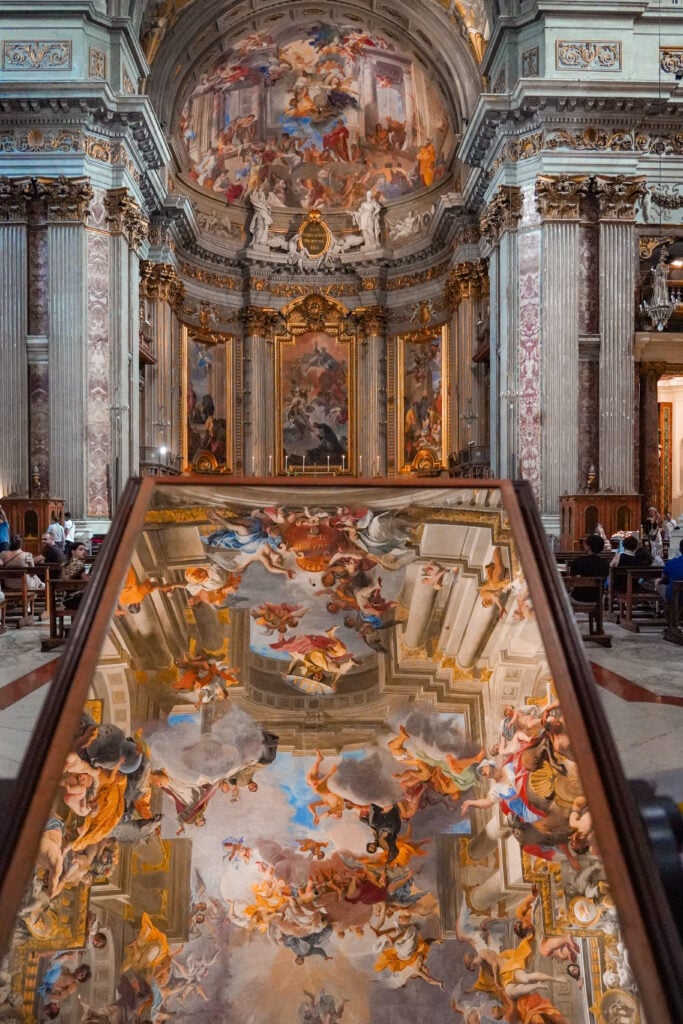
Try to arrive right when the church opens at 8 am to avoid a long line. The cost is 1 euro for one minute before the mirror goes black, so bring coins.
The Colosseum
The Colosseum is the largest ancient amphitheater ever built, and is a true architectural marvel. It is the most iconic historic landmark in Rome and one of the most visited tourist attractions in the world.
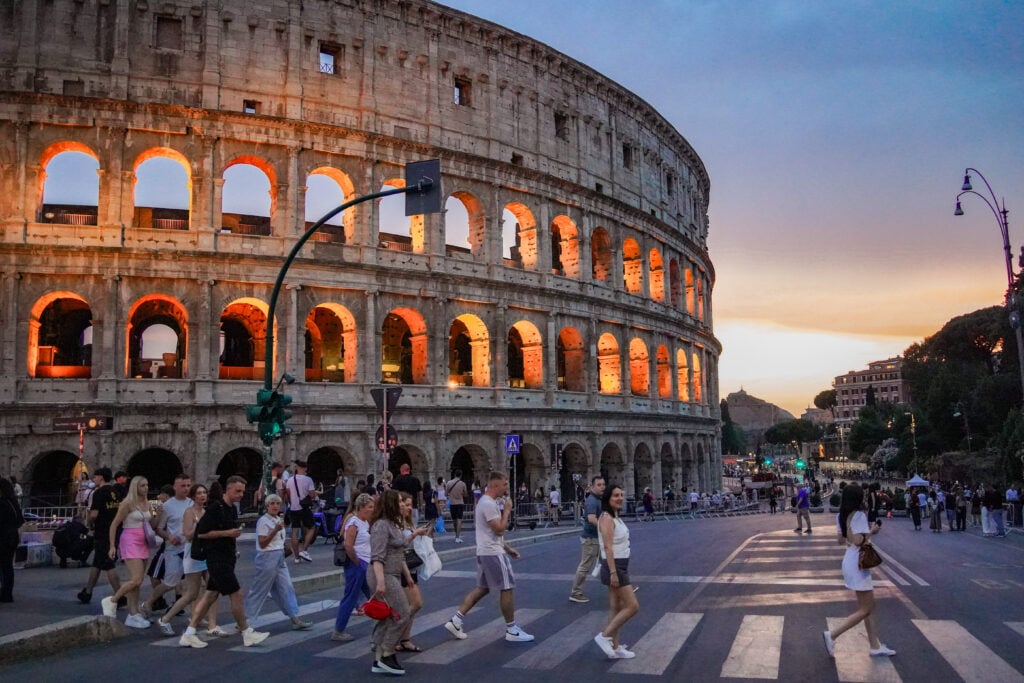
Construction of the Colosseum began around 70 AD, but it wasn’t completed until 80 AD. The grand opening was celebrated with 100 days of games.
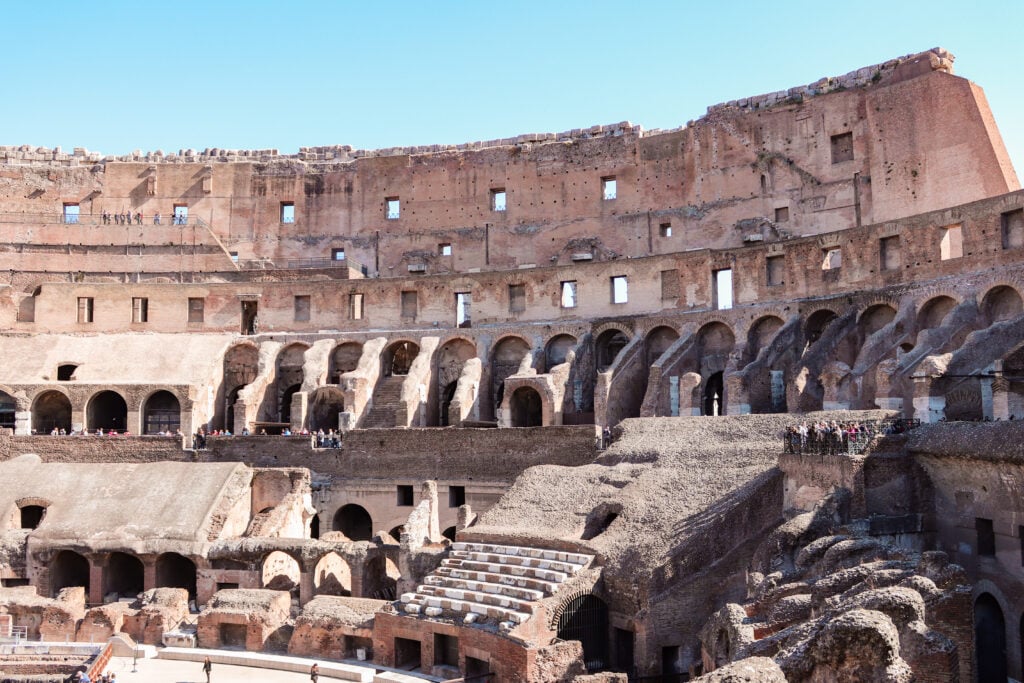
The Colosseum has a gruesome history and is infamous for the gladiator fights that were held here. It was also used for performances, battle re-enactments, public executions, and even animal hunts. It is estimated that around 500,000 people and 1 million animals were killed during games and battles at the Colosseum.
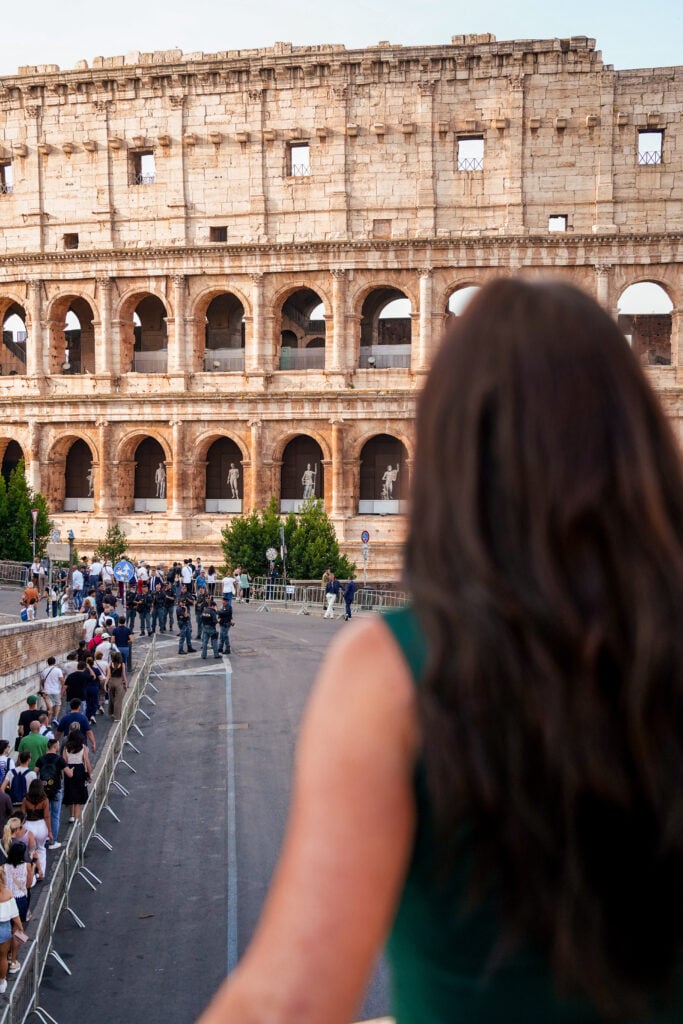
You can book tickets directly through the official website. They are released 30 days in advance and sell out fast. Admission includes a free audio guide through the MyColossuem App, so bring your own headphones.
Piazza Navona and Campo di Fiori
Piazza Navona and Campo di Fiori are two of the most popular city squares in Rome, with histories dating back to medieval times.
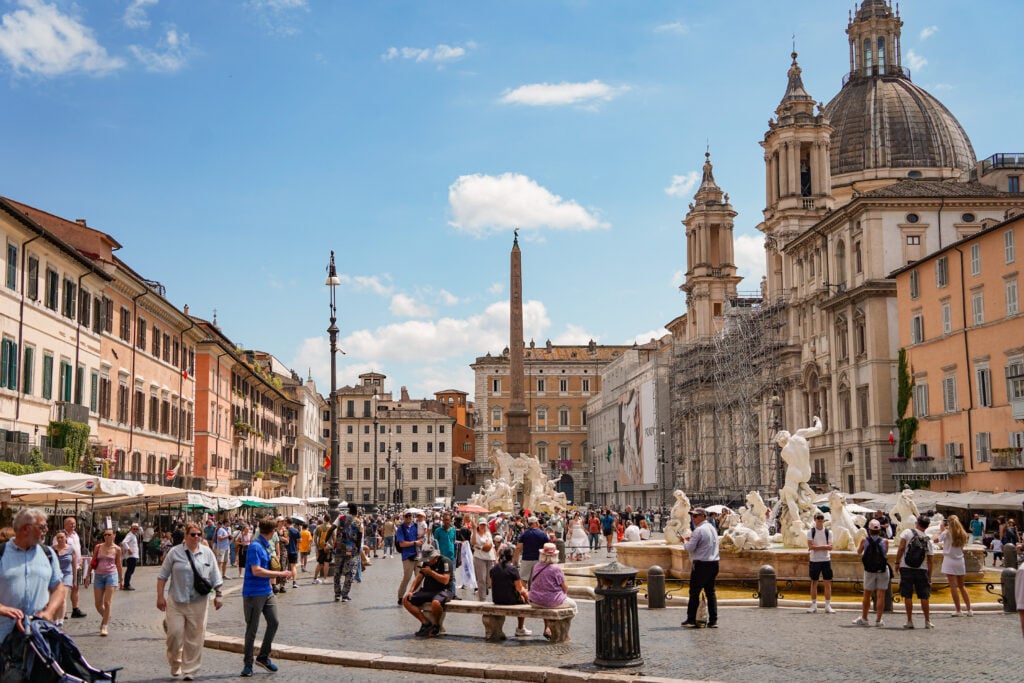
Today, the bustling squares are filled with local vendors, outdoor cafes, historic fountains and sculptures, street artists, musicians, morning markets, and a vibrant nightlife.
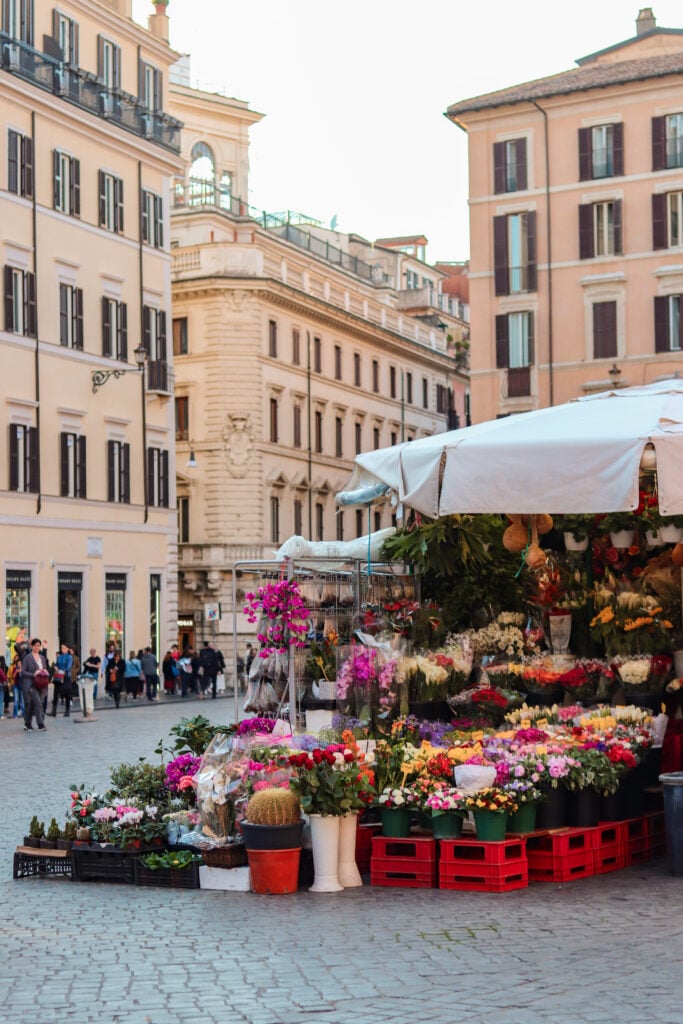
It’s a great place to grab a bite to eat, browse for souvenirs, or just sit on a bench and people-watch.
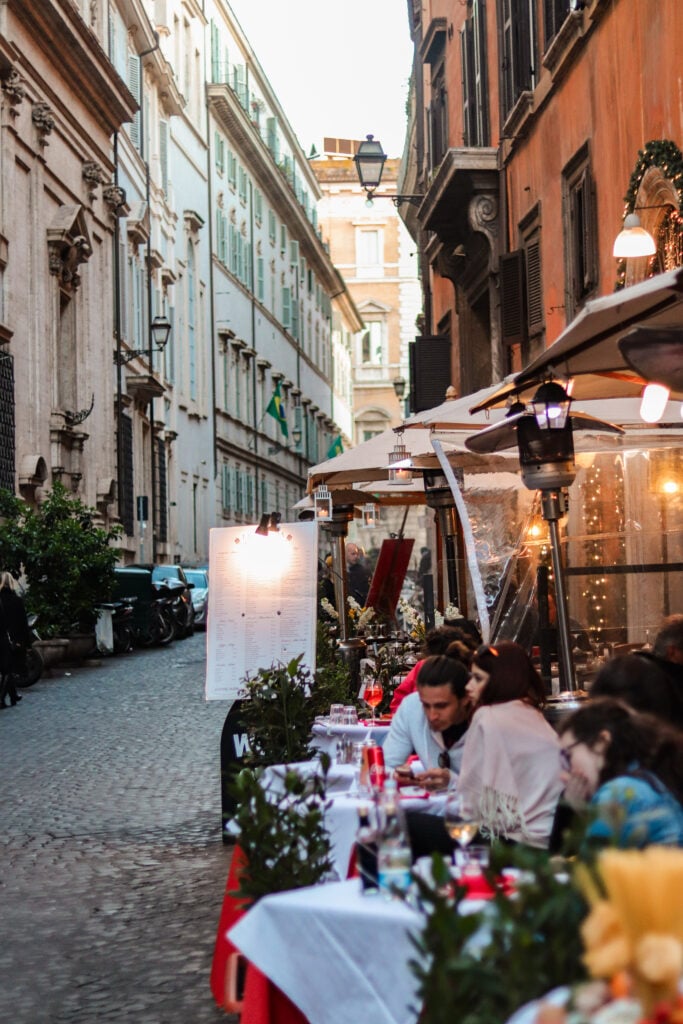
Borghese Gardens
This 16th-century garden is one of the largest public parks in Rome.
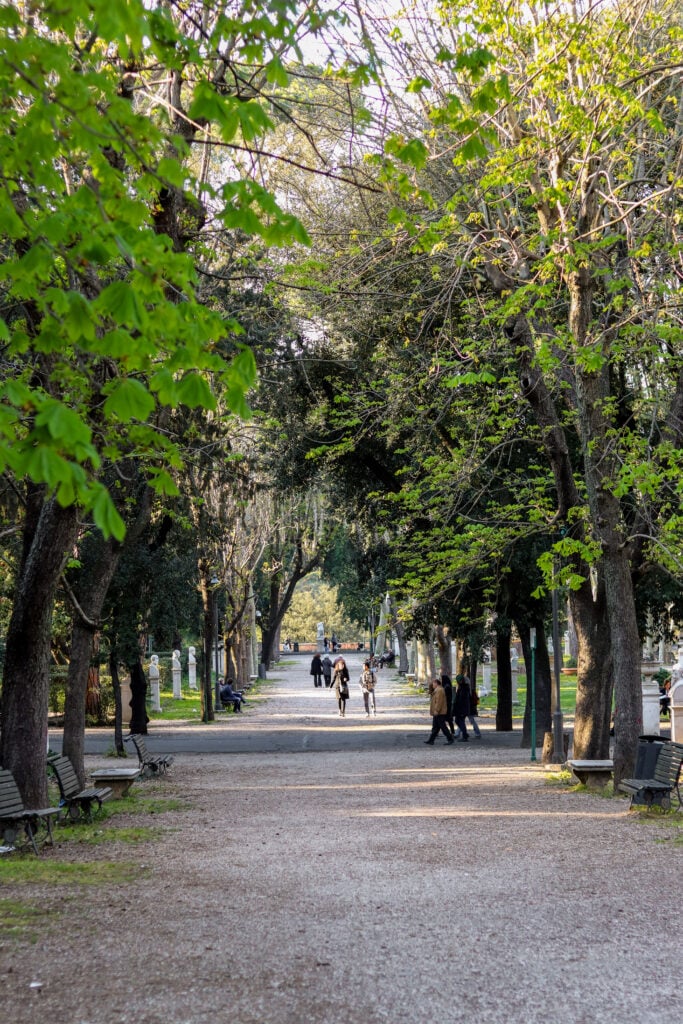
It features a museum, gardens, a theater, a lake with boat rentals, a zoo, a working 19th-century water clock, and one of the best views in the city!
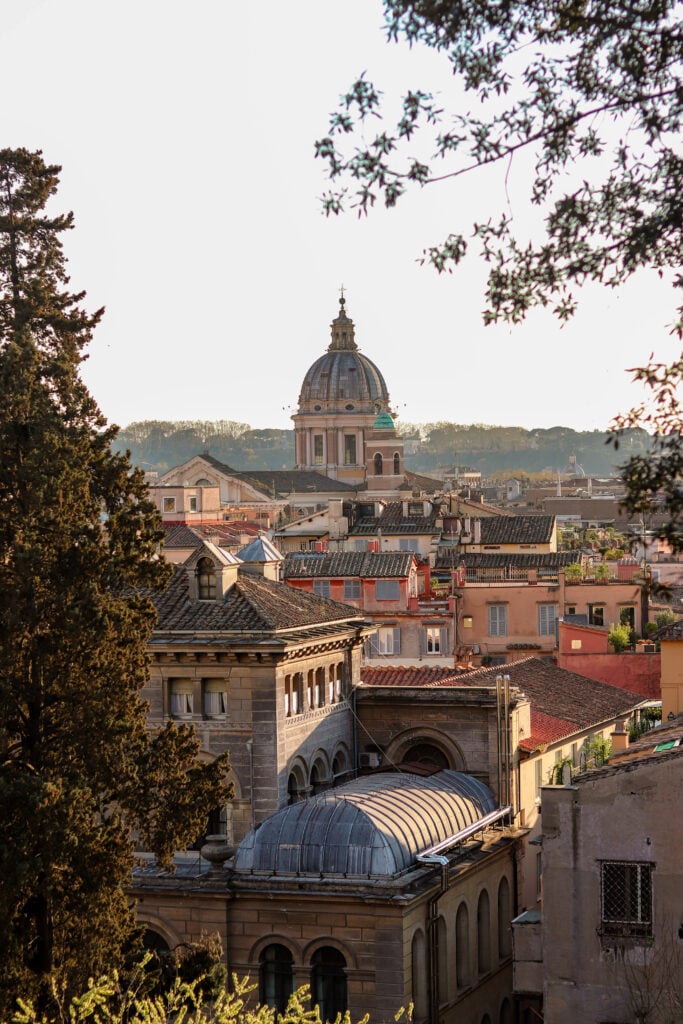
One of our favorite things to do is grab pasta to-go from Pastificio, a nearby shop, and have a picnic at the gardens. You can also rent bicycles, e-bikes, or pedal carts to ride around the garden’s paved pathways.
Galleria Doria Pamphilj
Did you know there’s a 15th-century palace hidden in the middle of Rome, and it looks just like a mini Palace of Versailles?
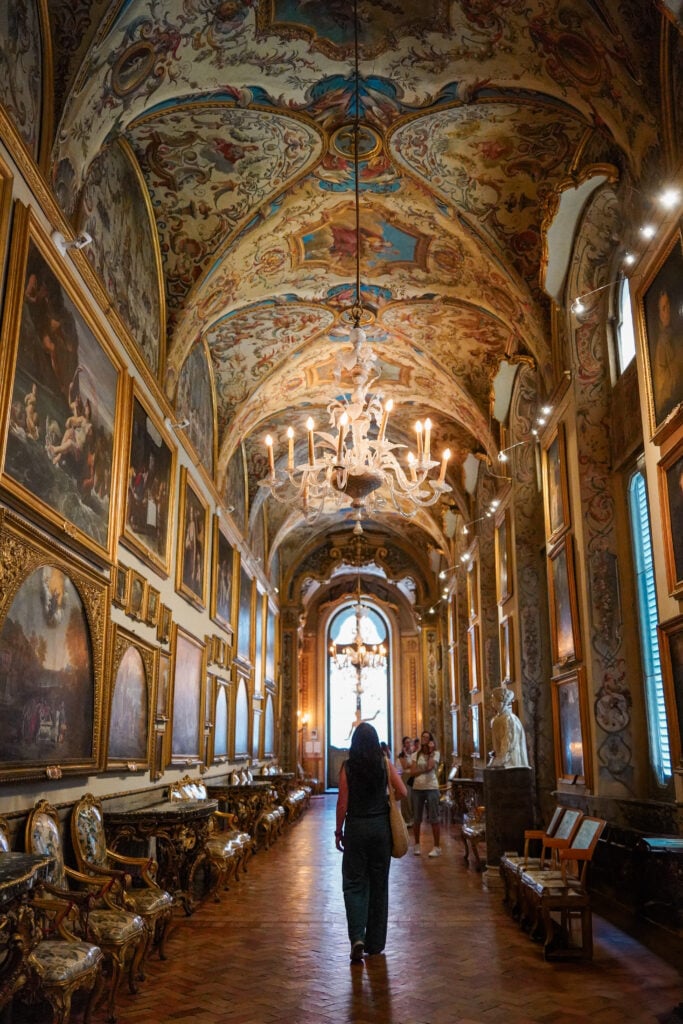
Galleria Doria Pamphilj is a historic palazzo that houses one of Europe’s largest and finest private art collections. The architecture of this former palace is just as impressive as the artwork itself.
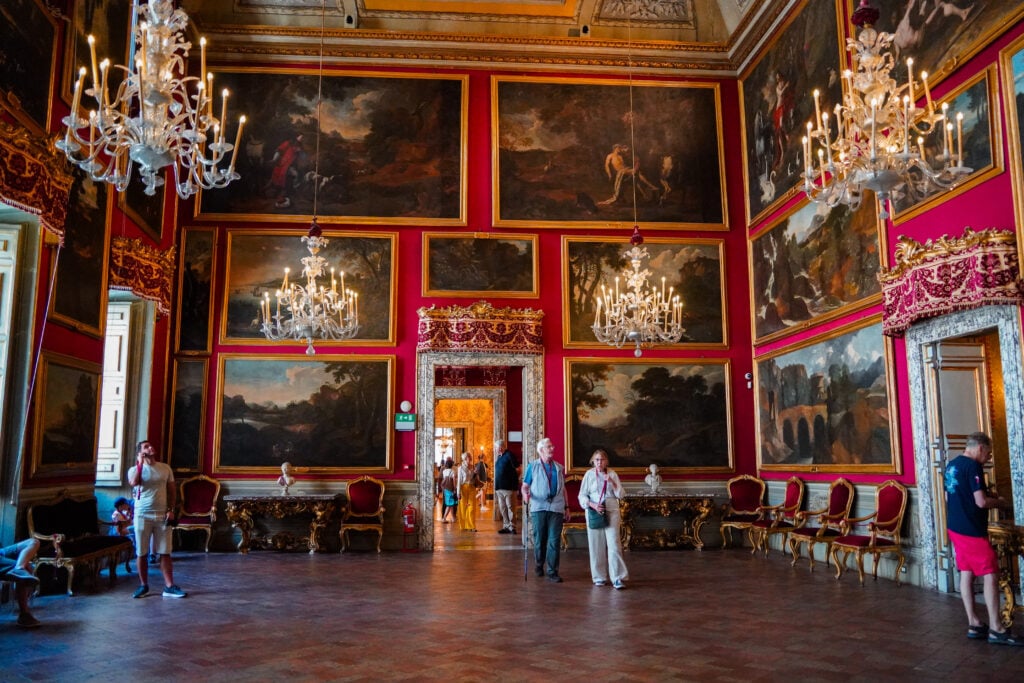
This museum is one of Rome’s most underrated destinations, and you would never guess it was hiding in the heart of the busy city!
Trastevere
Trastevere is one of the most charming and authentic neighborhoods in Rome, and my personal favorite. You’ll find a maze of narrow cobblestone lanes and colorful buildings with vines creeping up the walls.
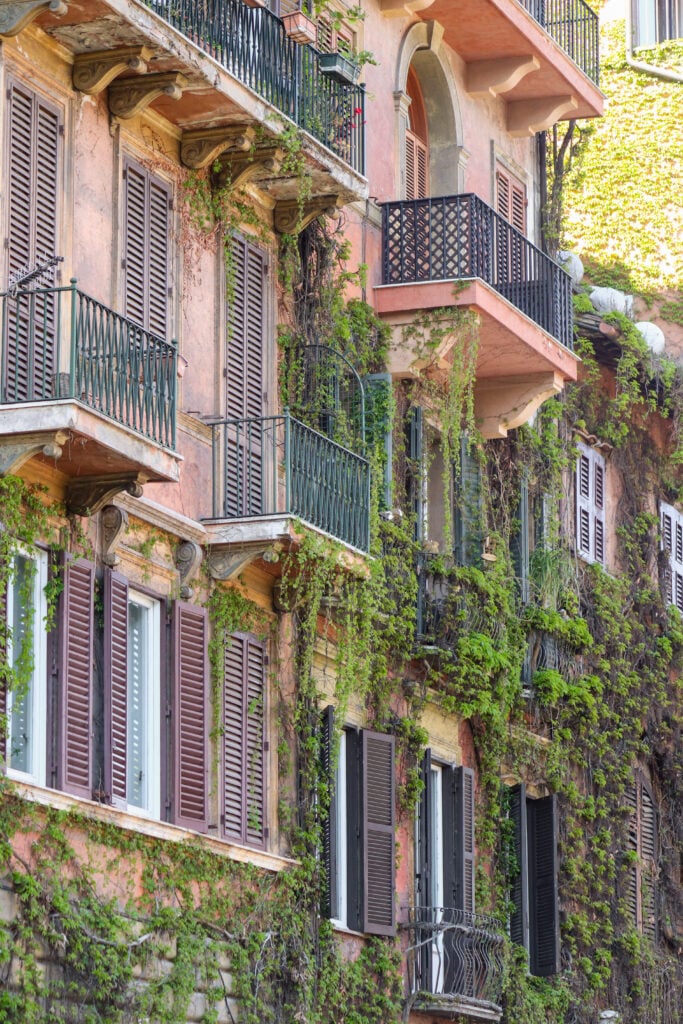
If you are a foodie, you will love the traditional trattorias found in this neighborhood. Be sure to try Dar Poeta, it’s our favorite restaurant in Rome!
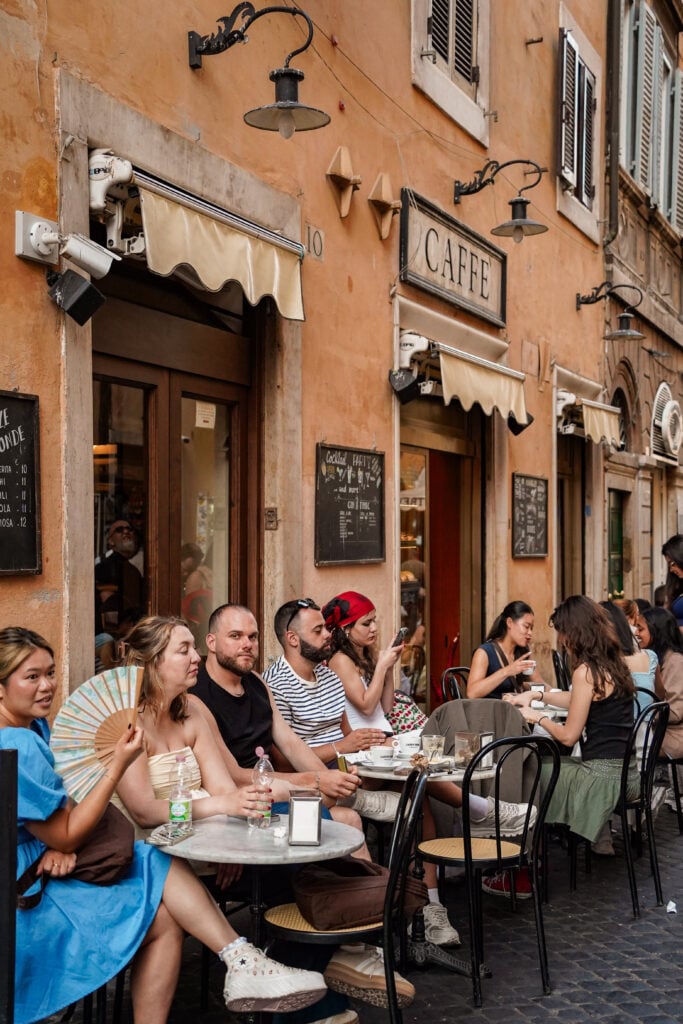
While Trastevre has long been a traditional working-class neighborhood, it has become more of a trendy spot over the years with a vibrant nightlife and hipster bars.
Gianicolo Hill
If you want the best panoramic view of the city, head up to the top of Gianicolo Hill.
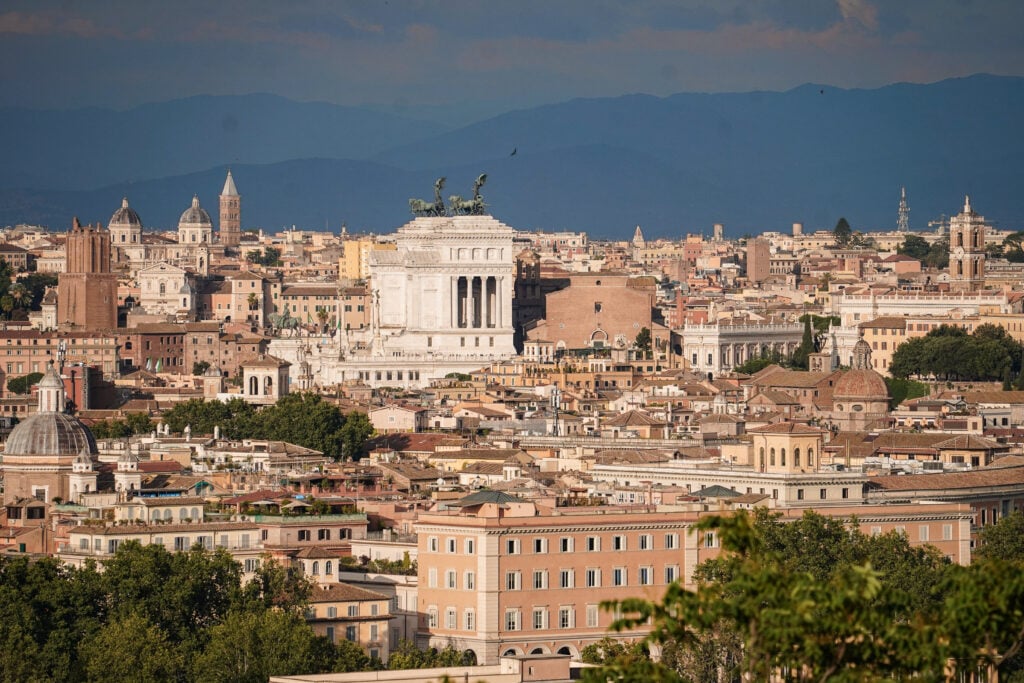
The lookout point is located about a mile from St. Peter’s Square. You can walk to it, but it is a bit of a hike. I recommend driving, taking a taxi, or taking a city tour where this stop is included.
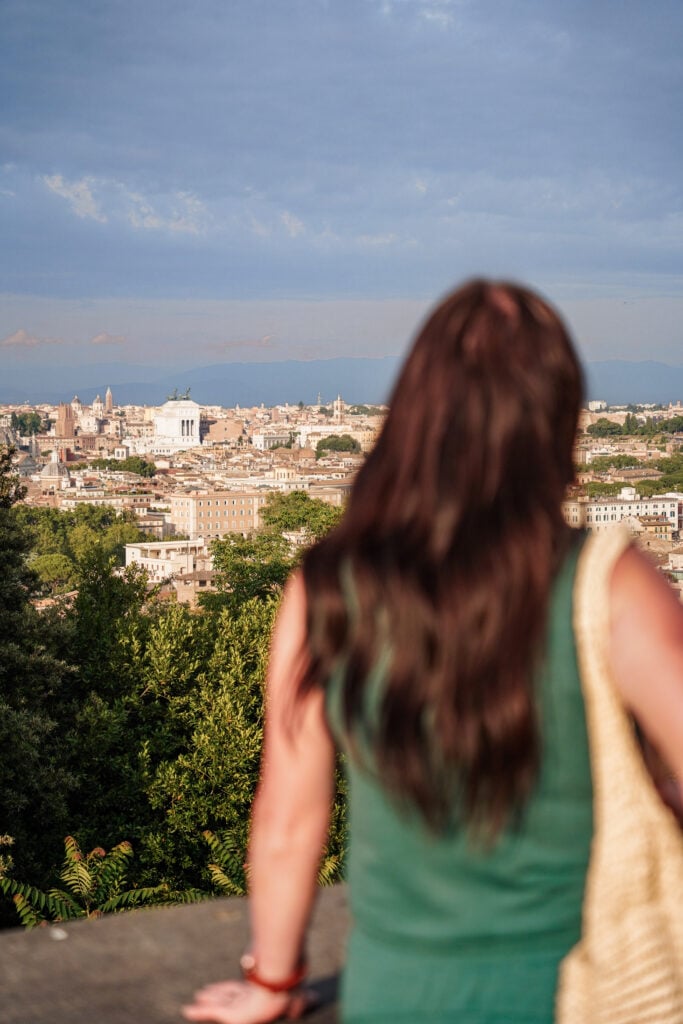
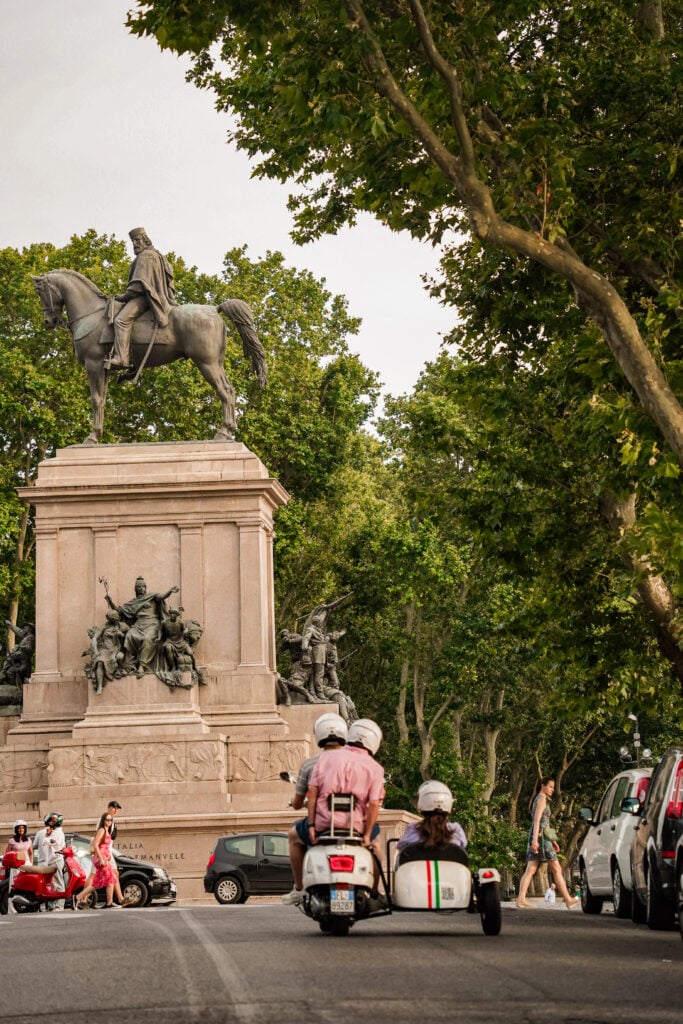
This hill also holds historical significance as the battle site where Garibaldi blocked an attack by French troops. There is a statue at the top to commemorate the event.
Another little gem at the top of the hill is the Fontana dell’Acqua Paola.
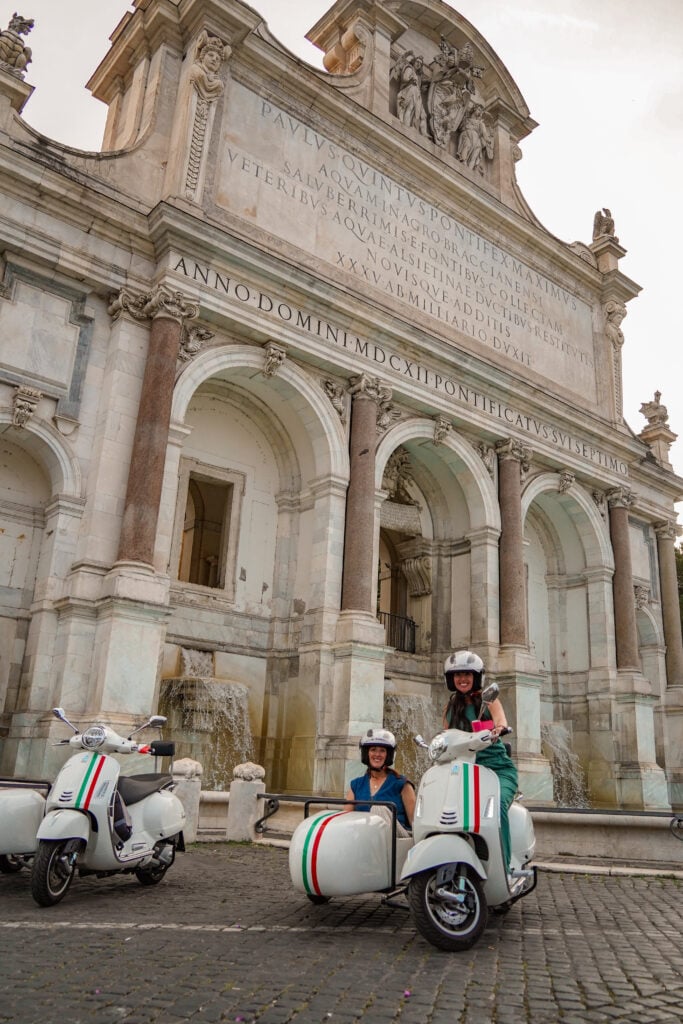
This beautiful fountain was actually built about 100 years before the Trevi Fountain and even served as inspiration for its design.
Roman Forum
The Roman Forum once served as the political, religious, social, and administrative center of the empire. It was essentially the beating heart of ancient Rome.
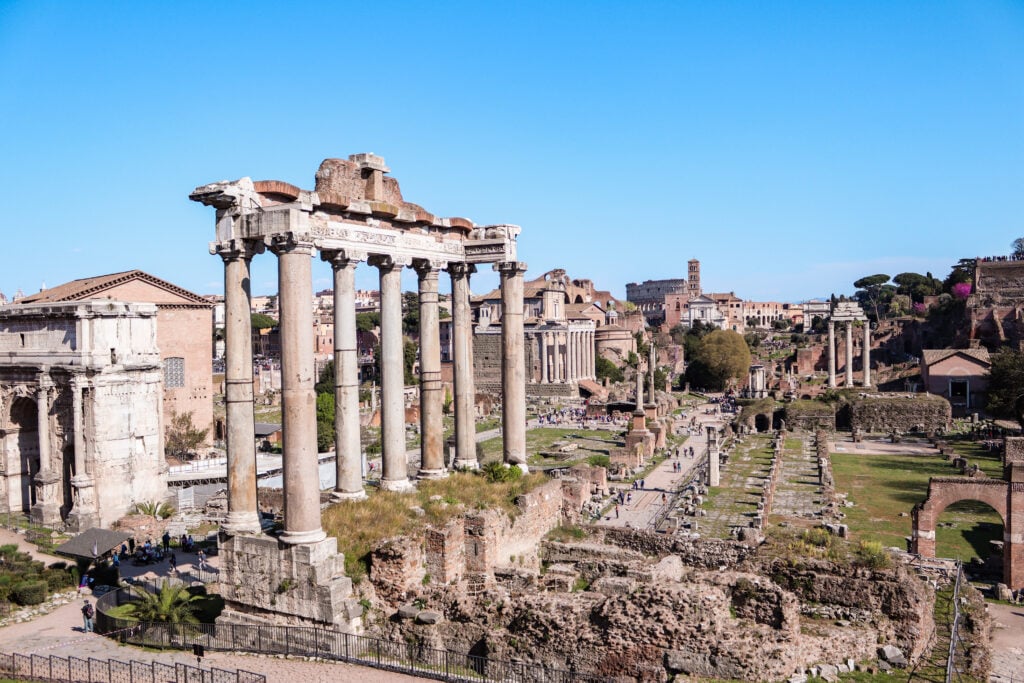
For centuries, buildings had been constructed over the ruins, so it took over 100 years to unearth the original remains. Today, it is an archeological goldmine featuring original temples, triumphal arches, bathhouses, palaces, and Via Sacra, which was part of the 50,000-mile network of paved roads throughout the Roman Empire.
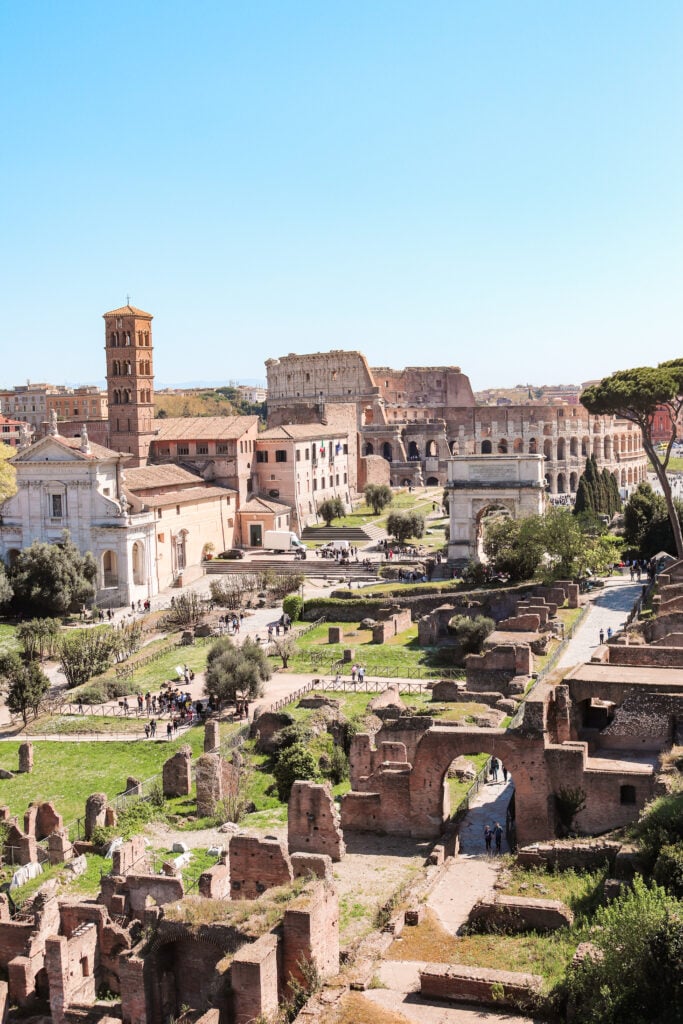
Entrance to the Roman Forum and nearby Palatine Hill (known as the Beverly Hills of ancient Rome) is generally included with your Colosseum ticket, so plan to visit all the sites on the same day.
Castel Sant’Angelo
Take a tour of the historic Castel Sant’Angelo. It was originally built by Emperor Hadrian in 134 AD as his family’s mausoleum, or tomb.
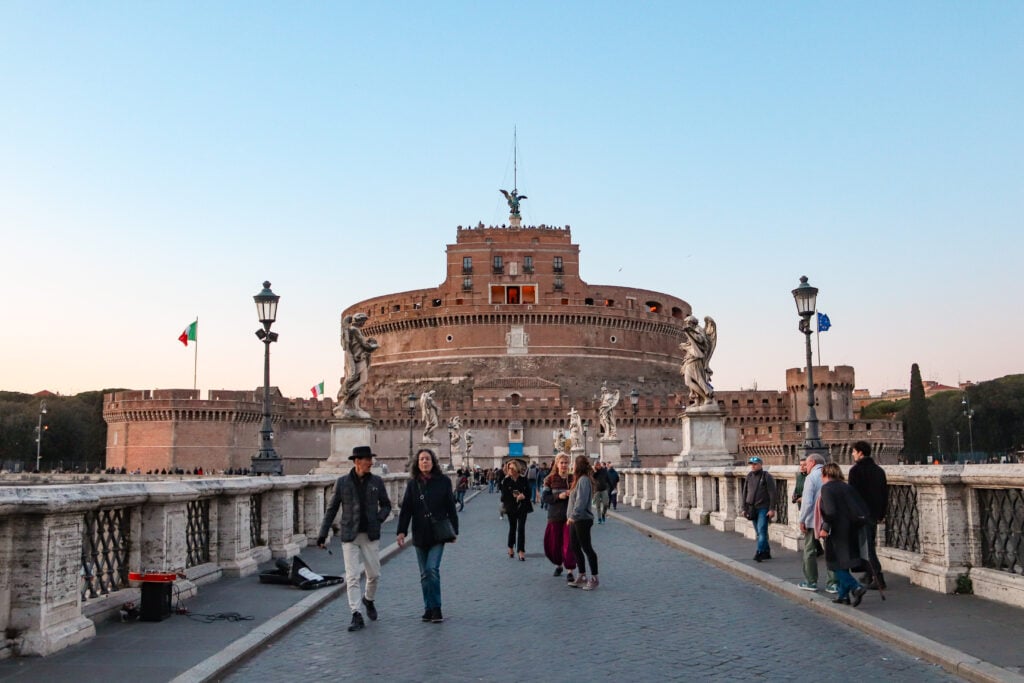
Over the years, the 6-level burial chamber also served as a Roman mausoleum, a prison, a medieval fortress, a treasury, and the pope’s residence.
It is such a fascinating and underrated spot to visit in Rome!
Vespa Sidecar Tour
My last recommendation in the city is to take a Vespa sidecar tour. We booked the 3-hour semi-private tour with Liv Tours, and it exceeded our expectations! It was such a fun way to see many of the main sites in the city in just a few hours.
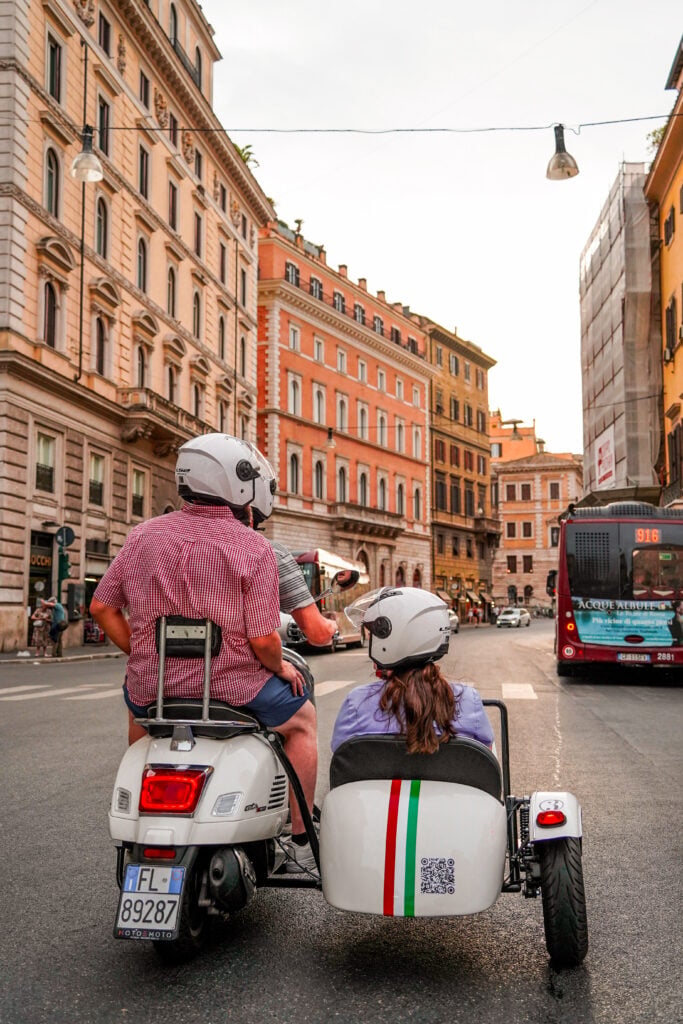
We had a blast zipping around the city, weaving through narrow cobblestone lanes, catching sunset at the top of the Spanish Steps, learning fascinating history, finding the best viewpoint in Rome, eating gelato in a local neighborhood, watching the glow of the Colosseum at dusk, and so much more.
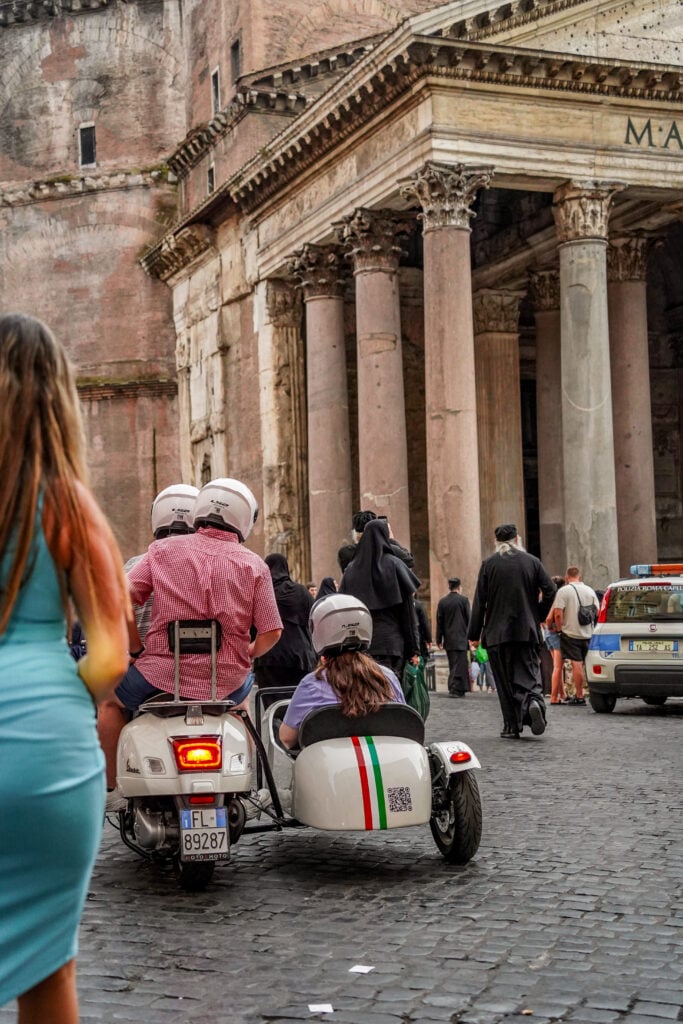
I recommend booking an evening tour so that you can see the city at golden hour, at sunset, and at night when the city lights start twinkling. It’s nothing short of magical!
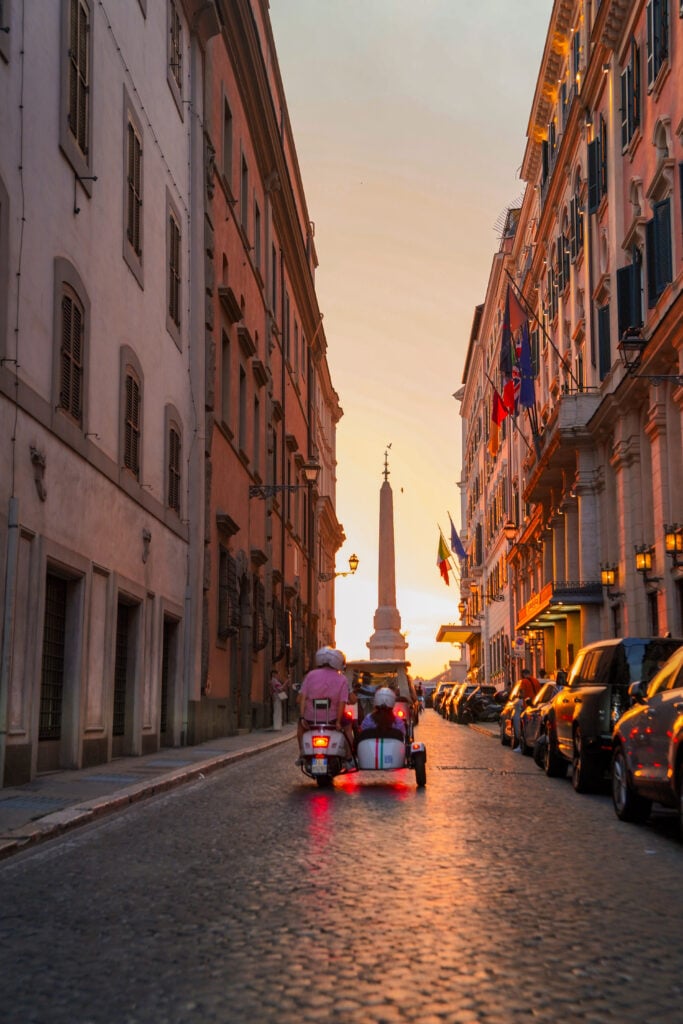
Wander the Streets of Rome
While this isn’t a recommendation for a specific destination, make sure you set aside time in your itinerary to just wander the streets of Rome.
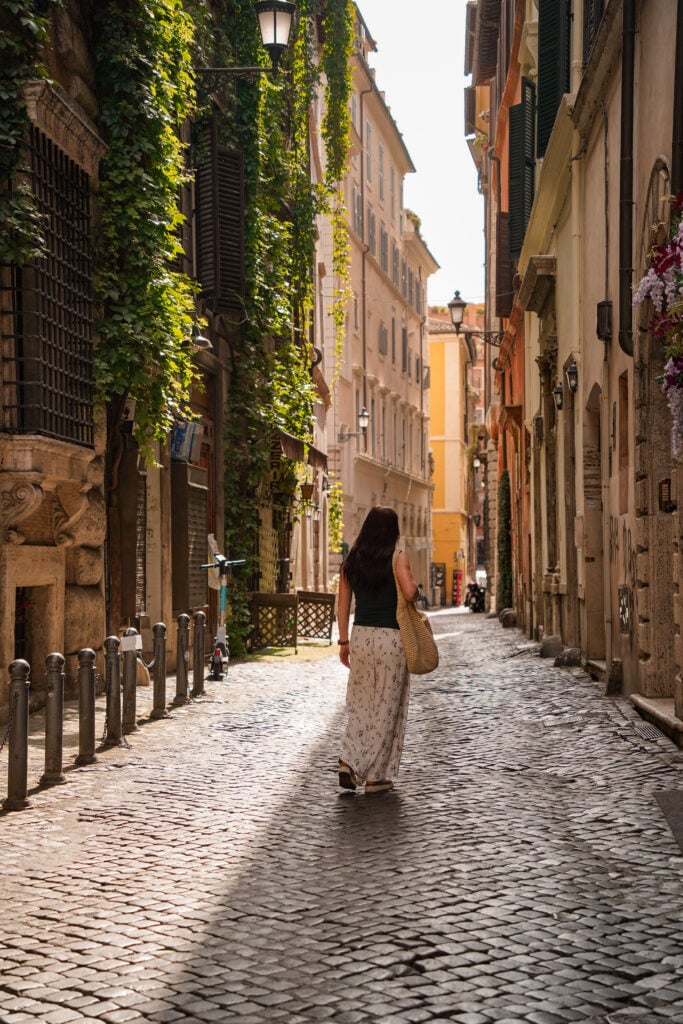
It is such a fascinating city with so much history, incredible architecture, and unmatched charm.
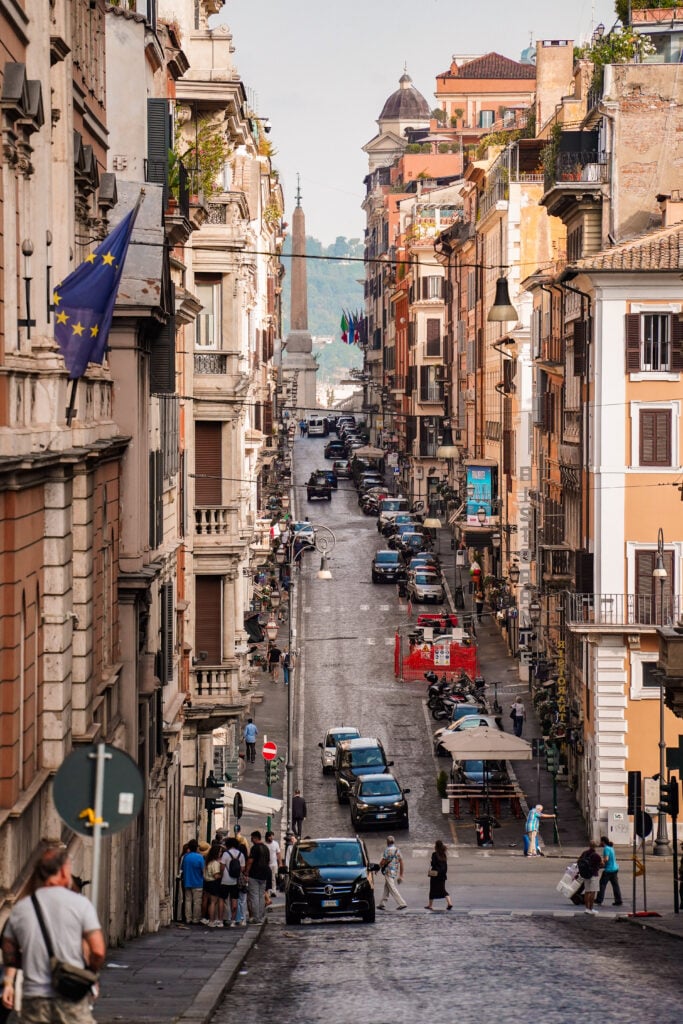
Wander the cobblestone streets that have been welcoming visitors for centuries, grab a slice of pizza at an outdoor cafe, pop into a local artisan shop, and just soak in the ambiance of one of the most iconic cities in the world.
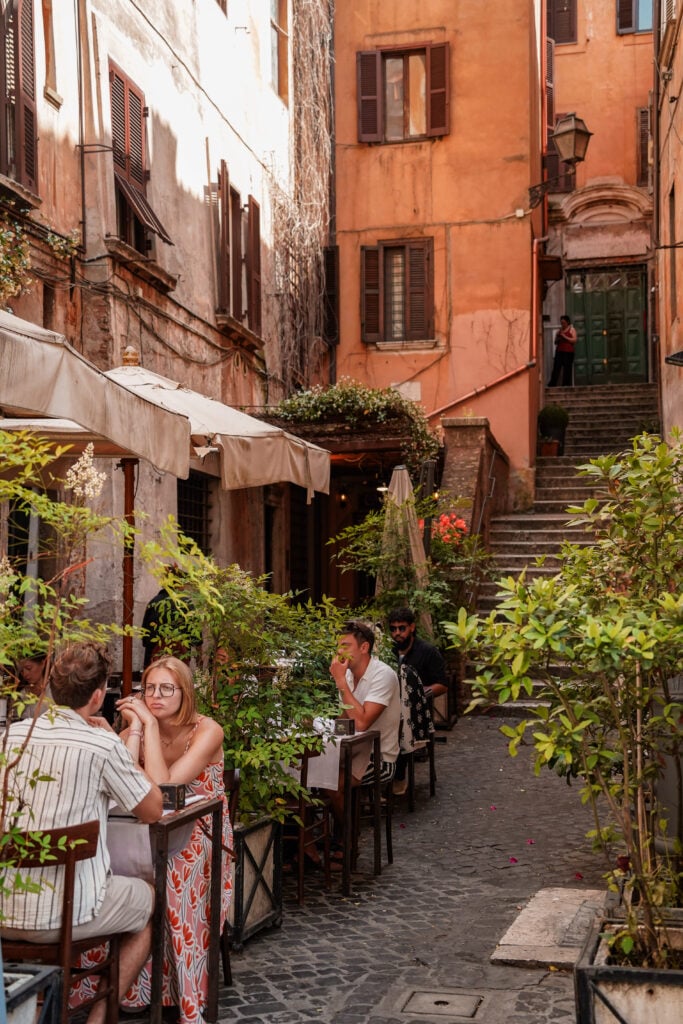
You never know what hidden gems you’ll find when you let yourself get lost in the city!
Final Thoughts
While this is by no means a comprehensive list, it is a great starting point for your visit to Rome. I have also put together a self-guided walking tour with a map to help with your planning.
A few things to note…the best time to visit Rome is in the shoulder season in early spring and late fall, as summer brings the heat and the crowds. Most restaurants and shops take credit cards, but bring some euros for tickets, public restrooms, and small vendors. Tipping is not expected but is always appreciated. Rome is a very walkable city, so make sure to bring comfortable walking shoes.
I hope this helps with your trip planning, happy travels!
A few more posts you might like:
- How to Spend 4 Perfect Days in Tuscany
- The Best Places to Explore, Stay, and Eat in Bellagio
- 8 Cool Things to See in Taormina
- How to Spend One Day in Venice
*CLICK THE BUTTON TO DOWNLOAD AND PRINT THIS GUIDE
Pin it for later:

Leave a Reply